Keeping your lunch fresh and at the right temperature throughout the day can be a challenge. You've probably experienced the disappointment of finding your carefully prepared meal lukewarm or your cold drinks at room temperature. Understanding the materials that make up your insulated lunch bags is key to solving this problem and ensuring your food stays just right from morning to mealtime.
Insulated lunch bags are typically constructed with three main material layers: an outer fabric for durability and aesthetics, an insulation layer for thermal performance, and an inner lining for easy cleaning and waterproofing. Common outer materials include polyester, Oxford fabric, nylon, non-woven PP, canvas, and RPET. Insulation often involves EPE foam, PE foam, EVA foam, or aluminum foil, while inner linings frequently use PEVA, PVC, or TPU films. The combination of these insulated lunch bag materials dictates the bag's effectiveness, longevity, and overall value.
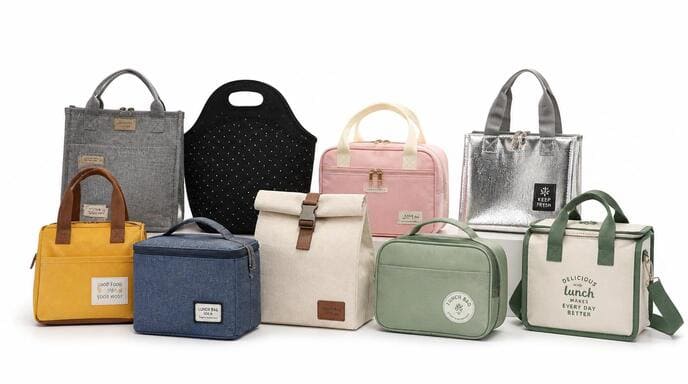
The seemingly simple insulated lunch bag is actually a marvel of material science, designed to create a thermal barrier. Each component plays a vital role. Let's break down the construction and explore the common materials used, helping you make informed choices for your next lunch bag.
1. Understanding the Three-Layer Structure of Insulated Lunch Bags?
While many insulated lunch bags might look similar on the surface, their performance hinges on an internal structure composed of distinct material layers. Understanding this layered approach is the first step to appreciating why some bags keep food cold for hours while others fall short.
The construction of a quality insulated lunch bag relies on a strategic combination of three primary material components: the outer shell, the insulation core, and the inner lining. Each layer serves specific functions critical to the bag's overall performance.
1.1 The Crucial Outer Fabric Layer
The exterior fabric is the first line of defense for your insulated lunch bag. It not only defines the bag's appearance and feel but also plays a significant role in its durability and protection against the elements. This layer needs to withstand daily wear and tear, resist moisture, and provide a surface for attractive branding or design elements.
Common materials used for the outer layer include:
- Polyester: Versatile and cost-effective.
- Oxford Fabric: Known for its robust weave and texture.
- Nylon: Offers exceptional strength and a smooth finish.
- Non-woven PP: A budget-friendly option often used for promotional items.
- Canvas: Provides a natural, textured, and premium look.
- RPET (Recycled Polyester): An eco-conscious choice made from recycled plastic bottles.
1.2 The Heart of Performance: Insulation Materials
The insulation layer is the key component responsible for maintaining the desired temperature inside the bag. Its primary function is to slow down the rate of heat transfer—whether you're trying to keep food hot or cold. The effectiveness of this layer is determined by its thickness, density, and the trapped air within its structure.
Key materials used for insulation include:
- EPE Pearl Cotton: A popular, lightweight, and flexible foam.
- PE Foam: Offers good waterproof properties and flexibility.
- EVA Foam: Known for its cushioning and resistance to deformation.
- Aluminum Foil Insulation: Acts as a radiant barrier, reflecting heat.
- Neoprene: A synthetic rubber known for its flexibility and insulation properties.
1.3 The Practical Inner Lining
The inner lining is the layer that directly contacts your food and beverages. Its characteristics are vital for hygiene, ease of maintenance, and preventing leaks. A good inner lining should be waterproof, easy to wipe clean, and resistant to odors or staining.
Common materials for the inner lining are:
- Aluminum Foil Film: Reflective and easy to clean.
- PEVA (Polyethylene Vinyl Acetate): A food-safe, flexible, and non-toxic plastic.
- PVC (Polyvinyl Chloride): Durable and waterproof, though less environmentally favored.
- TPU-Coated Fabric: A high-performance, flexible, and waterproof coating.
Quick Summary: Insulated lunch bags consist of an outer fabric for protection and aesthetics, an insulating core to regulate temperature, and an inner lining for hygiene and waterproofing. Common outer materials are polyester, Oxford, and nylon; insulation uses EPE foam or aluminum foil; linings are often PEVA or PVC.
2. Exploring Common Outer Fabrics for Insulated Lunch Bags?
The outer fabric of an insulated lunch bag is more than just a pretty face; it's a critical component that influences durability, water resistance, and the overall tactile experience. Selecting the right outer material ensures the bag can withstand daily use while presenting a professional or appealing look.
Choosing the exterior material for your insulated lunch bag involves balancing factors like cost, wear resistance, water repellency, and aesthetic appeal. Different fabrics offer unique advantages suited for various applications and branding needs.
2.1 Polyester: The Versatile Workhorse
Polyester is arguably the most common outer fabric for a wide range of bags, including polyester insulated lunch bags. It offers an excellent balance of properties that make it ideal for everyday use.
Advantages:
- Cost-Effective: Generally more affordable than many other synthetics.
- Durable: Resists stretching and shrinking, offering good abrasion resistance.
- Lightweight: Does not add significant weight to the bag.
- Easy to Print: Takes inks well, allowing for vibrant custom designs.
- Water Repellent: Can be coated or treated for enhanced water resistance.
Common Specifications:
- Denier (D) count: Indicates thread thickness; higher numbers (e.g., 600D) generally mean a thicker, more durable fabric than lower numbers (e.g., 210D).
2.2 Oxford Fabric: Durability Meets Texture
Oxford fabric is a type of woven polyester known for its distinct basket-weave pattern, which gives it a more textured and robust feel compared to standard polyester. It's a popular choice for higher-quality insulated lunch bags.
Advantages:
- Enhanced Durability: The weave provides greater strength and tear resistance.
- Premium Appearance: Offers a more structured and sophisticated look.
- Good Water Resistance: Inherently water-repellent and easily treated further.
- Versatile: Suitable for various applications from office to outdoor use.
Common Specifications:
- Often specified by denier (e.g., 210D, 420D, 600D Oxford), similar to regular polyester but with a different weave structure.
2.3 Nylon: Strength and Smoothness
Nylon is a high-performance synthetic fiber celebrated for its exceptional strength-to-weight ratio. A nylon insulated lunch bag often signifies a premium product due to its durability and smooth, sleek appearance.
Advantages:
- Superior Strength: Extremely resistant to tearing and abrasion.
- Lightweight: Despite its strength, it remains lightweight.
- Smooth Finish: Offers a premium, often slightly glossy, feel.
- Good Water Resistance: Naturally repels water effectively.
Limitations:
- Higher Cost: Typically more expensive than polyester.
- UV Sensitivity: Can degrade over time with prolonged sun exposure if not treated.
2.4 Non-Woven PP: The Budget-Friendly Choice
Non-woven polypropylene (PP) is created by bonding polypropylene fibers together using heat or chemicals, rather than weaving them. This makes it a very cost-effective and lightweight option for many reusable insulated lunch bags.
Advantages:
- Low Cost: Significantly cheaper than woven fabrics.
- Lightweight: Very minimal weight contribution.
- Easy Customization: Easily printed and shaped.
- Quick Production: Can be manufactured rapidly.
Limitations:
- Lower Durability: Less resistant to tears and heavy loads compared to woven materials.
- Not Waterproof: Requires coatings for significant water resistance.
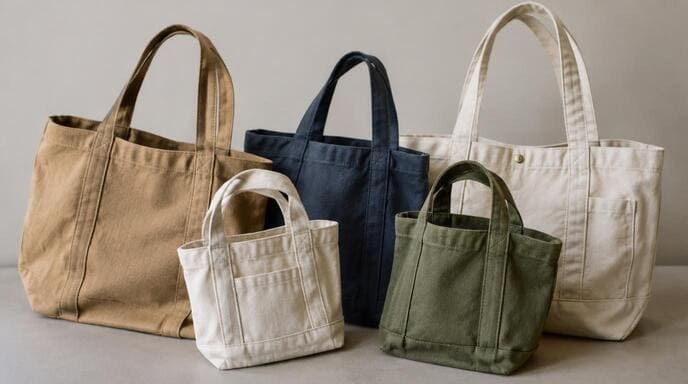
2.5 Canvas and Cotton: Natural Appeal
Canvas and cotton bags offer a natural, earthy aesthetic that appeals to consumers looking for more traditional or eco-friendly options. While often associated with "eco-friendly," their natural fibers require careful consideration for insulation and waterproofing.
Advantages:
- Natural Look & Feel: Offers a premium, organic appearance.
- Strong Fabric Texture: Durable when used in appropriate weights.
- Biodegradable (Cotton): A more environmentally friendly end-of-life option.
Limitations:
- Heavier: Typically heavier than synthetic counterparts.
- Moisture Absorption: Natural fibers readily absorb water; require coatings (like wax or acrylic) for effective moisture resistance.
- Cost: Can be more expensive, especially for heavier weights or organic cotton.
2.6 RPET: Sustainable Style
RPET (Recycled Polyethylene Terephthalate) is derived from post-consumer plastic bottles. Using RPET for the outer fabric is an excellent way for brands to highlight their commitment to sustainability, offering an eco-friendly alternative that performs much like virgin polyester.
Advantages:
- Environmental Marketing: Supports sustainability initiatives and appeals to eco-conscious consumers.
- Performance: Offers comparable durability, printability, and water resistance to standard polyester.
- Versatile: Can be used in a wide range of bag styles.
Quick Summary: The outer fabric of insulated lunch bags varies from cost-effective non-woven PP and versatile polyester to durable Oxford fabric and strong nylon, and eco-friendly options like canvas, cotton, and RPET. Each material impacts the bag's durability, appearance, and suitability for different uses.
3. Diving into Insulation Materials for Thermal Bags?
The insulation material is the unsung hero within your insulated lunch bag, working silently to maintain optimal temperatures for your meals and drinks. Without effective insulation, the bag is merely a container. Understanding these materials helps demystify how lunch bag insulation materials keep your food fresh.
The core function of the insulation layer is to minimize heat transfer via conduction, convection, and radiation. This layer dictates how long your bag can keep food hot or cold, making it a critical component for any quality insulated food bag.
3.1 EPE Pearl Cotton: The Go-To Foam
EPE (Expanded Polyethylene) pearl cotton is one of the most popular and widely used insulation materials in lunch bags and cooler bags. It's a closed-cell foam known for its excellent insulating properties and flexibility.
Advantages:
- Lightweight: Adds minimal weight, making the bag easy to carry.
- Good Thermal Insulation: Effectively slows down heat transfer.
- Moisture Resistant: Closed-cell structure prevents water absorption.
- Flexible and Compressible: Can conform to bag shapes and withstand some compression.
- Cost-Effective: Offers a great balance of performance and price.
Why It Is Popular: EPE provides a reliable and affordable solution for maintaining temperatures, making it a staple for many manufacturers producing standard and reusable insulated lunch bags.
3.2 Aluminum Foil: The Radiant Barrier
Aluminum foil is often used as a component within the insulation system, typically bonded to foam or fabric. Its primary role is to reflect radiant heat, thereby reducing heat exchange between the inside and outside of the bag.
Advantages:
- Reflective Surface: Highly effective at reflecting thermal radiation.
- Lightweight: Adds negligible weight.
- Hygienic: Easy to clean and resistant to mold.
Important Note: Aluminum foil alone provides poor insulation against conductive heat transfer. It works best when used in conjunction with foam materials like EPE to create a composite insulation layer. This combination leverages both reflective and conductive properties for better performance.
3.3 PE Foam and EVA Foam: Flexible Alternatives
PE foam and EVA (Ethylene Vinyl Acetate) foam are other closed-cell foam materials utilized for thermal insulation. They share many benefits with EPE, including water resistance and flexibility.
- PE Foam: Offers good insulation, is waterproof, and provides excellent shock absorption. It's flexible and durable, making it suitable for various insulated bag designs.
- EVA Foam: Known for its exceptional flexibility, resilience, and cushioning properties. It is resistant to cracking and deformation, making it ideal for structured or premium insulated lunch bags.
3.4 Neoprene: The Stretchy Option
Neoprene, a type of synthetic rubber, is often used in higher-end insulated lunch bags, particularly smaller ones. It offers good flexibility and insulation, and its stretchy nature can help create a snug fit around contents.
Advantages:
- Excellent Flexibility: Stretches to accommodate various shapes.
- Good Insulation: Traps air effectively.
- Durable and Water-Resistant: Resists water and general wear.
Considerations: Can be more expensive than EPE and may have a distinct rubber odor initially.
Quick Summary: Key insulation materials for thermal bags include EPE pearl cotton for its balance of performance and cost, aluminum foil as a reflective barrier, PE and EVA foams for their flexibility and water resistance, and neoprene for its stretch and insulation properties.
4. Examining Inner Lining Materials for Insulated Food Bags?
The inner lining of an insulated food bag is the critical interface between your food and the bag's structure. A well-chosen lining ensures that spills are contained, cleaning is effortless, and the bag remains hygienic for repeated use, enhancing the overall user experience.
The inner lining must be durable, waterproof, and easy to maintain to prevent food from compromising the insulation layer or creating odors. Selecting the right material significantly impacts the bag's longevity and practicality for storing food.
4.1 PEVA: The Modern Standard
PEVA (Polyethylene Vinyl Acetate) is a popular choice for the inner lining of insulated lunch bags due to its excellent combination of properties. It is considered a safer and more environmentally friendly alternative to PVC.
Advantages:
- Waterproof: Effectively prevents leaks and spills from penetrating.
- Easy to Clean: Smooth surface allows for quick wiping of residue and food particles.
- Food Safe: Non-toxic and generally free from harmful chemicals.
- Soft Texture: Feels flexible and less rigid than PVC.
- BPA-Free: An important consideration for food contact materials.
4.2 PVC: The Durable Classic
PVC (Polyvinyl Chloride) has long been used as an inner lining for cooler bags due to its exceptional durability and waterproof capabilities. It offers robust performance for demanding applications.
Advantages:
- Highly Durable: Resistant to tears and punctures.
- Excellent Waterproofing: Forms a strong barrier against liquids.
- Easy Maintenance: Simple to wipe clean.
Limitations:
- Environmental Concerns: PVC can release harmful chemicals (e.g., plasticizers) and is less biodegradable, making PEVA a preferred option for many brands focused on sustainability.
4.3 TPU-Coated Fabric: Premium Performance
TPU (Thermoplastic Polyurethane) is a high-performance material known for its flexibility, strength, and excellent waterproof properties. When used as a coating on fabric for inner linings, it offers a premium solution for demanding environments.
Advantages:
- Exceptional Durability: Highly resistant to abrasion and punctures.
- Superior Waterproofing: Provides a reliable, impermeable barrier.
- Flexibility: Maintains flexibility even at low temperatures.
- Chemical Resistance: Resists oils and greases.
Applications: Often found in high-end or specialized insulated bags where extreme durability and performance are required.
4.4 Aluminum Foil Film: Reflective and Easy Clean
While often used as an insulating layer, a thin layer of aluminum foil film can also serve as the inner lining. This approach combines reflective properties with a surface that is generally easy to wipe clean.
Advantages:
- Reflects Heat: Adds a small degree of thermal reflection.
- Easy to Wipe: Smooth surface facilitates cleaning.
- Lightweight: Adds minimal weight.
Considerations: Aluminum foil film can be prone to tearing and may not offer the same level of seamless waterproofing as PEVA or TPU if seams are not properly sealed. It is often used in conjunction with a foam layer.
Quick Summary: Inner lining materials for insulated food bags are crucial for hygiene and practicality. PEVA offers a safe, flexible, and easy-to-clean option. PVC is durable but raises environmental concerns. TPU-coated fabric provides premium performance, while aluminum foil film offers reflectivity and ease of cleaning.
5. Key Material Comparisons for Your Insulated Lunch Bag Needs?
When selecting materials for insulated lunch bags, it's easy to get lost in the specifications. Direct comparisons can clarify which materials offer the best advantages for specific needs, helping you make a more informed decision for your next purchase or custom order.
Understanding the nuances between similar materials is essential for optimizing performance, durability, and cost-effectiveness. Let's look at some common comparisons to help you navigate the options.
Polyester vs. Nylon Lunch Bags
| Feature | Polyester | Nylon |
|---|---|---|
| Strength | Good, resists stretching and shrinking | Excellent, superior tensile strength |
| Weight | Lightweight | Very Lightweight |
| Cost | More affordable | Higher material cost |
| Water Resistance | Good, can be enhanced with coatings | Very good, naturally repels water |
| Printing | Excellent ink absorption, vibrant colors | Good, but some treatments may be needed |
| Appearance | Versatile, can be matte or slightly shiny | Smooth, often with a premium sheen |
| Application | Everyday use, promotional, school bags | Premium bags, travel, sports meal bags |
Oxford Fabric vs. Basic Polyester
| Feature | Oxford Fabric | Basic Polyester |
|---|---|---|
| Durability | Higher, due to basket weave | Good, general-purpose |
| Fabric Feel | Textured, robust | Smoother, more pliable |
| Appearance | More structured, premium | Standard, versatile |
| Cost | Slightly higher | More economical |
| Application | Heavy-duty use, outdoor, premium styles | General promotional, office, school bags |
EPE vs. Other Foam Insulation Materials
| Feature | EPE (Pearl Cotton) | PE Foam / EVA Foam | Aluminum Foil |
|---|---|---|---|
| Thermal Performance | Good, effective insulator | Good, comparable to EPE | Acts as radiant barrier, poor standalone |
| Moisture Resistance | Excellent (closed-cell) | Excellent (closed-cell) | Not applicable (metal film) |
| Weight | Very Lightweight | Lightweight | Negligible |
| Cost | Cost-effective, good balance | Moderate | Low cost as component |
| Flexibility | High | High, cushioning (EVA) | Not flexible when rigid |
| Primary Function | Core insulation | Insulation, cushioning | Heat reflection |
PEVA vs. PVC Lining
| Feature | PEVA | PVC |
|---|---|---|
| Waterproof | Excellent | Excellent |
| Flexibility | Very good, soft | Good, can become stiff in cold |
| Cleaning | Easy, non-toxic | Easy, durable |
| Environmental Impact | Preferred, safer, more biodegradable | Less preferred, potential chemical release |
| Food Safety | Generally considered safe, BPA-free | Can contain phthalates (less common now) |
| Cost | Moderate | Moderate, can be cheaper |
Quick Summary: Comparing materials reveals key trade-offs. Nylon offers superior strength over polyester at a higher cost. Oxford fabric provides more durability and a premium feel than standard polyester. EPE foam is a balanced choice for insulation, while aluminum foil acts as a reflective barrier. PEVA is preferred over PVC for inner linings due to environmental and safety benefits.
6. How Specific Insulated Lunch Bag Materials Impact Performance?
The materials chosen for an insulated lunch bag directly dictate its performance across several key metrics, from how long it keeps food hot or cold to how well it withstands daily use. Understanding these links helps consumers and businesses select bags that meet specific demands.
Each material choice contributes to the bag's overall efficacy. The outer fabric affects durability, the insulation layer determines thermal retention, and the lining impacts hygiene and waterproofing, collectively shaping the user experience.
6.1 Thermal Retention
The primary function of an insulated lunch bag is thermal retention. This performance is influenced by:
- Insulation Thickness: Thicker layers of EPE, PE, or EVA foam generally provide better insulation.
- Material Structure: Closed-cell foams trap air more effectively than open-cell foams, slowing heat transfer.
- Sealing Quality: Air leaks around zippers or seams are major culprits for temperature loss. Well-constructed bags minimize these.
- Inner Lining Performance: A reflective lining (like aluminum foil or PEVA) can help bounce radiant heat back, assisting the insulation.
- Outer Fabric: While less critical for insulation itself, tightly woven fabrics can offer a slight barrier against convective heat loss.
6.2 Durability
A durable insulated lunch bag should withstand repeated use, abrasion, and minor impacts. This is affected by:
- Outer Fabric Density: Higher denier fabrics (like 600D Oxford or Nylon) are generally more robust than lower denier polyester.
- Stitching Quality: Strong, reinforced stitching, especially at stress points like handles and seams, is crucial.
- Handle Reinforcement: Well-attached and reinforced handles prevent tearing.
- Bottom Construction: A reinforced or thicker base can protect against wear from being placed on rough surfaces.
- Zipper Quality: Robust zippers that operate smoothly contribute to overall bag longevity.
6.3 Waterproof Performance
Keeping contents dry and preventing leaks is essential. This depends on:
- Fabric Coating: Many outer fabrics receive PU (polyurethane) or PVC coatings on the inside to make them water-repellent.
- Inner Lining: Materials like PEVA, PVC, and TPU are inherently waterproof.
- Seam Construction: Heat-sealed or specially taped seams prevent water from escaping through stitching holes.
- Zipper Design: Water-resistant zippers or flap covers significantly improve waterproofing.
6.4 Food Safety and Compliance
Ensuring that materials are safe for food contact is paramount, especially for reusable lunch bags.
- Food-Contact Materials: Inner linings should be made from food-grade materials.
- FDA Requirements (US): The Food and Drug Administration sets standards for materials that come into contact with food. Manufacturers often test for compliance.
- LFGB Requirements (Europe): The German Federal Institute for Food Safety and Veterinary Medicine has stringent testing requirements for food-contact materials.
- Certifications: Look for certifications that indicate materials have been tested for safety, such as ISO 9001 for quality management or specific material safety certifications. While food safety certifications evaluate material safety, they do not directly measure insulation performance.
Quick Summary: Material choices directly impact an insulated lunch bag's performance. Insulation thickness and material type determine thermal retention. Outer fabric density and stitching quality affect durability. Waterproofing relies on fabric coatings, linings, and seam construction. Food safety compliance, assessed by bodies like FDA and LFGB, ensures materials are safe for contact.
7. Selecting the Best Materials for Custom Insulated Lunch Bags?
When you’re looking to create custom insulated lunch bags, the array of material options can seem overwhelming. However, by understanding your specific needs and how different materials perform, you can tailor the perfect bag for your brand, promotion, or product line.
The process of selecting materials for custom insulated lunch bags involves defining requirements, balancing budget with desired quality, and considering branding objectives. A knowledgeable insulated lunch bag manufacturer can guide you through these choices.
7.1 Define Usage Requirements
Before diving into material specifics, clarify the intended use of the insulated lunch bags. This will significantly narrow down your options.
- Required Insulation Time: Will the bag need to keep food hot/cold for 4 hours or 8+ hours? Longer times require thicker, higher-performance insulation.
- Capacity and Carrying Weight: Will it hold a light snack or a full day's meals, including drinks? This impacts the required strength of the outer fabric and handles.
- Usage Environment: Is it for daily office use, rugged outdoor adventures, or frequent food delivery services? Durability and water resistance become more critical in demanding environments.
- Frequency of Use: For promotional items used occasionally, cost might be the primary driver. For daily commuters or commercial use, longevity and performance are key.
7.2 Balancing Budget and Quality
The choice of materials directly affects the final cost of your custom insulated lunch bags. You can often create excellent bags across different price points by selecting appropriate material combinations.
-
Economy Option:
- Outer Fabric: Non-woven PP or basic 210D Polyester.
- Insulation: Thin EPE foam (around 3-5mm) or aluminum foil layer.
- Inner Lining: Basic PEVA or aluminum foil film.
- Focus: Low cost for high-volume promotions or giveaways.
-
Standard Option:
- Outer Fabric: 420D or 600D Polyester, or entry-level Oxford fabric.
- Insulation: Thicker EPE foam (around 5-8mm), possibly with an aluminum foil layer.
- Inner Lining: Good quality PEVA.
- Focus: Reliable performance for everyday use, office, or school bags.
-
Premium Option:
- Outer Fabric: High-density 600D/900D Oxford fabric, Nylon, or RPET.
- Insulation: Thick EPE/EVA/PE foam (8-10mm+), potentially with double layers or advanced reflective materials.
- Inner Lining: High-quality PEVA, TPU-coated fabric, or durable aluminum foil.
- Focus: Maximum insulation, superior durability, premium feel, and enhanced features for demanding applications or high-end branding.
7.3 Consider Customization Requirements
Beyond performance, your branding and aesthetic preferences will guide material choices.
- Printing Method: Different outer fabrics suit different printing techniques. Polyester and non-woven PP are excellent for screen printing and heat transfer. Oxford fabric can also be printed on. Canvas might require special printing methods.
- Color Options: Some materials are available in a wider range of base colors than others.
- Material Availability: Ensure the chosen materials are readily available in the quantities and colors you need, especially for large custom orders.
- MOQ Requirements: Minimum order quantities can vary based on the complexity of the materials and manufacturing process.
- Branding Needs: For logos, consider how well the fabric accepts printing or embroidery, and whether a specific texture or finish is desired to complement your brand image.
Working closely with an experienced insulated lunch bag manufacturer like Jiarong Packaging can help you navigate these choices effectively, ensuring you create custom bags that are both functional and aligned with your brand identity.
Quick Summary: Selecting materials for custom insulated lunch bags involves defining usage needs (insulation time, capacity, environment), balancing budget with quality options (economy, standard, premium), and considering customization requirements like printing methods and branding needs. An experienced manufacturer is key to this process.
9. Frequently Asked Questions About Insulated Lunch Bag Materials
What is the best material for insulated lunch bags?
There isn't a single "best" material; it depends on your priorities. For a balance of cost, durability, and performance, polyester or Oxford fabric for the exterior, EPE foam for insulation, and PEVA for the lining are excellent choices. For premium performance, nylon and thicker insulation may be preferred, while non-woven PP is great for budget promotions.
Is aluminum foil enough for insulation?
No, aluminum foil alone is not sufficient for effective insulation. It acts primarily as a radiant barrier, reflecting heat. While it can contribute to thermal performance when layered, it needs to be combined with insulating materials like EPE foam or other thermal foams to significantly slow down heat transfer.
Is nylon better than polyester for lunch bags?
Nylon generally offers superior strength-to-weight ratio and durability compared to polyester. It's often found in premium bags requiring high resilience. However, polyester is more cost-effective, offers excellent printability, and provides good durability for most everyday uses, making it a versatile and popular choice for many insulated lunch bags.
What insulation material keeps food cold the longest?
The longest-lasting cold retention typically comes from a combination of factors: a thicker layer of high-density EPE foam or a similar closed-cell foam, possibly layered with an aluminum foil reflective barrier, and a well-sealed bag with a durable, waterproof inner lining like PEVA or TPU. The thickness of the insulation is a critical component.
Are PEVA lunch bags safe?
Yes, PEVA (Polyethylene Vinyl Acetate) lunch bags are generally considered safe for food contact. It is a non-toxic, BPA-free material often recommended as a safer alternative to PVC. Its food-grade properties, combined with its waterproof and easy-to-clean characteristics, make it a popular choice for inner linings in reusable insulated lunch bags.
Are RPET insulated lunch bags durable?
Yes, RPET (Recycled Polyethylene Terephthalate) insulated lunch bags are typically as durable as those made from virgin polyester. RPET is manufactured from recycled plastic bottles but retains the strength, abrasion resistance, and water-repellent properties of standard polyester, making it a sustainable yet robust option.
How thick should insulation be in a lunch bag?
The ideal thickness for insulation in a lunch bag varies, but for good performance, 5mm to 10mm of EPE foam is common. Thicker insulation generally leads to better temperature retention. For specialized needs like prolonged outdoor use or commercial delivery, insulation layers of 10mm or more might be necessary.
Conclusion: Choosing the Right Combination of Materials for Insulated Lunch Bags
The performance of insulated lunch bags is a sophisticated interplay between three distinct material layers: the outer fabric, the insulation core, and the inner lining. Each component, from the robust polyester or Oxford fabric on the exterior to the thermal-blocking EPE foam or aluminum foil in the middle, and the easy-to-clean PEVA or PVC lining within, contributes vital functions. There is no single "best" material for all insulated lunch bags; the ideal choice is always dependent on the intended application, budget constraints, desired durability, and specific branding requirements.
By understanding the properties and benefits of different insulated lunch bag materials—such as the strength of nylon versus polyester, the insulating capabilities of EPE foam, or the hygiene of a PEVA lining—you are empowered to select or customize insulated lunch bags that offer superior performance and longevity. Whether you need a simple promotional item or a heavy-duty thermal bag, the right material combination makes all the difference. As a leading insulated lunch bag manufacturer, Zhejiang Jiarong Packaging Co., Ltd. is ready to help you explore these options and create the perfect custom solution. Contact us today to discuss your specific needs and let us bring your ideal insulated lunch bag to life.