Mini tote bags have become a practical option for retail brands looking to create reusable packaging, promotional products, seasonal merchandise or branded accessories. Compared with standard shopping bags, their compact size makes them easier to carry, more suitable for gift-oriented purchases and more likely to be reused in daily life. However, developing a successful mini tote bag for retail is not simply about reducing the size of a regular tote. Brands need to consider the relationship between product size, customer usage, material selection, printing requirements and production cost. For retailers, the key question is not “How small should a mini tote be?” but rather “What size and design can provide the right balance between usability, brand visibility and manufacturing efficiency?”
Why Retail Brands Use Mini Tote Bags
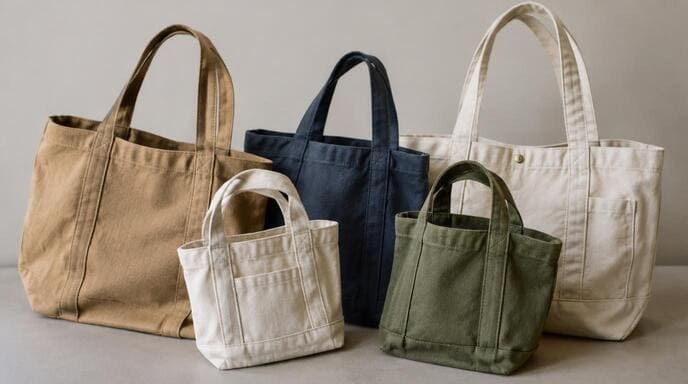
Retail brands use mini tote bags for different purposes, including replacing disposable packaging, creating limited-edition merchandise, offering gift-with-purchase items and strengthening customer recognition after purchase. Unlike ordinary shopping bags that are often discarded after one use, a well-designed mini tote can become a reusable item that continues to represent the brand outside the store.
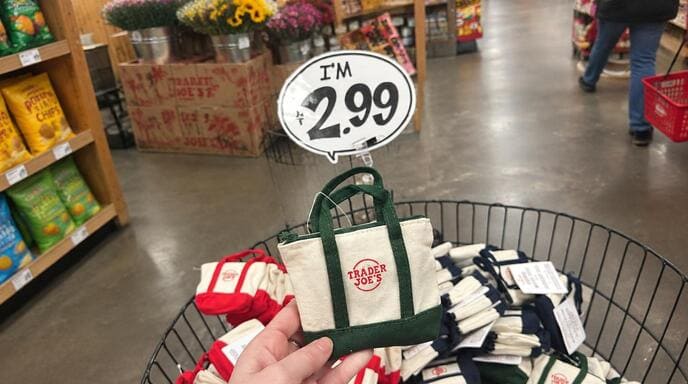
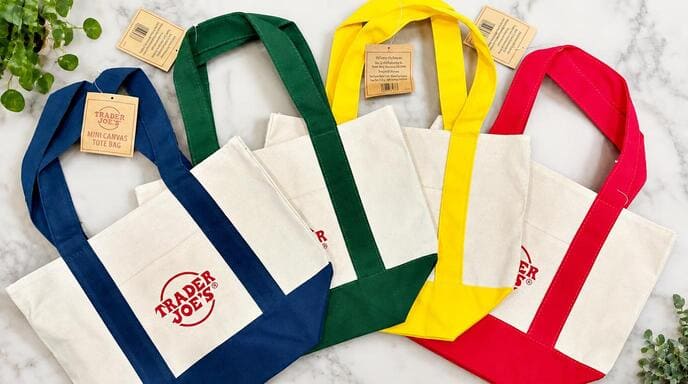
A recent example is Trader Joe’s mini tote bag. Originally introduced in 2024 at $2.99 per bag, the compact canvas bags attracted attention through seasonal color releases and limited availability. According to Numerator data, 9.6% of Trader Joe’s shoppers purchased a mini tote in 2025, representing 3.4% of U.S. households. This case shows that even a small functional product can gain strong customer interest when size, design and brand recognition work together.
For retail companies, this does not mean every mini tote needs to become a collectible product. Instead, it demonstrates that a shopping bag can create additional brand value when its design matches the customer experience and product positioning.
Choosing the Right Mini Tote Bag Size for Retail Applications
Mini tote bags do not have one fixed industry standard size. The right dimensions depend on the products being carried, customer usage habits and the role of the bag in the sales process.
| Size Category | Approximate Dimensions (W × H × D) | Suitable Applications |
|---|---|---|
| Small mini tote | 15–22 × 15–22 × 5–8 cm | Jewelry, cosmetics, small gifts |
| Standard mini tote | 20–30 × 20–30 × 8–10 cm | Accessories, lifestyle products, retail purchases |
| Large mini tote | 28–35 × 30–35 × 10–12 cm | Clothing, books, premium retail packaging |
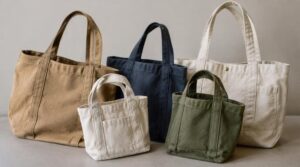
Small mini tote bags are commonly used for lightweight products such as cosmetics, jewelry and small gifts. In these applications, the bag itself often functions as part of the product presentation, so appearance and finishing details can be more important than carrying capacity.
The standard mini tote size, usually around 25 × 25 cm to 30 × 30 cm, is one of the most flexible choices for retail brands. It provides enough space for everyday items while maintaining the compact appearance associated with mini bags.
Larger mini tote bags, usually around 30–35 cm, are often selected by brands that want customers to reuse the bag after purchase. These sizes can carry more products while still creating a lifestyle-oriented image compared with traditional shopping bags.
Mini Tote Bag Materials: Selecting the Right Option for Different Brands
Material selection affects the appearance, durability, production cost and overall brand positioning of a mini tote bag. Different retail applications require different material solutions, and there is no single material suitable for every project.
| Material | Main Characteristics | Common Applications |
|---|---|---|
| Cotton canvas | Natural texture, durable structure, premium appearance | Fashion brands, boutiques, lifestyle products |
| Non-woven polypropylene | Lightweight, economical, flexible customization | Promotions, campaigns, high-volume retail |
| RPET fabric | Recycled material option with textile appearance | Sustainability-focused brands |
| Laminated non-woven | Improved surface protection and stronger visual effect | Retail packaging requiring extra durability |
| Felt | Soft texture and distinctive appearance | Seasonal products and gift packaging |
Cotton Canvas Mini Tote Bags
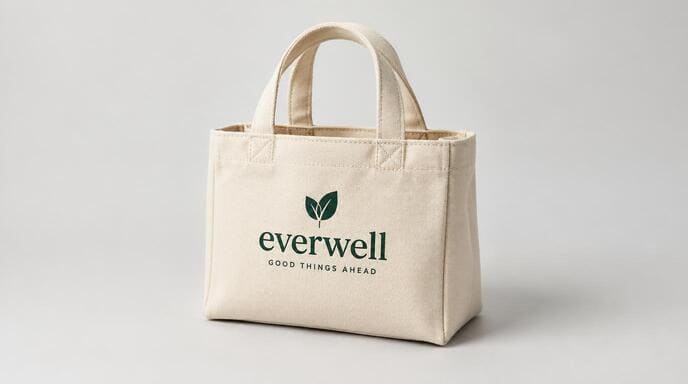
Cotton canvas is often selected when the bag itself is expected to become a reusable lifestyle product. The material provides a natural appearance, strong structure and good printing performance, making it suitable for brands that want a more premium customer experience.
Many fashion and lifestyle brands use canvas tote bags because the material communicates a casual and reusable image. However, canvas generally has a higher production cost and heavier shipping weight compared with lightweight alternatives. For large promotional campaigns involving thousands of units, brands usually need to evaluate whether the premium appearance matches the expected budget and usage scenario.
Non-Woven Mini Tote Bags
Non-woven polypropylene is widely used for retail campaigns and promotional programs because it offers a balance between customization flexibility and cost efficiency. It is lightweight, available in various colors and suitable for different printing methods.
Typical applications include seasonal promotions, event products, retail giveaways and entry-level reusable shopping bags. For brands ordering larger quantities, non-woven materials can provide an economical way to achieve customized branding.
RPET Mini Tote Bags
RPET mini tote bags are increasingly considered by brands that want to include recycled materials in their product strategy. However, material selection alone does not determine customer perception. A recycled bag still requires practical design, attractive appearance and clear brand communication to create meaningful value.
For RPET projects, manufacturers usually evaluate fabric texture, printing performance and durability together to ensure the final product meets both branding and functional requirements.
Mini Tote Bag Design Inspiration from Real Brand Examples
Customization does not always require complex structures or excessive decoration. Many recognizable mini tote designs succeed because they use simple but consistent visual elements, such as signature colors, memorable patterns or distinctive materials.
Creating Recognition Through Color and Seasonal Releases: Trader Joe’s Mini Tote Inspiration
Trader Joe’s mini tote bags provide an example of how color variation and simple branding can increase customer interest. The design approach focuses on recognizable brand elements, compact proportions and seasonal color combinations rather than complicated graphics.
For retail brands, this concept can inspire several customization ideas:
- Creating seasonal color collections;
- Developing limited-edition variations;
- Using matching handles and body colors;
- Keeping logos simple and recognizable.
This approach is especially suitable for brands that want customers to collect different versions without significantly changing the production structure.
Building a Signature Look Through Material and Details: Marc Jacobs Small Tote Inspiration
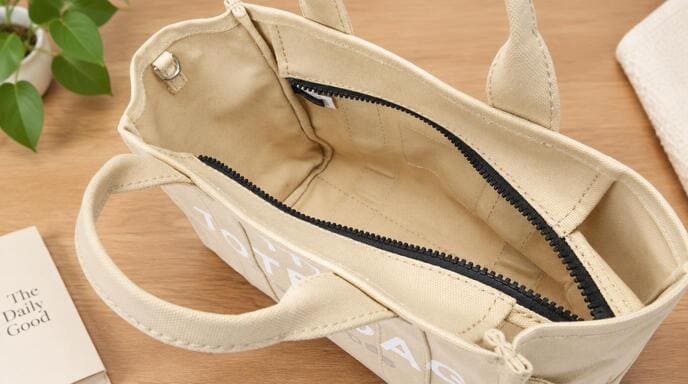
Marc Jacobs’ small tote designs demonstrate how structure, fabric texture and recognizable details can create strong product identity. The appeal does not come only from the logo, but from the combination of shape, material and overall visual style.
For mini tote bag customization, brands can apply similar ideas through:
- Custom woven labels;
- Embroidered logos;
- Contrast stitching;
- Special fabric textures;
- Unique handle designs.
The key idea is to create a bag that customers can recognize through its overall appearance rather than relying only on large printed branding.
Communicating Brand Values Through Materials: Anya Hindmarch Universal Bag Inspiration
The collaboration between Waitrose, Dish and Anya Hindmarch demonstrates another design direction: using materials and functional details to communicate brand values. The Universal Bag combines recycled materials, distinctive visual elements and a reuse-focused concept, showing how a shopping bag can carry a broader brand message.
For retail brands, similar ideas can include:
- Using RPET or recycled fabrics;
- Adding material information labels;
- Creating functional details that encourage repeated use;
- Connecting packaging design with brand storytelling.
The purpose is not simply to follow a trend, but to make the bag communicate something meaningful about the brand.
Important Customization Factors Before Production
Before starting bulk production, retail brands should evaluate several factors that influence both appearance and manufacturing results.
Printing Area and Artwork Design
Mini tote bags provide less printing space than standard tote bags, so artwork needs to be carefully planned. Large logos, simple illustrations and clear typography usually produce better results than highly detailed graphics with many small elements.
Handle Structure and User Experience
Handle length affects how customers interact with the bag. Short handles create a compact gift-bag appearance, while longer handles improve daily usability. Brands should select handle structures based on whether the bag is mainly intended for packaging, gifting or repeated carrying.
Fabric Thickness and Durability
Fabric weight influences the bag’s appearance, strength and cost. Lightweight materials may be suitable for short-term promotional use, while retail merchandise products usually require stronger fabric structures for repeated use.
Additional Features
Brands can customize mini tote bags with features such as inner pockets, zippers, labels, gussets, special shapes and different handle materials. However, additional features also increase production complexity. Manufacturers usually recommend confirming the basic size, material and structure first before adding more complicated details.
Manufacturer Analysis: How to Develop a Mini Tote Bag for Retail Success
From a manufacturer’s perspective, successful mini tote bag projects usually begin with understanding the intended usage rather than focusing only on visual design.
A cosmetics brand selling small products may benefit from a lightweight 20–25 cm tote, while a fashion retailer may require a larger structure that can hold clothing items. Similarly, a promotional campaign with a large quantity requirement may prioritize cost efficiency, while a premium retail product may focus more on material quality and finishing details.
During production planning, manufacturers usually evaluate factors including fabric selection, printing method, handle reinforcement, stitching quality and packaging requirements. Creating a pre-production sample is also an important step because small changes in dimensions or material thickness can affect the final customer experience.
For retail brands, working with an experienced manufacturer can help balance creative ideas with production feasibility, ensuring that the final mini tote design is attractive, practical and suitable for large-scale manufacturing.
Conclusion: Choosing the Right Mini Tote Bag for Your Retail Brand
Mini tote bags can serve multiple roles for retail brands, including reusable packaging, promotional products, seasonal merchandise and branded accessories. The most effective designs are not necessarily the smallest or most decorative options, but those that balance size, usability, material selection, brand identity and production cost.
A successful mini tote bag should answer three questions: Does it fit the customer’s needs? Does it communicate the brand clearly? Can it be produced consistently at the required quantity?
Jiarong Packaging provides customized tote bag manufacturing solutions for retail brands, wholesalers and promotional buyers, supporting material selection, sampling, printing and bulk production. Contact our team to discuss your mini tote bag requirements and develop a customized production solution for your brand.