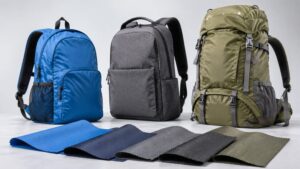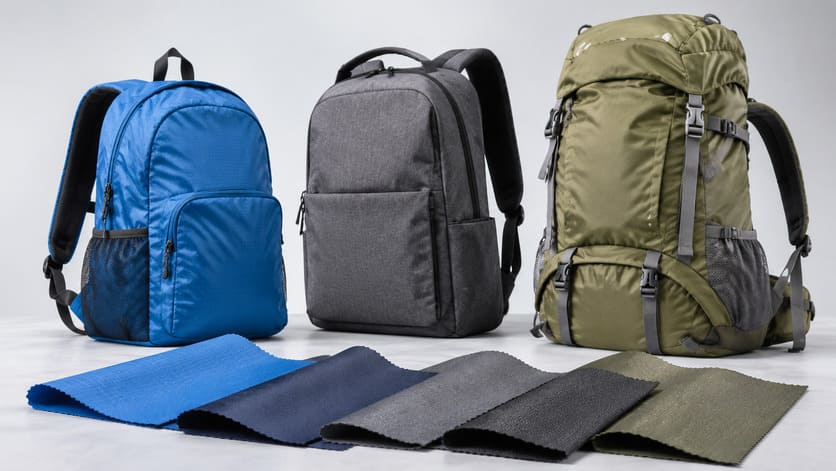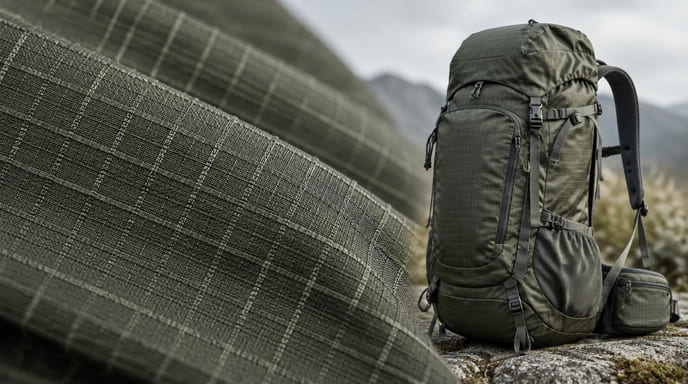
Choosing the right denier (D) fabric is an important decision when developing a backpack. A lightweight daypack, a commuter backpack, a travel backpack, and a heavy-duty outdoor backpack have different requirements for fabric weight, abrasion resistance, tear strength, and structural reinforcement.
However, a higher denier does not automatically mean a better backpack. A 600D fabric with a suitable weave and coating may perform better in a particular application than a poorly constructed 1000D fabric. Fabric quality, yarn strength, weave density, coating, stitching, and load-bearing construction all influence the finished product.
For backpack manufacturers, wholesalers, and brand buyers, the objective is to select a fabric specification that meets the intended use without adding unnecessary weight or material cost.
1. What Does Denier (D) Mean in Backpack Fabric?
Denier (D) measures the linear density of a yarn, not the thickness or quality of the finished fabric.
One denier equals the mass in grams of 9,000 meters of yarn.
For example:
- 300D: 9,000 meters of yarn weigh 300 grams.
- 600D: 9,000 meters of yarn weigh 600 grams.
- 1000D: 9,000 meters of yarn weigh 1,000 grams.
A higher denier generally indicates a heavier yarn, which can contribute to greater fabric thickness and durability. However, actual performance also depends on filament quality, yarn construction, weave structure, and finishing.
An important distinction: Denier is not the same as GSM (grams per square meter). Denier describes the yarn, while GSM measures the weight of the finished fabric per unit area. Two fabrics made from 600D yarn can have different GSM values because of differences in weave density, backing, and coating.
2. What Denier Fabric Should You Choose for Different Backpack Uses?
There is no universal denier specification for all backpacks. The appropriate range depends on the expected load, frequency of use, abrasion exposure, and weight requirements.
The following recommendations provide practical starting points for material selection.
| Backpack application | Common fabric specifications | Main considerations |
|---|---|---|
| Lightweight daypacks | 70D–210D nylon or polyester | Low weight, packability |
| Everyday backpacks | 300D–600D polyester or nylon | Balance of weight and durability |
| Commuter backpacks | 300D–600D polyester or 420D–600D nylon | Daily abrasion, shape retention |
| Travel backpacks | 600D–900D polyester or nylon | Repeated handling, heavier contents |
| Outdoor backpacks | 210D–600D nylon, including ripstop | Tear resistance, weight control |
| Heavy-duty backpacks | 900D–1680D polyester or nylon | Abrasion resistance, reinforcement |
These are typical sourcing ranges, not standardized performance grades. Different manufacturers may use different yarn specifications and fabric constructions.
Lightweight Daypacks: 70D–210D
Lightweight backpacks prioritize portability and low fabric weight. They are commonly used for short walks, casual activities, promotional products, and packable bags.
70D–210D nylon or polyester can be suitable when the backpack carries relatively light items.
However, lightweight fabrics require careful construction. Thin fabrics may be more vulnerable to punctures, abrasion, and tearing around seams or attachment points.
For this category, consider:
- Ripstop construction to help limit tear propagation.
- Reinforced stitching around shoulder strap attachments.
- A stronger bottom panel if the backpack frequently contacts rough surfaces.
Everyday and Commuter Backpacks: 300D–600D
For everyday backpacks, 300D–600D polyester is a common material range. Nylon in comparable denier specifications is also used when flexibility, abrasion resistance, or weight is an important consideration.
These fabrics are suitable starting points for backpacks carrying items such as laptops, books, clothing, and personal accessories.
For example, a 600D polyester backpack may offer a practical balance between material cost, appearance, and everyday durability.
However, the laptop compartment, shoulder strap connections, and bottom panel should be evaluated separately. A durable main fabric cannot compensate for weak load-bearing construction.
Travel Backpacks: 600D–900D
Travel backpacks experience more frequent handling, contact with luggage surfaces, and exposure to abrasion during transportation.
600D–900D polyester or nylon can be considered for the main body, depending on the required weight and durability.
For travel products, pay particular attention to:
- Bottom-panel abrasion resistance.
- Zipper attachment and reinforcement.
- Shoulder strap anchoring.
- Side pockets and compression strap connections.
Using heavier fabric throughout the entire backpack is not always necessary. A combination of medium-weight fabric for the main body and stronger material in high-wear areas can control overall weight.
Outdoor and Heavy-Duty Backpacks: 600D–1680D
Outdoor and heavy-duty backpacks may encounter rough surfaces, repeated friction, heavier contents, and more demanding handling conditions.
600D–1000D nylon or polyester is frequently considered for general-purpose outdoor and utility applications. 1000D–1680D fabrics may be appropriate for high-abrasion areas or specialized heavy-duty products.
However, 1680D fabric is not automatically the best choice for every outdoor backpack. Its weight and stiffness may be unnecessary for lightweight hiking or climbing applications.
For these products, fabric selection should consider both abrasion resistance and tear strength rather than relying on denier alone.
3. Why Denier Alone Cannot Determine Backpack Fabric Quality
Two fabrics with the same denier can have significantly different performance. Before confirming a material specification, evaluate the following five factors.
3.1 Fiber Type: Nylon vs. Polyester
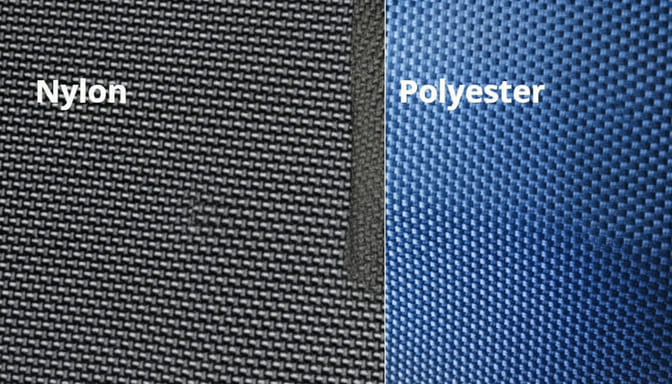
Nylon generally offers good tensile strength, abrasion resistance, and flexibility relative to its weight. It is commonly selected for outdoor and technical backpacks.
Polyester is often more economical, offers good color retention and UV resistance, and is widely used for school, promotional, and everyday backpacks.
Neither material is universally superior. The choice depends on the intended application, budget, and required performance.
3.2 Weave Construction
The weave affects how yarns interact under tension and abrasion.
- Plain weave: A relatively simple, stable structure for general-purpose applications.
- Oxford weave: A basket-style construction commonly used for backpack and luggage fabrics.
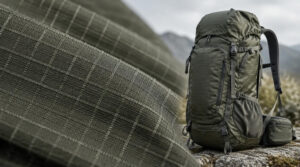
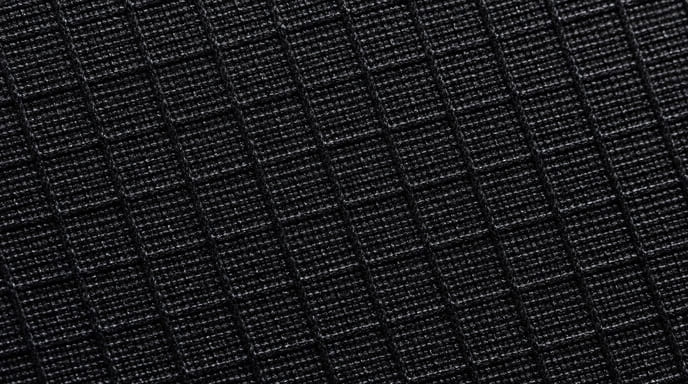
- Ripstop weave: Uses reinforcing yarns at regular intervals to help prevent small tears from spreading.
For lightweight outdoor backpacks, 210D–420D ripstop nylon can be worth considering. A reinforcement grid can improve resistance to tear propagation without requiring the entire fabric to use heavier yarns.
3.3 Fabric Density and GSM
GSM measures the mass of the finished fabric per square meter. It helps buyers compare the actual material weight rather than relying only on yarn specifications.
For illustration, some commercial backpack fabrics fall within these approximate ranges:
| Fabric specification | Indicative fabric weight |
|---|---|
| 210D | 60–110 GSM |
| 420D | 110–180 GSM |
| 600D | 180–240 GSM |
| 900D–1000D | 230–380 GSM |
These are indicative sourcing ranges, not fixed industry standards. Actual weight depends on fiber, yarn construction, weave density, and coating. Always request the supplier's actual fabric specification.
3.4 Coating and Finishing
Common backpack fabric finishes include:
- PU coating: Adds a protective layer and improves resistance to water penetration.
- PVC coating: Provides a heavier, more substantial protective layer, often used in demanding applications.
- DWR treatment: Reduces surface wetting but does not make the entire backpack waterproof.
A coated 600D fabric may offer better water resistance than an uncoated 1000D fabric. However, coating adhesion, flexibility, hydrostatic performance, and aging resistance should also be checked.
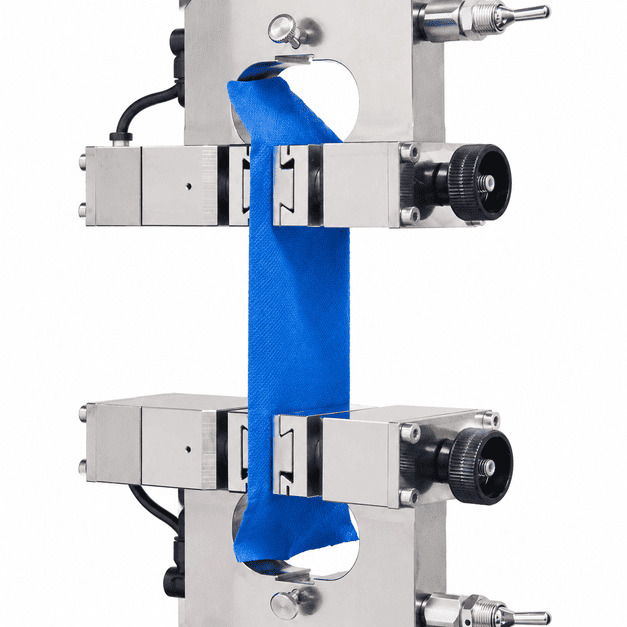
3.5 Actual Performance Testing
For bulk production, request test results instead of accepting denier as the only quality indicator.
| Test | What it evaluates |
|---|---|
| Tensile strength | Resistance to pulling forces |
| Tear strength | Resistance to the propagation of a tear |
| Abrasion resistance | Resistance to repeated surface friction |
| Colorfastness | Resistance to color transfer or fading |
| Coating adhesion | Whether the coating separates from the fabric |
| Water resistance | Resistance to water penetration |
ASTM D5034 is one example of a grab test method for textile tensile strength. ASTM D2261 evaluates fabric tear strength using a tongue procedure. The selected test method and acceptance criteria should be agreed upon before production.
4. Structural Reinforcement: Where Should a Backpack Use Stronger Materials?
Even a high-denier backpack can fail if its load-bearing structure is poorly designed.
When a backpack carries 8 kg, for example, the weight is not distributed evenly across its fabric. The shoulder strap attachments, bottom panel, handles, and seam intersections experience concentrated forces, particularly when the bag is lifted or dropped.
For this reason, reinforcement should be based on stress distribution rather than simply increasing the denier of the entire backpack.
Bottom Panel
The bottom panel experiences repeated friction from floors, concrete, vehicle compartments, and other surfaces.
For a backpack with a 300D–600D main body, consider:
- Using 600D–900D fabric for the bottom panel.
- Adding a second fabric layer in high-abrasion areas.
- Using a suitable backing or coating when easier cleaning and moisture resistance are required.
For heavy-duty products, 900D–1680D material may be appropriate, depending on the intended load and contact conditions.
Shoulder Strap Attachment Points
Shoulder strap connections are among the most important structural areas because they transfer the backpack's weight to the wearer's shoulders.
Recommended construction considerations include:
- Reinforcement patches behind strap attachment points.
- Box-X stitching or other suitable reinforced stitch patterns.
- Appropriate thread strength and stitch density.
- Sufficient attachment area to distribute the load.
A stronger fabric alone cannot prevent failure if the stitching or attachment geometry is inadequate.
Handles and Webbing Connections
Top handles and side compression straps experience concentrated pulling forces.
For these areas, consider reinforcing the fabric underneath the webbing and extending the reinforcement beyond the immediate stitching line. Bar-tack stitching can be used at selected high-stress points.
Zipper and Pocket Attachment Areas
Zippers are often sewn into relatively narrow fabric sections. Repeated opening, closing, and loading can place stress on these seams.
Reinforced zipper ends, appropriate seam allowances, and compatible lining materials help reduce localized failure.
The manufacturing principle: Use the main fabric for overall performance and targeted reinforcement for concentrated loads. This approach can reduce unnecessary material weight while improving structural reliability.
5. How to Specify Backpack Fabric When Requesting a Factory Quotation
A specification that only says "600D backpack fabric" leaves too much room for variation between suppliers.
For accurate quotations and consistent bulk production, provide the following information:
| Specification | Information to confirm |
|---|---|
| Fiber | Polyester, nylon, or recycled polyester |
| Denier | 210D, 420D, 600D, 1000D, etc. |
| Weave | Oxford, plain weave, ripstop |
| Fabric weight | GSM |
| Coating | Uncoated, PU, PVC, DWR |
| Color | Pantone reference or approved swatch |
| Performance | Tensile, tear, abrasion, colorfastness |
| Application | Main body, bottom, lining, reinforcement |
Also confirm whether the stated GSM includes the coating. This avoids comparing the weight of coated and uncoated fabrics as if they were equivalent.
For repeat orders, retain an approved fabric swatch and document the material specification. This makes it easier to identify differences between production batches.
6. Expert Manufacturer Analysis: How to Balance Fabric Cost, Weight, and Durability
From a bag manufacturer's perspective, the most practical solution is not necessarily to select the highest-denier fabric. It is to match the material to the product's expected service conditions and reinforce areas where loads are concentrated.
Consider three examples:
Example 1: A 600D Polyester Commuter Backpack
A 600D polyester main body, lighter polyester lining, reinforced shoulder strap connections, and a stronger bottom panel can provide a balanced construction for everyday use.
Example 2: A Lightweight Outdoor Backpack
A 210D–420D ripstop nylon body can help control product weight. Reinforced attachment points and abrasion-resistant bottom materials can address areas that experience greater stress.
Example 3: A Heavy-Duty Travel Backpack
A 900D–1000D main fabric may be appropriate when abrasion resistance and structural stability are priorities. However, using 1680D throughout the backpack may add unnecessary weight and cost. Selective reinforcement may be more efficient.
Before mass production, a manufacturer should evaluate the actual fabric samples, sewing performance, reinforcement construction, and finished-bag test results. Material specifications should be approved together with the product sample rather than independently.
This is particularly important for OEM and private-label projects, where the same backpack design may need to meet different price points and performance requirements.
7. Frequently Asked Questions
Is 600D Polyester Good for Backpacks?
Yes. 600D polyester is a common choice for school, commuter, promotional, and general-purpose backpacks. It offers a practical balance of material cost, weight, appearance, and durability. Its actual performance depends on weave density, yarn quality, coating, and construction.
Is 1000D Better Than 600D for Backpacks?
Not necessarily. 1000D generally uses heavier yarn and can provide greater abrasion resistance, but it also increases fabric weight and may make the backpack stiffer. For everyday backpacks, 600D may be sufficient. Higher denier is more relevant when the product faces demanding abrasion or handling conditions.
Is 300D Fabric Too Thin for a Backpack?
Not always. 300D polyester or nylon can be suitable for lightweight backpacks, promotional products, and less demanding applications. However, products carrying heavy contents should receive additional evaluation of tear strength, seam construction, and reinforcement.
What Is the Difference Between 600D Polyester and 600D Nylon?
Both use 600-denier yarn, but their fiber properties differ. Nylon generally offers better strength-to-weight and abrasion performance, while polyester often provides better UV color retention and lower material cost. The actual comparison should be based on tested fabric performance.
Does Higher GSM Mean Better Backpack Fabric?
No. Higher GSM means more fabric mass per square meter, not necessarily greater strength. A lighter high-tenacity nylon fabric may outperform a heavier fabric in certain tear or tensile tests. Compare GSM alongside tensile strength, tear strength, and abrasion resistance.
Conclusion: Choose Backpack Fabric Based on Use, Not Just Denier
For most everyday and commuter backpacks, 300D–600D polyester or nylon provides a useful starting point. Lightweight daypacks may use 70D–210D materials, while travel and heavy-duty products may require 600D–1000D or higher specifications.
The final decision should consider five factors: denier, fiber type, weave construction, fabric weight, and structural reinforcement.
If you are developing custom backpacks, choosing the right fabric specification at the beginning can help control product weight, material costs, and potential quality issues during bulk production.
Looking for a manufacturing partner for your custom backpack project?
Contact Jiarong Packaging to discuss your backpack design, fabric options, material specifications, printing requirements, and reinforcement details. Our team can help evaluate suitable materials based on your target application, order quantity, and budget.