Skip to content

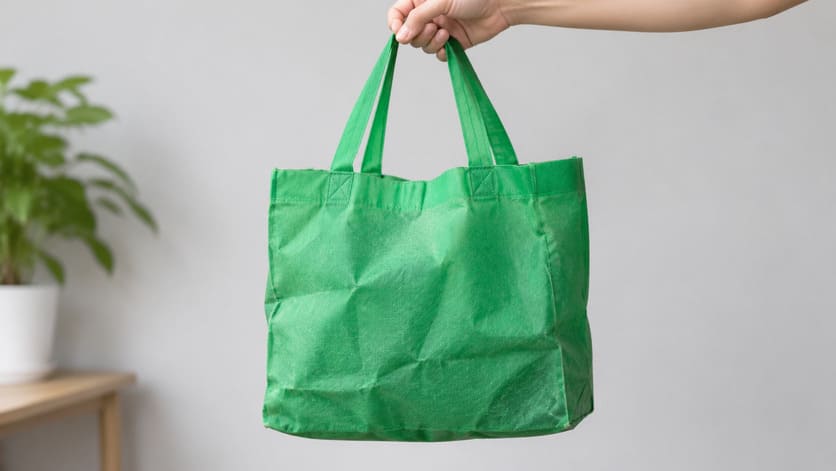
Non-woven bags can gradually lose strength after repeated use, even when they show no obvious damage during the first few uses. Handles may stretch, seams may loosen, the fabric may become thinner, and the bottom may eventually tear under load.
For wholesalers, retailers, importers and reusable bag buyers, the important question is not simply whether a non-woven bag is reusable. It is how long the bag can maintain its load-bearing performance under normal handling conditions.
Non-woven bag durability depends on several interacting factors: fiber bonding, fabric weight (GSM), polypropylene quality, handle and seam construction, repeated folding, abrasion, UV exposure and moisture or temperature conditions.
Understanding these factors helps buyers select the right specifications, estimate reusable bag lifespan and reduce complaints caused by premature damage.
1. Why Does Non-Woven Fabric Lose Strength Over Time?
Most conventional non-woven shopping bags are made from spunbond polypropylene (PP). Unlike woven fabric, which is formed by interlacing yarns, spunbond non-woven fabric is made by bonding continuous filaments together through heat and pressure.
This structure provides a relatively lightweight material, but its strength depends on both the filaments and the bonding points between them.
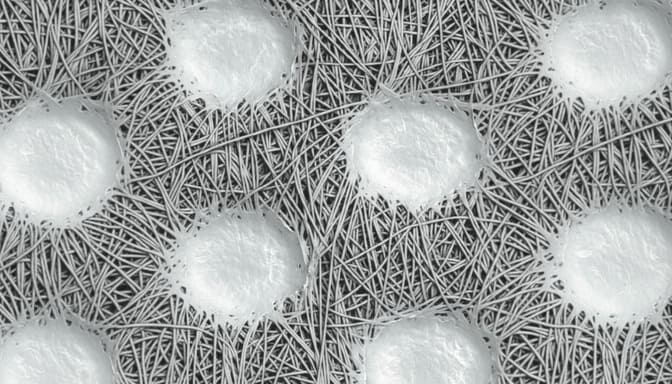
With repeated loading, bending and friction, the fabric structure can gradually deteriorate.
There are four main mechanisms:
- Fiber damage: Repeated friction and bending can weaken or break individual filaments.
- Bonding deterioration: Localized mechanical stress can damage the bonded structure, allowing fibers to separate.
- Permanent deformation: Repeated loading can stretch the material, particularly around handles and attachment points.
- Material aging: Heat, UV radiation and oxidation can gradually reduce polypropylene's mechanical performance.
An important distinction is that non-woven bags do not necessarily lose strength at the same rate everywhere. The handle roots, bottom corners, side folds and seams often experience more concentrated stress than the main fabric panels.
2. How Does GSM Affect Non-Woven Bag Strength and Durability?
GSM (grams per square meter) measures fabric weight per unit area. It is one of the first specifications buyers check when evaluating non-woven bag strength.
Generally, increasing GSM means more material is used per square meter, which can improve thickness, stiffness and resistance to certain types of damage. However, GSM alone cannot determine the actual load-bearing capacity.
Two non-woven fabrics with the same GSM may perform differently because of variations in fiber quality, filament distribution, bonding conditions and manufacturing consistency.
| Fabric weight | Common application | Durability considerations |
|---|---|---|
| 60–70 GSM | Lightweight promotional bags | Suitable for relatively light contents and occasional reuse |
| 80–90 GSM | Everyday shopping bags | A practical balance between material use and handling strength |
| 100–120 GSM | Reusable retail bags | More material for repeated handling and moderate loads |
| 130–150 GSM | Heavy-duty promotional or shopping bags | Greater fabric substance, but construction still determines performance |
These are indicative purchasing ranges, not standardized load ratings. A 100 GSM bag is not automatically capable of carrying a specific weight without testing.
For buyers comparing suppliers, it is also important to distinguish between fabric weight and finished-bag performance. A heavier fabric cannot compensate for poorly designed handles or weak attachment points.
3. How Repeated Folding and Abrasion Damage Non-Woven Bags
Repeated folding is one of the most overlooked causes of non-woven bag deterioration.

When a bag is folded along the same lines, the fibers in those areas experience repeated bending and localized stress. Over time, this can cause:
- Surface fibers to become rough or loosen.
- Fold lines to develop visible creases.
- Localized thinning or small holes.
- Reduced resistance to tearing around corners and edges.
Abrasion creates another problem. When a bag repeatedly rubs against shopping carts, rough shelves, vehicle floors or other bags, its surface fibers gradually wear down.
The risk increases when the bag carries heavy or irregularly shaped products. Sharp corners, metal components and rigid packaging can concentrate pressure on relatively small areas.
Practical example: A reusable shopping bag carrying 8 kg of groceries may experience more localized damage if several rigid cartons press against one bottom corner than if the same weight is distributed evenly.
This is why repeated-use performance cannot be evaluated by weight capacity alone. Folding resistance, abrasion resistance and load distribution also matter.
4. Does Sunlight and Temperature Exposure Reduce Non-Woven Bag Lifespan?
Yes. Polypropylene is susceptible to environmental aging, particularly prolonged exposure to ultraviolet (UV) radiation and elevated temperatures.
UV radiation can trigger photo-oxidation in polypropylene. This process changes the polymer structure and can gradually reduce elongation and tensile performance, making the material more brittle.
Heat can accelerate oxidation and other aging reactions, particularly when exposure is prolonged.
However, there is no universal lifespan that applies to all non-woven bags. The rate of degradation depends on:
- UV exposure intensity and duration.
- Ambient and storage temperature.
- Polypropylene resin quality.
- Stabilizer and UV-additive formulation.
- Fabric thickness and manufacturing conditions.
For example, a bag stored indoors between uses may experience considerably less UV exposure than one left in direct sunlight for weeks.
Moisture is generally less damaging to polypropylene itself than UV exposure because PP has low water absorption. However, prolonged damp storage can contribute to odor, contamination and deterioration of printed or laminated components.
For buyers sourcing outdoor promotional bags or reusable shopping bags, UV stabilization may be worth discussing with the manufacturer. It should be specified and verified rather than assumed from the fabric's appearance.
5. Why Do Handles and Seams Often Fail Before the Fabric?
In many non-woven bags, the first failure does not occur in the main fabric panel. It occurs at the handles, seams or bottom corners.
This is because these areas experience concentrated mechanical stress during lifting and carrying.
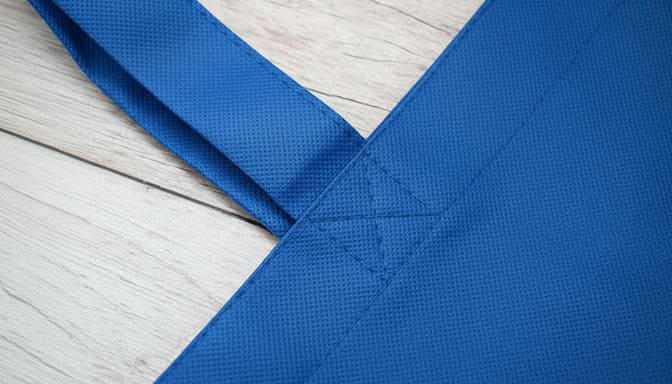
Three common problems deserve attention:
- Handle attachment stress
When a bag carries groceries, the load is transferred through the handles to relatively small attachment areas. Repeated lifting increases stress around these points, potentially causing the material to stretch or tear.
- Seam weakening
Ultrasonic welding and stitching both create potential failure points if the production parameters or construction are unsuitable.
For ultrasonic non-woven bags, insufficient bonding can result in weak joints. Excessive heat or pressure can also damage the fabric locally.
- Bottom corner deformation
Heavy or unevenly distributed contents place additional pressure on the bottom panel and side folds. Repeated loading can cause permanent deformation and eventually tearing.
A useful reference is Kenya's DARS 1600:2024 specification for non-woven bags. It includes the following minimum requirements:
| Test characteristic | Specified requirement |
|---|---|
| Fabric breaking strength, MD | 220 N |
| Fabric breaking strength, CD | 140 N |
| Seam strength | 50 N |
| Handle strength | 90 N |
| Tear resistance, MD | 100 N |
| Tear resistance, CD | 80 N |
| Abrasion resistance | 10,000 cycles |
These values demonstrate why fabric strength, handle strength and seam strength should be evaluated separately. They are requirements from a particular national specification, not universal ratings for every non-woven shopping bag.
6. How Long Do Reusable Non-Woven Bags Last?
There is no scientifically reliable universal lifespan for non-woven shopping bags.
A bag used occasionally for lightweight shopping may remain functional much longer than one used daily for heavy groceries. Storage conditions and construction quality also influence its service life.
Instead of assigning an arbitrary number of months or uses, buyers should evaluate durability through measurable performance indicators.
| Usage condition | Main durability concern | Recommended consideration |
|---|---|---|
| Occasional shopping | Handle stretching | Appropriate GSM and handle construction |
| Frequent grocery shopping | Repeated loading and abrasion | Stronger fabric and reinforced stress points |
| Heavy shopping | Bottom and seam failure | Load distribution and bottom reinforcement |
| Outdoor promotional use | UV aging | UV-stabilized material where appropriate |
| Frequent folding and storage | Creasing and surface wear | Fabric flexibility and folding resistance |
For buyers, the more useful question is:
How many repeated-use cycles can the bag withstand before its performance falls below the required level?
This can be established through product-specific testing rather than relying on a general lifespan estimate.
7. How Can Buyers Test Non-Woven Bag Durability Before Bulk Ordering?
A visual inspection is not enough to determine whether a bag can withstand repeated use.
For wholesale orders, importers and retail packaging buyers, several tests can provide more objective information.
| Test | What it evaluates | Relevant method |
|---|---|---|
| Fabric weight | Material consistency | ISO 9073-1 |
| Fabric tensile strength | Resistance to pulling | ISO 9073-18 |
| Tear resistance | Resistance to tear propagation | ISO 9073-4 |
| Abrasion resistance | Surface wear | ISO 12947-2 |
| Seam strength | Joint performance | ISO 9073-18 |
| Puncture resistance | Resistance to localized penetration | ISO 9073-5 |
These methods are referenced in the DARS 1600:2024 non-woven bag specification.
In addition to standardized material tests, buyers can request repeated-use evaluations of the finished bag.
A practical internal evaluation procedure could include:
- Record the bag's GSM, dimensions, handle width and construction.
- Apply a defined test load, such as 5 kg or 10 kg, according to the intended application.
- Lift and lower the loaded bag repeatedly under controlled conditions.
- Inspect the handle roots, seams and bottom corners at defined intervals.
- Record stretching, visible damage, deformation and any joint failure.
- Repeat the test using multiple samples from the production batch.
The 5 kg and 10 kg values are suggested test loads, not universal capacity ratings. The actual load and number of cycles should be agreed upon according to the intended use.
8. Expert Manufacturer Analysis: What Actually Determines Non-Woven Bag Durability?
From a manufacturing perspective, improving non-woven bag durability is not simply a matter of increasing fabric weight.
A well-designed 80 GSM bag may perform better in a particular application than a poorly constructed 100 GSM bag.
There are four areas manufacturers should evaluate together.
Material selection: Consistent polypropylene quality, appropriate fiber distribution and uniform fabric bonding provide the foundation for mechanical performance.
Fabric specifications: GSM should match the intended load and frequency of use. Buyers should also consider tensile strength in both machine direction (MD) and cross direction (CD), because fabric performance can differ depending on the pulling direction.
Structural design: Handle width, attachment area, bottom construction and seam strength influence how loads are distributed. Reinforcement should focus on areas where stress is concentrated rather than adding material indiscriminately.
Production consistency: Ultrasonic welding parameters, cutting accuracy and dimensional consistency all affect finished-bag quality. A strong fabric cannot compensate for inconsistent joining or poorly positioned handles.
For custom non-woven bag orders, manufacturers should evaluate the complete bag structure rather than recommending specifications based on GSM alone.
This approach also helps buyers avoid unnecessary material costs while maintaining the performance required for their target market.
9. How to Extend the Lifespan of Non-Woven Bags
Although material aging cannot be completely prevented, appropriate handling can reduce unnecessary damage.
For end users and retailers:
- Avoid carrying loads beyond the bag's intended capacity.
- Distribute heavy products evenly across the bottom.
- Avoid placing sharp or irregular objects directly against the fabric.
- Do not repeatedly fold the bag along the same crease when alternative storage is possible.
- Keep bags away from prolonged direct sunlight and excessive heat.
- Clean and dry bags before storing them, following the material and printing care requirements.
For wholesale buyers and packaging purchasers, the most effective approach starts earlier: specify the intended application, select suitable GSM, evaluate handle and seam construction, and establish acceptance criteria before mass production.
Frequently Asked Questions
Does higher GSM always mean a stronger non-woven bag?
No. Higher GSM generally indicates more material per unit area, but actual strength also depends on polypropylene quality, fiber bonding, fabric uniformity and bag construction. Tensile, tear and finished-bag load tests provide more meaningful comparisons.
Can non-woven bags lose strength even when they are not being used?
Yes. Polypropylene can undergo oxidative and UV-related aging during storage, particularly under prolonged exposure to sunlight and elevated temperatures. Proper storage can slow deterioration.
Are laminated non-woven bags more durable?
Lamination can improve surface protection against splashes, moisture and certain types of abrasion. However, it does not automatically increase handle strength, seam strength or tear resistance. These properties depend on the underlying fabric and finished-bag construction.
How many times can a non-woven bag be reused?
There is no fixed number applicable to all non-woven bags. Reuse frequency depends on fabric specifications, load, construction, handling and environmental exposure. Buyers should request repeated-load and structural durability tests when a specific reuse target is required.
What GSM is suitable for reusable shopping bags?
For many everyday reusable shopping bags, 80–120 GSM is a reasonable starting range for evaluation. Lightweight promotional bags may use lower GSM, while heavier applications may require thicker fabric and additional structural reinforcement. Final specifications should be determined through testing.
Conclusion: Choose Non-Woven Bags Based on Tested Durability, Not GSM Alone
Non-woven bags gradually lose strength through a combination of mechanical wear, repeated folding, material aging and concentrated stress around handles and seams.
For buyers, the key is to look beyond initial appearance and fabric weight. Material consistency, tensile strength, abrasion resistance, handle construction and production quality all contribute to the actual reusable bag lifespan.
If you are sourcing custom non-woven shopping bags for retail, promotional campaigns or wholesale distribution, Zhejiang Jiarong Packaging can help evaluate fabric GSM, bag construction, printing and production requirements according to your application.
Contact our manufacturing team to discuss your custom non-woven bag specifications and request a factory-direct quotation.