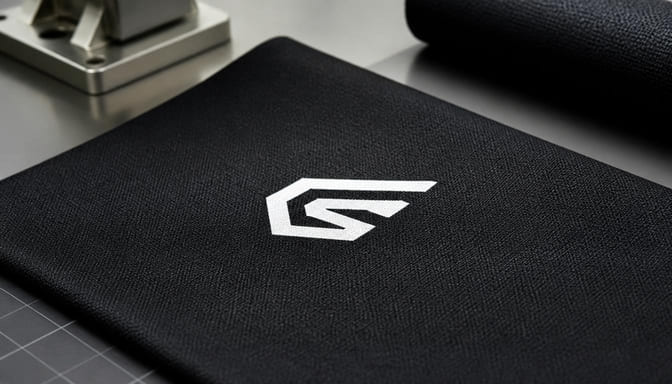
Yes. Nylon fabric can be printed with logos using screen printing, heat transfer, digital printing and other processes. However, the best method depends on the nylon's surface structure, fabric color, coating, intended use and production requirements.
For bag manufacturers, wholesalers and brand buyers, the main concern is not simply whether a logo can be printed. It is whether the logo will maintain its color, adhesion, clarity and appearance after repeated handling, folding and friction.
A printing method that works well on uncoated nylon may fail on PU-coated or water-repellent fabric. Before confirming a bulk order, buyers should evaluate ink compatibility, heat resistance, rubbing fastness and color consistency across production batches.
1. Which Printing Methods Can Be Used on Nylon Fabric?
Nylon is a synthetic fiber with a relatively smooth surface and low moisture absorption. These characteristics make printing possible, but they also mean that ordinary textile inks do not necessarily adhere well to every nylon fabric.
The following methods are commonly considered for custom nylon bags.
Screen Printing
Screen printing transfers ink through a mesh screen onto the fabric. A separate screen is generally required for each color.
It is particularly suitable for logos with solid colors, simple graphics and clearly defined shapes.
Advantages:
- Suitable for medium and large production quantities.
- Can produce relatively opaque colors with appropriate ink systems.
- Works well for simple logos and text.
- Unit printing costs can become more economical as quantities increase.
Limitations:
- Fine gradients and photographic details are more difficult to reproduce.
- Multiple colors require additional setup and registration.
- Ink compatibility must be confirmed for coated nylon.
For nylon bags, buyers should confirm that the ink is specifically formulated for synthetic fabrics or the relevant coated substrate. A nylon-compatible ink system and suitable pretreatment may be necessary to achieve reliable adhesion.
Heat Transfer Printing
Heat transfer printing applies a pre-produced graphic to the fabric using heat and pressure. Depending on the process, the graphic may be printed onto transfer paper or film before being transferred to the nylon.
It is suitable for multicolor logos, fine details and designs that are difficult to reproduce through conventional screen printing.
Advantages:
- Supports detailed graphics and multiple colors.
- Offers consistent reproduction when transfer materials and settings are controlled.
- Suitable for customized logos and relatively small production runs.
Limitations:
- Excessive heat can deform nylon or damage surface coatings.
- Insufficient temperature or pressure may cause incomplete bonding.
- Some transfer films can feel thicker or less flexible than direct printing.
Nylon has a relatively low melting temperature compared with some other synthetic fibers. Depending on the nylon grade and construction, melting temperatures are commonly around 210–265°C. This is not a recommended transfer temperature: actual processing conditions must be substantially lower and determined by the fabric and transfer material specifications.
Digital Printing
Digital printing applies designs directly to the fabric using specialized printing equipment and compatible ink systems.
It is useful when the artwork contains gradients, intricate details, photographs or multiple colors.
However, digital printing is not a universal solution for nylon. Some processes require pretreatment, specialized inks or particular fabric surfaces. Coated nylon may need a different process from untreated nylon.
Buyers should confirm:
- Whether the printer supports nylon.
- Whether the ink is compatible with the fabric coating.
- Whether pretreatment is required.
- Whether the print maintains its appearance after rubbing and handling.
Other Printing Options
| Method | Suitable applications | Main consideration |
|---|---|---|
| Screen printing | Simple logos, solid colors | Ink adhesion and color registration |
| Heat transfer | Multicolor logos, detailed graphics | Temperature and bonding strength |
| Digital printing | Complex patterns and gradients | Ink and substrate compatibility |
| Sublimation | Specialized polyester-based materials | Conventional nylon is generally not an ideal substrate |
| Embroidery | Text and decorative logos | Needle penetration, fabric distortion and added weight |
One important distinction is sublimation printing. It works particularly well with polyester because the dye can bond with the polyester fiber under heat. Conventional nylon does not offer the same predictable results, so sublimation should not be assumed suitable without material-specific testing.
2. What Factors Affect Logo Printing Quality on Nylon?
Choosing the printing method is only the first step. Even when the same logo and printing process are used, different nylon fabrics can produce noticeably different results.
Four factors deserve particular attention before bulk production.
2.1 Fabric Color and Logo Contrast
The original fabric color directly affects the final appearance of a printed logo.
- White and light-colored nylon: Generally easier to reproduce bright colors and fine details.
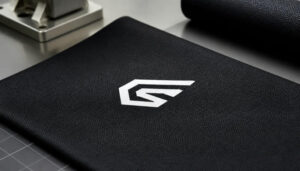
- Black and dark-colored nylon: May require an opaque white underbase before applying lighter colors.
- Colored nylon: The background may influence the appearance of the printed ink, especially when the ink is not fully opaque.
For example, printing a light blue logo directly onto black nylon may produce a darker, less vivid result than the approved artwork.
For consistent results, buyers should approve a physical print sample using the actual fabric color rather than relying exclusively on a digital mockup.
2.2 Nylon Coatings and Surface Treatments
Nylon bags are often made from untreated fabric, PU-coated nylon, PVC-coated nylon or water-repellent nylon.
These surface differences can significantly affect printing.
| Nylon surface | Printing consideration |
|---|---|
| Uncoated nylon | Usually offers more flexibility in ink selection |
| PU-coated nylon | Requires checking ink compatibility with the coating |
| PVC-coated nylon | Requires an ink or transfer system suitable for PVC surfaces |
| Water-repellent nylon | Surface treatment may prevent ink from bonding properly |
| Silicone-treated nylon | Can be particularly difficult for conventional inks and transfer adhesives |
Water-repellent treatments are especially important. They reduce surface wetting and can interfere with ink adhesion.
A simple preliminary check is to place a small water droplet on the fabric. If water spreads or penetrates, the surface may be more receptive than a fabric on which water beads and rolls away.
However, this is only a screening method. It cannot identify every coating or confirm printing compatibility.
Some screen-printing ink systems require a nylon-specific catalyst or adhesion promoter. The correct formulation depends on the ink manufacturer's instructions and the fabric treatment.
2.3 Ink Adhesion and Curing Conditions
Ink adhesion determines whether a logo remains attached to the fabric during use.
Common problems include:
- Logo peeling at the edges.
- Ink cracking when the bag is folded.
- Printed areas becoming detached after repeated friction.
- Ink transferring onto other surfaces.
- Uneven adhesion between different sections of the same fabric.
For screen printing, curing is particularly important. The ink must reach the manufacturer's specified curing conditions, but the nylon itself must not be exposed to excessive heat.
For example, one specialized nylon screen-printing system specifies an ink-film curing temperature of approximately 149–163°C. This is a product-specific requirement, not a universal setting for nylon printing.
Heat transfer also requires material-specific settings. One manufacturer's nylon-compatible transfer film specifies 150°C for 8 seconds, followed by a further 10-second pressing step. Another product designed for nylon uses 165°C for 15 seconds.
These differences demonstrate why copying a temperature setting from another transfer material can lead to poor results.
2.4 Fabric Texture and Logo Position
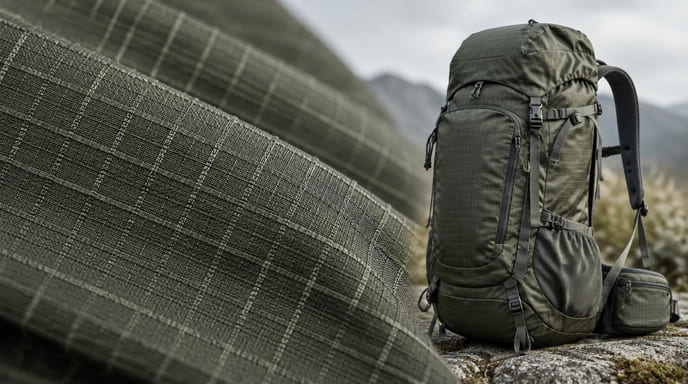
Nylon is available in different constructions, including plain weave, ripstop and heavier Oxford fabrics.
Their surface structures influence print clarity and uniformity.
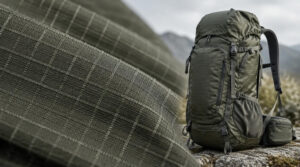
A smooth nylon surface generally provides a more uniform printing area. Ripstop nylon has a visible reinforcement grid, which may make fine lines or small text appear less uniform.
Logo position also matters. Printing across seams, folds, reinforced panels or heavily curved bag surfaces can create uneven pressure and inconsistent transfer.
For better production consistency, the logo should ideally be positioned on a flat, accessible fabric panel with sufficient space around the design.
3. How to Evaluate Logo Durability Before Bulk Ordering
A logo may look excellent immediately after printing but deteriorate after repeated use. For wholesalers, distributors and brand owners, appearance at delivery is not enough.
Three quality checks are particularly useful.
3.1 Rubbing Fastness Test
Rubbing fastness measures how well a printed or dyed surface resists color transfer when rubbed against another material.
The internationally recognized test method is ISO 105-X12:2016, which covers both dry and wet rubbing tests for textiles, including printed fabrics.
A practical purchasing specification might use the following targets:
| Test | Suggested target for discussion |
|---|---|
| Dry rubbing fastness | Grade 4 or above |
| Wet rubbing fastness | Grade 3–4 or above |
| Test method | ISO 105-X12 |
| Test condition | Dry and wet rubbing |
These are suggested buyer acceptance targets, not mandatory ISO pass requirements. The appropriate level depends on the bag's intended use, exposure to moisture and price positioning.
A grade of 4 generally indicates limited staining, while grade 5 represents the highest level on the standard grey scale for assessing staining.
3.2 Adhesion and Folding Tests
Rubbing tests alone cannot establish whether the ink is firmly bonded to the fabric.
Additional checks should include:
- Adhesion check: Examine whether the printed layer peels or separates when subjected to an agreed adhesion test.
- Folding test: Fold and unfold the printed area repeatedly to check for cracking.
- Scratch check: Apply controlled scratching to identify weakly bonded ink.
- Handling test: Check whether the logo changes appearance after repeated contact.
For a preliminary factory evaluation, buyers can agree on 20–50 folding cycles as an internal screening target. This is not a standardized universal requirement; the final test conditions should reflect the actual bag design and usage.
3.3 Color Consistency Between Production Batches
Color variation is another common concern in customized nylon bags.
A logo may match the approved sample but appear slightly different when produced in another batch.
Possible causes include:
- Different ink formulations or ink batches.
- Variations in fabric base color.
- Different coating thicknesses.
- Changes in printing pressure or curing conditions.
- Differences in transfer film or production settings.
For measurable color control, buyers can use the CIE L*a*b* color system and ΔE00 color difference.
A practical contractual target could be:
- ΔE00 ≤ 1.5: A relatively tight color-matching target.
- ΔE00 ≤ 2.0: A commonly useful target for controlled production.
- ΔE00 above 3.0: Differences may become more noticeable, depending on the color and viewing conditions.
These are proposed commercial tolerances, not universal printing standards. The buyer and manufacturer should agree on the reference sample, measurement instrument, measurement location and acceptable tolerance before production.
For branded bags, retaining an approved physical sample and using the same reference throughout production is particularly important.
4. Which Printing Method Should Buyers Choose?
There is no single printing process suitable for every nylon bag. The decision should consider the logo design, order quantity, fabric treatment and expected durability.
| Purchasing requirement | Method worth considering | Main reason |
|---|---|---|
| Simple one- or two-color logo | Screen printing | Suitable for repeat production |
| Detailed multicolor logo | Heat transfer | Supports complex graphics |
| Photographic design | Compatible digital printing | Reproduces detailed artwork |
| Small logo on specialized coated nylon | Nylon-compatible transfer | Can suit difficult surfaces |
| Decorative raised logo | Embroidery | Adds texture without relying on printed ink |
Before making a final decision, buyers should answer three questions:
- Is the nylon fabric coated or water-repellent?
- Does the logo contain solid colors, fine lines, gradients or photographs?
- Will the bag experience frequent folding, friction or exposure to moisture?
These answers help narrow down the appropriate printing process and avoid unnecessary production trials.
5. Expert Manufacturer Analysis: How to Reduce Printing Problems in Bulk Production
From a bag manufacturer's perspective, printing quality should be controlled as part of the entire production process rather than treated as an independent finishing step.
A common sourcing mistake is to approve a logo on a fabric swatch and assume the same result will automatically be achieved on finished bags.
In practice, fabric tension, coating differences, printing position, heat exposure and production settings can all affect the final result.
For custom nylon bags, a more reliable production process involves five steps:
- Confirm the fabric specification: Identify the nylon composition, fabric construction, GSM, coating type and water-repellent treatment.
- Review the logo artwork: Check the number of colors, minimum line thickness, text size and printing position.
- Produce a physical sample: Use the actual nylon material and intended printing method rather than a substitute fabric.
- Conduct performance tests: Evaluate adhesion, dry and wet rubbing fastness, folding resistance and color appearance.
- Control bulk production: Retain the approved sample as a reference and monitor printing conditions and color consistency throughout the production run.
For example, if a customer orders 5,000 nylon shopping bags with a two-color logo, the factory should confirm the printing process and approve a physical sample before proceeding with all 5,000 pieces.
If the production uses multiple fabric batches, comparing their base colors and surface treatments is also important. Otherwise, even identical printing settings may produce different visual results.
The goal is not necessarily to select the most expensive printing process, but to find a suitable balance between logo appearance, durability, production quantity and cost.
6. Frequently Asked Questions About Printing Logos on Nylon
Can nylon bags be screen printed?
Yes. Screen printing is suitable for many nylon bags, particularly those with simple, solid-color logos. However, nylon-specific inks or adhesion promoters may be necessary, especially when the fabric has a water-repellent coating.
Can heat transfer printing be used on coated nylon?
Yes, some transfer films are specifically developed for coated nylon. However, compatibility depends on the coating composition, transfer adhesive and heat resistance of the fabric. A physical application test is necessary before bulk production.
Does nylon printing fade or peel easily?
Not necessarily. Properly selected inks, compatible transfer materials and controlled curing conditions can produce durable logos. Poor adhesion, unsuitable ink and excessive friction are common reasons for peeling or deterioration.
Is sublimation printing suitable for nylon bags?
Conventional nylon is generally less suitable for standard sublimation printing than polyester. Specialized treatments and processes may make certain nylon applications possible, but compatibility and color fastness need to be verified.
What information should I provide when requesting a nylon bag printing quotation?
Ideally, provide the following:
- Nylon fabric type and coating requirements.
- Bag dimensions and estimated GSM.
- Logo artwork in AI, PDF or high-resolution format.
- Logo dimensions and number of colors.
- Estimated order quantity.
- Expected usage conditions and durability requirements.
This information helps the manufacturer evaluate the printing process, sample requirements and production costs more accurately.
Final Thoughts: Get the Printing Process Right Before Bulk Production
Printing a logo on nylon fabric is technically feasible, but achieving consistent results requires more than selecting a printing method.
Fabric coatings, ink compatibility, curing conditions, rubbing fastness and batch color differences all influence the final product. For wholesale and custom bag orders, approving a sample made from the actual production material is one of the most effective ways to reduce quality risks.
At Jiarong Packaging, we work with different materials and printing processes for custom bags, including nylon, non-woven and laminated fabrics. Our manufacturing team can evaluate fabric specifications, logo artwork and production requirements to help identify a suitable printing solution.
Planning a custom nylon bag order? Send us your bag design, logo artwork and estimated quantity. Contact Jiarong Packaging through WhatsApp at +86 152 6771 9222 to discuss material selection, printing options and a production quotation.