Choosing shopping bags for a supermarket or grocery store involves more than selecting a material and asking for a quotation. The bag needs to match the store's typical shopping load, product mix, bag size, expected reuse and target cost. A bag that works well for lightweight convenience purchases may be unsuitable for bottled drinks or heavy grocery loads, even if both are sold in the same store.
For retailers and packaging buyers, the practical question is therefore not simply which shopping bag material is best, but what bag specification provides enough performance for the actual shopping conditions without adding unnecessary cost.
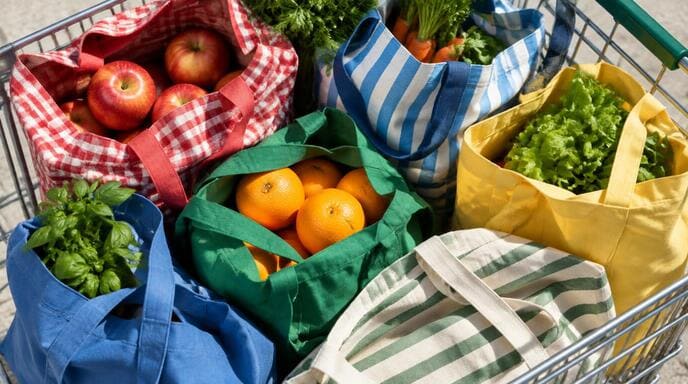
Start With the Shopping Load, Not the Material
The most useful starting point is the amount and type of products customers normally put into the bag. A supermarket bag may carry only 1–3 kg of lightweight packaged goods during a small purchase, while a larger grocery order containing cans, bottles and household products can easily reach 5–10 kg or more.
This difference should determine the basic specification.
| Typical application | Approx. target load | Typical specification direction |
|---|---|---|
| Small convenience purchase | 1–3 kg | Lightweight bag |
| General grocery shopping | 3–7 kg | Medium-weight reusable bag |
| Heavy grocery shopping | 7–10 kg | Higher-strength construction |
| Heavy reusable shopping | 10–15+ kg | Reinforced or woven construction |
These are practical design ranges rather than universal load limits. Actual performance depends on the material, GSM, dimensions, handle attachment, bottom construction and how the load is distributed.
For example, a 5 kg load produces approximately 49 N of downward force under static conditions. If two handles share the load perfectly, each handle would theoretically carry about 24.5 N. Real shopping conditions are less uniform. A customer may carry the bag with one hand, place several heavy products on one side, or swing the bag while walking. These movements can create higher local stress around the handles than a simple static calculation suggests.
This is why the target load should be established before selecting the material. If the store normally needs a 5–7 kg bag, there is little reason to automatically specify a construction designed for 15 kg. Conversely, a lightweight bag should not be expected to perform like a heavy-duty reusable bag simply because its handles have been reinforced.
Choose Material and Construction Together
Once the target load is clear, material selection becomes much easier. Non-woven PP, PP woven, paper and cotton or canvas all have different combinations of strength, cost, appearance and reuse potential.
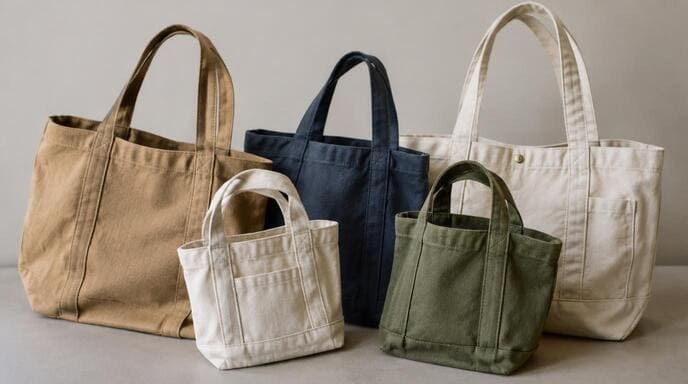
Non-woven PP is commonly used for reusable supermarket and grocery bags because it provides a balance between material cost, printing capability and practical strength. Different GSM levels can be selected according to the required load and construction. PP woven bags are more suitable when repeated heavy use is a priority, while paper bags remain common where the store wants a paper-based retail presentation. Cotton and canvas are generally positioned toward longer-term reusable or premium applications where a higher unit cost is acceptable.
However, material alone does not determine the finished bag's performance. Consider two non-woven bags: one may use 100 GSM material with a reinforced handle and suitable bottom structure, while another may use 120 GSM material but have a weak handle attachment. The second bag is heavier on paper but may still experience handle failure under concentrated loads.
The same principle applies to GSM. GSM describes the mass of material per square metre; it does not directly represent the finished bag's maximum carrying capacity. A higher GSM generally provides more material mass and can contribute to higher strength, but the relationship is not one-to-one.
For example, a 10 × 10 cm non-woven sample weighing 1.8 g corresponds to approximately 180 GSM:
1.8 g × 10,000 ÷ 100 cm² = 180 g/m²
For a supermarket buyer, the more useful specification is therefore something like 90 GSM non-woven PP + reinforced handle + 7 kg target load, rather than simply asking for a “strong non-woven bag.”
Size, Handle and Bottom Design Affect the Real Carrying Capacity
Bag dimensions should be selected according to the volume and shape of the products being carried. A bag that is too small encourages overloading, while an unnecessarily large bag consumes additional material and increases production and shipping volume.
The gusset is particularly useful for grocery applications because it increases usable volume without requiring the front panel to become excessively wide. A bag measuring 40 × 45 cm with a 10 cm gusset, for example, provides a substantially different usable volume from a flat 40 × 45 cm bag.
The bottom also affects how the load is distributed. Bottles, cans and boxed products can create concentrated pressure at the bottom of the bag, so a suitable bottom structure can be important when the store frequently handles these products.
The handles are another critical part of the load path. The weight of the contents ultimately transfers through the handle attachment area, which is much smaller than the total surface area of the bag. If the body is sufficiently strong but the handle attachment is weak, the bag can still fail.
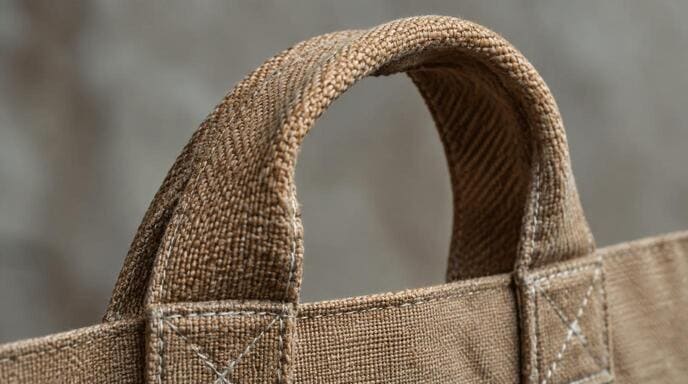
For this reason, handle width, reinforcement area, attachment method and the material around the attachment point should be considered together with the target load. Reinforcing the handle can improve performance, but reinforcement cannot compensate indefinitely for an excessively thin bag body. Likewise, simply increasing GSM does not solve a poorly designed handle attachment.
The objective is to create a balanced load-bearing structure rather than making one part of the bag unnecessarily strong.
Match the Bag to the Store's Actual Shopping Pattern
A supermarket does not necessarily need one bag specification for every transaction. A convenience-oriented store may primarily handle small purchases, while a full-size grocery store may need bags capable of carrying substantially heavier combinations of food and household products.
For example, a lightweight bag can be appropriate when most purchases consist of bread, snacks and small packaged goods. A medium-weight non-woven PP bag is more suitable when customers commonly carry several kilograms of groceries. If bottled drinks, canned food and other concentrated loads are common, a higher-strength construction with a suitable gusset and reinforced handles becomes more relevant.
The expected number of uses should also be considered. A bag intended for one or a few uses does not necessarily justify the same material specification as a reusable bag expected to survive repeated shopping trips.
This distinction is important when comparing prices. A $0.18 bag and a $0.22 bag differ by only $0.04 per unit, but across an order of 100,000 bags the difference becomes $4,000. Whether that additional cost is worthwhile depends on the actual performance requirement.
If the cheaper specification frequently fails under normal shopping loads, the apparent unit-price saving may not represent a lower overall cost. On the other hand, if customers typically carry only 2–3 kg, specifying a heavy-duty construction may add cost without providing meaningful value.
The target should therefore be sufficient performance for the intended use, rather than maximum possible strength.
Test the Finished Bag Before Large-Volume Production
A bag should not be judged by material thickness or appearance alone. The finished product needs to be evaluated because the material, handle attachment, seams, gusset and bottom structure work together.
EN 13590 provides a standardized framework for flexible carrier bags with handles and covers characteristics including bag volume and carrying capacity. The 2003 version specifies type testing using at least 100 bags produced under normal industrial conditions and defines testing procedures for evaluating carrier-bag performance.
For a supermarket or grocery-store purchasing program, sample testing should focus on the actual conditions expected during use. The bag can be evaluated at the intended target load, with particular attention paid to handle attachment, bottom deformation and any tearing around concentrated stress points.
The distinction between material strength and finished-bag performance is important. A material certificate or GSM specification alone does not establish how the complete shopping bag will perform.
Build the Purchasing Specification Around the Required Performance
Once the target load, shopping pattern and material have been established, the buyer can turn them into a clear production specification.
For example:
| Specification | Example |
|---|---|
| Application | Supermarket grocery shopping |
| Bag size | 40 × 45 × 10 cm |
| Material | Non-woven PP |
| GSM | 90–100 GSM |
| Target load | 7 kg |
| Handle | Reinforced |
| Bottom | Gusseted |
| Printing | 2 sides |
| Quantity | 100,000 pcs |
| Use | Reusable |
| Testing | Load test before mass production |
This type of specification is much more useful than simply requesting “reusable grocery bags” because it gives the manufacturer the information needed to recommend the construction and quote the product accurately.
It also makes supplier comparisons more meaningful. If one supplier quotes a 70 GSM bag and another quotes a 100 GSM reinforced bag, the prices cannot be compared fairly unless the construction and target performance are the same.
For larger retail programs, buyers should also confirm sample approval, production consistency, packaging method, delivery requirements and any required testing before placing the full order.
What Is the Right Shopping Bag for a Supermarket?
There is no universal shopping bag specification for every supermarket or grocery store. The appropriate construction depends on the store's products, typical shopping weight, bag size, reuse expectations and cost target.
A practical selection process is to determine the target load first, select the required bag volume second, then choose the material and GSM together with the handle and bottom structure. After that, test the finished bag under the expected load before moving to large-volume production.
For many general grocery applications, a reusable non-woven PP bag can provide a practical balance between cost, printability and carrying performance. Heavier shopping patterns may require stronger non-woven, PP woven or other reinforced constructions, while paper and canvas can be selected when the store's retail presentation or reuse requirements justify them.
The key is not to make the bag as strong or as heavy as possible. It is to specify enough material and structural strength for the actual shopping conditions.
FAQ
How do I choose the right shopping bag for a supermarket?
Start with the typical customer load and product mix. Then determine the required bag size, material, GSM, handle construction and bottom structure. The finished bag should be sampled and tested before mass production.
What GSM is suitable for reusable grocery bags?
There is no single correct GSM. The required GSM depends on the target load and construction. A medium-GSM bag with proper handle reinforcement can be more suitable than a heavier bag with a weak structure.
How much weight should a supermarket shopping bag carry?
The required load depends on the store. General grocery applications may target around 3–7 kg, while heavy reusable bags may be designed for 10–15 kg or more. These figures are design ranges rather than universal safety limits.
Why do grocery bags tear at the handles?
The handles transfer most of the bag's load through a relatively small attachment area. Uneven loading, concentrated weight, repeated use and insufficient reinforcement can increase stress at this point.
Is a thicker shopping bag always stronger?
No. Higher GSM can contribute to higher material strength, but finished-bag performance also depends on handle attachment, bottom construction, seams, dimensions and load distribution.
Should supermarket shopping bags be load tested?
For reusable or heavy-load applications, testing the finished bag is strongly recommended. Standardized methods such as EN 13590 can provide a consistent framework for evaluating flexible carrier bags with handles.