Skip to content
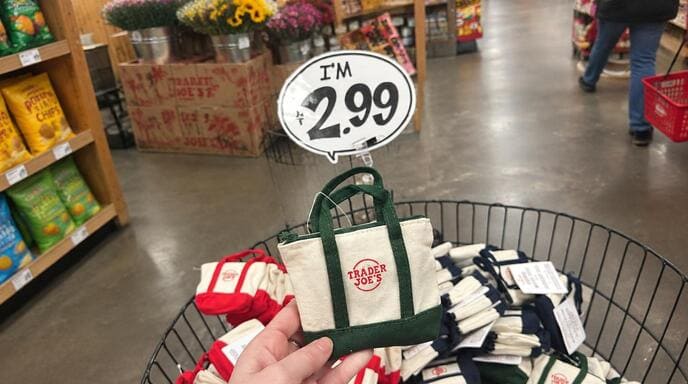
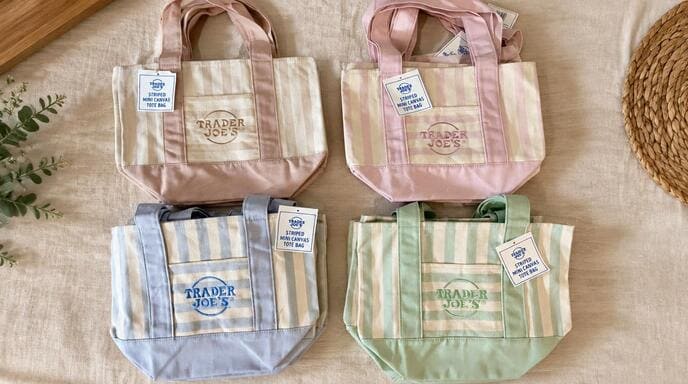
Trader Joe’s mini tote bags cost just $2.99 per bag, yet their seasonal releases have repeatedly attracted intense consumer attention, sold out quickly at some stores, and generated resale listings far above retail prices. First launched in 2024, the miniature canvas bags remained a talking point in 2026, when new pastel and striped designs continued the trend. Source: Fast Company, March 2026.
But the popularity of these bags is not explained by price or social media alone. Their appeal combines compact design, recognizable branding, everyday usefulness, seasonal variation, and the feeling of finding an inexpensive item that other people want.
For consumers, the question is whether the bags are genuinely useful or mainly collectible. For retailers and bag manufacturers, the more important question is what this trend reveals about product design, branding, and consumer demand.
1. How Popular Are Trader Joe’s Mini Tote Bags in 2026?
The trend has continued beyond its initial viral moment in 2024. New releases in 2025 and 2026 indicate that consumer interest has persisted across multiple product cycles.
Numerator surveyed 1,022 verified mini tote buyers, split approximately evenly between buyers in 2025 and 2026. Its findings offer a more useful picture of demand than viral videos or resale listings alone. Source: Numerator.
| Consumer data point | Reported figure |
|---|---|
| Trader Joe’s shoppers who bought a mini tote in 2025 | 9.6% |
| Share of all U.S. households represented by those purchases | 3.4% |
| Trader Joe’s shoppers who bought one in March 2026 | 7% |
| Buyers influenced by the bags’ viral status | 54% |
| Buyers who owned five or more mini totes | 30% |
| Buyers who purchased primarily for resale | Approximately 4% |
The March 2026 figure is an early-period result, not a full-year estimate. The 2025 and March 2026 figures therefore should not be treated as a direct year-over-year comparison.
Nevertheless, the data show that the mini tote is more than a short-lived social media curiosity. A meaningful share of the retailer’s shoppers purchased one, and some returned for additional colors or versions.
The distinction matters: sustained interest does not mean every release sells out everywhere, nor does it prove that the bags are equally popular among all consumers. The evidence is strongest for demand among Trader Joe’s shoppers and people already engaged with the brand.
2. Why Do Consumers Want Such a Small Tote Bag?
A low price makes the purchase easy
The original mini canvas tote retailed for $2.99. At this price, shoppers can try the product, buy it as a small gift, or collect several colors without making a substantial financial commitment.
Numerator found that 31% of surveyed buyers cited the bag’s low price and perceived value as a reason for purchasing it. However, affordability was not the leading reason: appearance ranked higher.
This suggests that price works best as an enabler. A bag still needs an appealing design or a reason to be wanted; a low price alone does not explain why one particular reusable bag becomes a trend.
The miniature format makes an ordinary product distinctive
Trader Joe’s mini tote retains the familiar appearance of a shopping bag but changes its scale. That difference makes an everyday product feel more playful and suitable for uses beyond grocery shopping.
The classic mini tote measures approximately 13 × 11 × 6 inches (33 × 28 × 15 cm), according to 2026 media coverage. Its compact format can accommodate small everyday items, although it offers substantially less capacity than a standard shopping tote. Source: Fast Company.
The size also creates a recognizable visual feature. In social media photographs, the proportions are immediately noticeable, helping distinguish the product from conventional canvas bags.
It is useful enough to keep using
The bags are not purely decorative. Numerator found that owners reported using them for several purposes:
| Reported use | Share of buyers |
|---|---|
| Grocery shopping and errands | 41% |
| Everyday bag or purse | 30% |
| Collecting or keeping as a collectible | 20% |
These figures describe reported uses, not mutually exclusive market segments. One owner may use a bag regularly and still collect other versions.
The practical value helps explain why the trend can persist beyond the initial excitement. A bag that looks distinctive but has no useful function may attract attention briefly; one that also carries everyday essentials has a clearer reason to remain in circulation.
Its limitations are equally important. A mini tote is not a substitute for a full-size grocery bag when carrying bulky or heavy purchases. Its actual carrying capacity depends on fabric weight, handle construction, stitching or bonding, and reinforcement—not simply its appearance.
3. How Social Media and Limited Releases Keep the Trend Alive
The mini tote’s popularity is a useful example of how a familiar product can gain new meaning through digital visibility and repeated product launches.
Numerator found that 54% of mini tote buyers said the bag’s viral status influenced their purchase. The influence was particularly high among Gen Z buyers (68%) and Millennials (58%).
However, the bags were not discovered exclusively online. The same research found that:
- 46% first learned about them in a Trader Joe’s store.
- 29% first discovered them through social media.
- 26% first heard about them through word of mouth.
These discovery channels may overlap with later exposure. The results should not be added together as if they represented separate groups.
The pattern suggests that physical retail and digital content reinforce one another. A shopper notices a bag in a store, posts a photograph, and introduces it to people who may later visit a store themselves. Videos of new colors, store displays, and personal collections provide repeated opportunities for exposure.
Seasonal colors give shoppers a reason to return
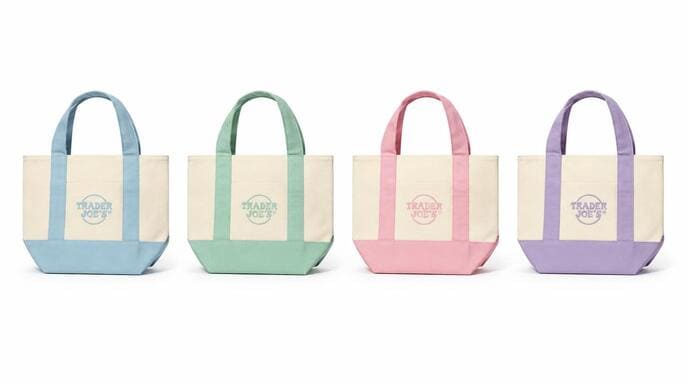
The original mini totes appeared in 2024, followed by further releases, including pastel colors in 2025 and striped versions in 2026. Each new design renews attention without requiring an entirely new product category. Source: Associated Press.
The product remains recognizable, while the changing colors give existing customers a reason to consider another purchase.
This is an important distinction between a single viral product and a repeatable product strategy. A new version can renew demand, but the core design must remain familiar enough for consumers to recognize it.
Limited availability increases urgency—but can also create frustration
When consumers believe a product may not be available later, they have an incentive to purchase it immediately. This effect becomes stronger when social media shows other shoppers buying the same item.
Numerator’s research found that 22% of buyers went to a store early or around opening time, while 17% visited multiple Trader Joe’s locations to find a bag.
Still, the evidence does not establish that artificial scarcity alone caused the trend. New colors, low prices, brand loyalty, and practical use also contribute. Nor should every report of long lines be taken as representative of the typical shopping experience.
For retailers, the lesson is to manage release timing and inventory carefully. Scarcity may create short-term excitement, but repeated stockouts can also inconvenience customers and shift spending toward resellers.
4. Are Trader Joe’s Mini Tote Bags Worth Buying or Reselling?
The answer depends on whether the buyer values everyday use, collecting, or potential resale.
For ordinary consumers, the original $2.99 retail price offers a relatively inexpensive way to obtain a compact branded bag. Its value is easier to justify if it will be used regularly or given as a gift.
Resale is a different proposition. Some online listings have advertised the bags for hundreds or even thousands of dollars, but an asking price is not evidence that a buyer actually paid that amount.
Numerator found that only about 4% of buyers purchased a mini tote with the intention of reselling it. Among those who did resell, the reported average resale price was $5.79 per bag—far below the extreme prices highlighted in viral posts. Source: Numerator.
A simple comparison illustrates the difference:
| Purchase scenario | Price | What it means |
|---|---|---|
| Original retail purchase | $2.99 | Low entry cost |
| Reported average resale price among resellers | $5.79 | Not a guaranteed return or net profit |
| Viral resale listing | Hundreds or more | Asking price, not necessarily a completed sale |
The $5.79 figure should not be interpreted as profit. It does not account for every possible resale expense, and the sample of people who resold bags is small relative to all owners.
Practical conclusion: Buy the bag because you like it or expect to use it, rather than assuming it will appreciate in value. If resale is your goal, verify completed transactions, platform fees, shipping costs, and actual buyer demand before committing money.
5. What Can Bag Brands and Manufacturers Learn From the Trend?
Trader Joe’s mini totes provide several useful lessons for businesses developing promotional bags, reusable shopping bags, or branded canvas totes. These are product-development implications, not proof that copying the same dimensions or colors will reproduce the same demand.
Recognizable branding can make a simple bag memorable
A tote does not need a complicated structure to be recognizable. Consistent colors, a distinctive logo, and a repeatable visual style can make a relatively ordinary product identifiable in photographs and in everyday use.
For brands, the goal is to develop a design that reflects their own identity. Copying another retailer’s logo or protected design is not a sustainable branding strategy.
Product size should match the intended use
Smaller bags can suit gifting, personal accessories, beauty products, event giveaways, or compact retail merchandise. Larger formats are generally more appropriate for groceries and heavier shopping loads.
Before selecting dimensions, buyers should define the intended contents, target load, carrying method, and required durability. Handle attachment, seam strength, fabric weight, and base construction all affect the finished product’s performance.
Material selection affects both appearance and function
Canvas offers a textured, fabric-based appearance that suits casual retail and reusable gift packaging. Non-woven polypropylene can be suitable for promotional bags where cost, printability, and order volume are priorities. Laminated non-woven material offers a smoother printed surface and improved resistance to splashes, although it is not fully waterproof.
The appropriate choice depends on the target price, desired finish, carrying requirements, and production quantity. No single material is automatically the best option for every brand.
Seasonal designs work best when the core product remains consistent
A retailer can introduce new colors, prints, or limited seasonal editions while retaining the same basic bag construction. This helps create visual variety without redesigning the entire product each time.
For B2B buyers, however, the commercial calculation includes more than consumer appeal. Minimum order quantity, sampling time, print complexity, production capacity, inventory risk, and delivery deadlines all influence whether a seasonal launch is viable.
6. Expert Manufacturer Analysis: Turning a Mini Tote Trend Into a Practical Product
From a bag manufacturer's perspective, the most useful lesson is not simply that smaller bags sell well. It is that a straightforward product can become commercially distinctive when its design, brand identity, intended use, and release strategy work together.
For a brand considering a custom mini tote, three decisions deserve attention before requesting a quotation.
First, define the product's role. Is the bag a reusable shopping accessory, a gift-with-purchase item, a retail product, or an event giveaway? A bag designed primarily for display may require a different construction and cost target from one expected to carry heavier everyday loads.
Second, select materials and construction according to use. Canvas is worth considering for a fabric-based, casual look; non-woven PP may suit cost-conscious promotional programs. The handle attachment, bottom structure, fabric weight, and printing method should be selected together rather than treated as separate details.
Third, calculate the full production cost. Unit price alone does not capture the cost of sampling, printing setup, packaging, shipping, storage, or unsold seasonal inventory. Buyers should confirm the finished dimensions, specifications, order quantity, sample approval, and delivery schedule before placing a bulk order.
A manufacturer can help translate a visual concept into production specifications, identify potential construction issues, and assess whether a design is suitable for the intended budget and order volume. It cannot guarantee that a product will go viral: consumer response depends on factors beyond manufacturing, including brand recognition, distribution, timing, and market demand.
For brands and importers exploring custom mini canvas totes or other reusable shopping bags, working directly with an experienced manufacturer can make it easier to compare material options, printing methods, and production requirements before committing to a bulk order.
Conclusion: Why the Mini Tote Trend Still Matters in 2026
Trader Joe’s mini tote bags remain popular because several factors reinforce one another: an accessible $2.99 retail price, a distinctive compact format, practical everyday uses, recognizable branding, and new seasonal designs that renew consumer interest. Numerator’s findings show that appearance and gifting are important purchase drivers, while social media amplifies demand rather than explaining every purchase on its own.
The broader lesson is that a successful reusable bag is not defined by size alone. Product usefulness, visual identity, material choice, pricing, and availability all matter.
For businesses, the opportunity is to apply these principles to an original product that fits their customers and commercial objectives. A well-specified custom tote can support retail sales, promotional campaigns, gift packaging, and brand visibility—provided that its design and production choices match the intended use.
Planning a custom mini tote or reusable shopping bag for your brand? Contact Jiarong Packaging to discuss materials, dimensions, printing options, order quantities, and production requirements. Share your target use and approximate order volume to get a more relevant quotation and assess which bag format best fits your project.