The best material for custom tool tote bags depends on durability, load capacity, working environment, and budget.
- Canvas: Best for heavy-duty tools, durability, and premium appearance.
- Oxford Fabric: Best overall choice with strength, water resistance, and cost balance.
- Polyester: Best for lightweight and cost-effective customization.
- Nylon: Best for high strength, abrasion resistance, and outdoor use.
- Non-Woven PP: Best for promotional and lightweight tool bags.
- Leather & Synthetic Leather: Best for premium and professional-style tool bags.
The right material should balance durability, protection, customization, and production cost.
Tools are essential for any trade, but keeping them organized and protected can be a constant struggle. Loose tools lead to inefficiency and potential damage. You need a reliable way to carry your essential gear, but not all tool bags are created equal. The wrong material can mean tears, punctures, or inadequate support for your valuable equipment. Choosing the right material is paramount when investing in custom tool tote bags that can withstand daily demands and represent your brand effectively.
The best material for custom tool tote bags balances durability, load capacity, resistance to environmental factors, and cost. While canvas offers exceptional strength and a premium feel, Oxford fabric provides a strong, water-resistant, and cost-effective all-rounder. Nylon excels in high-strength, abrasion-resistant applications, polyester is ideal for lightweight customization, and non-woven PP suits promotional needs.
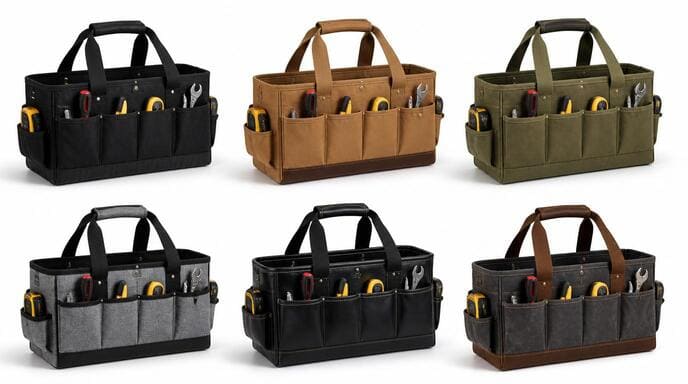
Selecting the right material for your custom tool tote bags isn't just about aesthetics; it directly impacts their performance, longevity, and suitability for your specific needs. Let's explore the key factors and the top material contenders.
Why Material Matters for Custom Tool Tote Bags?
Have you ever felt the frustration of a tool bag failing under pressure? Whether you're a seasoned carpenter, a busy mechanic, or a DIY enthusiast, your tools are your livelihood. Ensuring they are carried safely and efficiently is crucial.
The material of your custom tool tote bags dictates their ability to carry weight, resist tears, repel water, withstand wear, and ultimately, how long they last. Choosing wisely ensures your investment provides lasting value and reliable performance for demanding jobs.
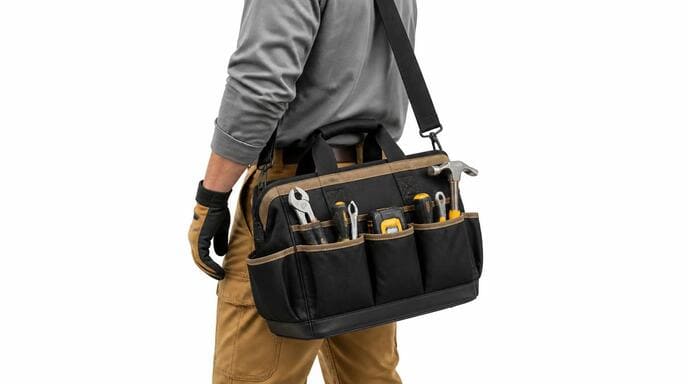
The world of work relies on specialized tools, and keeping them organized is as important as using them correctly. Think about the diverse professionals who depend on robust tool carriers: construction workers hauling heavy equipment, electricians managing delicate wiring tools, mechanics navigating oily workshops, technicians working in varied environments, dedicated DIYers tackling home projects, and industrial maintenance teams maintaining complex machinery. Each group faces unique challenges.
For construction workers, a tool tote bag needs to withstand rough handling, heavy loads, and exposure to dust and debris. Electricians might require specialized pockets and materials that don't conduct electricity or snag easily. Mechanics need bags resistant to oil and grease, capable of holding heavy wrenches and power tools. Technicians might work outdoors, necessitating water resistance and UV protection. Even DIY users benefit from durable, well-organized bags that prevent tool loss and damage.
The impact of material choice is significant and multifaceted. A bag made from inferior fabric might tear under the weight of a few power tools, rendering it useless and potentially scattering your equipment. Conversely, a well-chosen material like heavy canvas or durable Oxford fabric can endure years of rigorous use, resisting punctures from sharp edges and tears from abrasive surfaces. Water resistance is critical for protecting sensitive electronic tools or preventing rust on metal components. Understanding these implications is the first step to selecting the ideal material for your custom tool tote bags.
In summary, the selection of material for custom tool tote bags is critical, directly influencing their capacity, durability, resistance to environmental factors, and overall lifespan, ensuring reliable tool transport for various professional and personal applications.
Key Factors When Choosing Tool Tote Bag Materials?
Before diving into specific fabrics, it's essential to understand what makes a tool bag truly functional. Several critical factors determine if a material will perform under pressure and meet your specific requirements.
Key factors include the fabric's inherent strength and load capacity for carrying heavy tools, its resistance to abrasion and tearing from rough environments, its ability to repel water and moisture, and its suitability for customization options like printing logos for brand recognition.
When you're loading up a tool tote, you're not just carrying a few items; you're often packing a significant amount of weight and sharp, hard objects. This is where the strength and load capacity of the material become paramount. Think about carrying a heavy hammer, a large drill, a box of screws, and other assorted hardware. A flimsy material will stretch, sag, or even rip under such pressure. Factors like fabric thickness, its GSM (grams per square meter) or Denier rating, and crucially, the quality of stitching and handle reinforcement, all contribute to a bag's ability to bear weight safely and reliably.
Beyond just carrying capacity, the abrasion and durability of the fabric are vital. Tool bags are often dragged across concrete floors, rubbed against metal beams, or come into contact with sharp tools inside and out. This constant friction and potential for puncture demand materials with excellent wear resistance. A bag that tears or frays easily after just a few months of use is not only an inconvenience but a safety hazard. Materials like canvas, nylon, and high-density Oxford fabric are engineered to withstand such harsh conditions, offering protection against tears and ensuring a long service life for your tool carrier.
Water resistance is another crucial consideration, especially for certain trades or working environments. Tools, particularly metal ones, are susceptible to rust and corrosion when exposed to moisture. If you work outdoors, in damp conditions, or need to protect sensitive electronic tools, a water-resistant or waterproof material is essential. This can be achieved through coatings like PU (polyurethane) or PVC, laminated fabrics, or by using inherently water-repellent synthetic materials like nylon. Understanding the level of water protection needed will significantly narrow down your material choices for custom tool tote bags.
Finally, weight and customization play a role, especially for the end-user's comfort and for branding purposes. While durability is key, an excessively heavy material can make the bag cumbersome to carry, particularly when fully loaded. For promotional or branded tool bags, the fabric's printability is crucial. Some materials accept inks and embroidery better than others, allowing for vibrant logos and designs that enhance brand visibility. Considering how easily a material can be dyed, printed upon, or embroidered, alongside its physical weight, helps create a practical and appealing custom tool tote bag.
In summary, selecting the right material for custom tool tote bags involves assessing their strength for load capacity, resistance to abrasion and wear, level of water resistance, and suitability for weight and customization needs, ensuring functionality and longevity.
Best Materials for Custom Tool Tote Bags Compared?
With so many fabric options available, pinpointing the best material for your custom tool tote bags can seem daunting. Each fabric offers a unique blend of properties, making some ideal for heavy-duty use and others perfect for promotional purposes.
The best materials for custom tool tote bags include Canvas for superior durability and load capacity, Oxford Fabric for a balance of strength, water resistance, and cost, Nylon for extreme strength and abrasion resistance, Polyester for lightweight customization, and Leather/Synthetic Leather for a premium aesthetic.
Let's break down the most popular and effective materials used in the creation of custom tool tote bags, looking at their strengths, weaknesses, and ideal applications. As a manufacturer with extensive experience in producing various types of bags, I've seen firsthand how these materials perform in real-world scenarios.
Canvas Tool Tote Bags
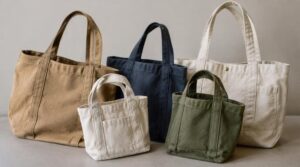
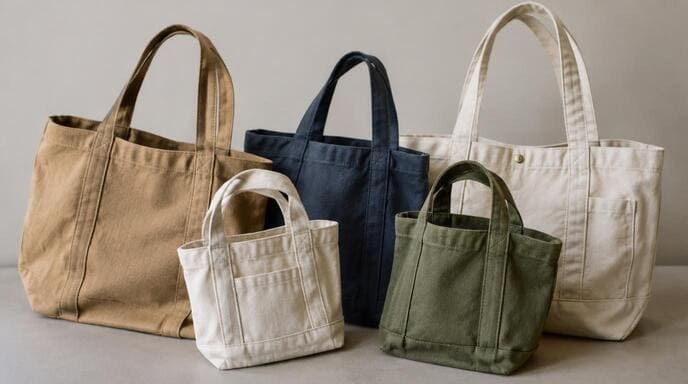
Canvas is a plain-woven fabric, traditionally made from cotton. It's known for its exceptional strength, durability, and a slightly coarse texture. Its natural fibers give it a premium, professional look that many appreciate.
Canvas is a champion when it comes to durability and load capacity. Its thick weave can withstand significant weight and abuse, making it perfect for carrying heavy hand tools and power tools. It also offers a higher perceived value and a classic, professional aesthetic that appeals to many trades.
The main drawbacks of canvas are its weight; it can be heavier than synthetic alternatives. While somewhat water-resistant naturally, it can absorb moisture over time and doesn't offer inherent waterproofing without additional coatings or treatments. This can also make it more expensive than some synthetic options.
Canvas is an excellent choice for professional tool bags, particularly for carpenters, plumbers, or trades requiring robust, long-lasting carriers. It’s also favored for premium customization, as its texture lends itself well to embroidery and certain printing techniques, offering a distinguished look for branded merchandise.
In summary, canvas tool tote bags are highly durable, offer excellent load capacity, and present a premium appearance, making them ideal for professional trades and high-end custom branding, though they can be heavier and less water-resistant without treatment.
Oxford Fabric Tool Tote Bags
Oxford fabric is a woven fabric typically made from polyester, or a blend of polyester and cotton. It's known for its basket weave structure, which gives it good strength and a slightly textured appearance, often smoother than canvas.
This material is a fantastic all-rounder. It offers great strength and good tear resistance while remaining relatively lightweight. Many Oxford fabrics are treated with coatings (like PU or PVC) to provide excellent water resistance, protecting contents from moisture. It's also very cost-effective, offering great performance for its price point.
While strong, it might not possess the absolute premium feel of heavy canvas. Its water resistance often depends on the applied coating, which can wear down over time if not properly maintained or if of lower quality.
Oxford fabric is incredibly versatile. It's perfect for construction tools, general maintenance bags, and outdoor repair kits where durability and some level of water protection are needed. Its balance of strength, weight, and cost makes it a top choice for many general-purpose custom tool tote bags.
In summary, Oxford fabric is a highly versatile and cost-effective material for custom tool tote bags, offering a strong, lightweight, and often water-resistant option suitable for industrial use, construction, and maintenance applications.
Polyester Tool Tote Bags
Polyester is a strong synthetic fiber known for its versatility. In bag manufacturing, it's often woven into fabrics that can range from lightweight and pliable to denser and more robust, depending on the weave and thread count.
Polyester bags are typically affordable and lightweight, making them comfortable to carry. They are also known for easy printing, allowing for vibrant, high-quality graphics and logos, which is crucial for promotional tool bags. Polyester holds color well and resists stretching and shrinking.
Compared to canvas or nylon, polyester generally offers lower durability and tear resistance, especially in thinner weaves. For carrying very heavy or sharp tools, it often requires reinforcement in key areas like handles and seams to prevent premature failure.
This material is a great option for promotional tool bags used for giveaways or as part of marketing kits. It's also suitable for general tool storage where extreme durability isn't the primary concern, such as lightweight storage solutions or bags for hobbyists.
In summary, polyester is a cost-effective and lightweight option for custom tool tote bags, ideal for promotional items and general tool storage due to its ease of customization and good color retention, though it may require reinforcement for heavy loads.
Nylon Tool Tote Bags
Nylon is a high-performance synthetic material renowned for its exceptional strength-to-weight ratio and resilience. It's often used in demanding applications where durability and toughness are paramount.
Nylon boasts excellent strength and high abrasion resistance, often outperforming other materials in toughness. It's also remarkably lightweight, making it surprisingly comfortable to carry even when fully loaded. Its natural resistance to moisture and mildew makes it a great choice for challenging environments.
The primary limitation of nylon is its higher material cost compared to polyester or Oxford fabric. While durable, its surface can sometimes be slicker, and its printing options, while good, might be slightly more limited than polyester in achieving certain vibrant effects without specific treatments.
Nylon is the go-to material for professional technicians and individuals involved in outdoor maintenance or working in rugged conditions where abrasion and tearing are constant risks. It's also a superior choice when a custom tool tote bag needs to be both incredibly strong and surprisingly light.
In summary, nylon is an exceptionally strong, lightweight, and abrasion-resistant material ideal for demanding professional applications and outdoor use in custom tool tote bags, though it comes at a higher material cost.
Non-Woven PP Tool Tote Bags
Non-woven Polypropylene (PP) is a fabric-like material made from thermoplastic polymer fibers. It’s produced by bonding fibers together using heat or chemical processes, creating a lightweight, breathable, and economical material.
The biggest draw for non-woven PP is its low cost. It's extremely lightweight, making these bags easy to handle and transport. It's also very easy to customize with printing, making it a popular choice for branding and promotional purposes.
Non-woven PP has significantly lower durability and tear strength compared to woven fabrics like canvas, Oxford, or nylon. It is generally not suitable for heavy tools or applications requiring long-term, rigorous use. Its texture can also feel less premium.
These bags are best suited for promotional giveaways, trade show bags, or carrying very light-duty tools and supplies. They are an economical solution for temporary needs or simple branding exercises.
In summary, non-woven PP offers a low-cost, lightweight, and easily customizable option for promotional tool bags and light-duty applications, but it lacks the durability required for heavy tools or frequent, demanding use.
Leather & Synthetic Leather Tool Tote Bags
This category includes both genuine leather, known for its natural durability and classic appeal, and synthetic leather (like PU leather or PVC), which mimics the look and feel of real leather at a lower cost.
Both genuine and synthetic leather offer a premium appearance and convey a professional image. They are often comfortable to handle, and genuine leather, in particular, can develop a beautiful patina over time. They provide good resistance to punctures.
Genuine leather can be expensive and requires regular maintenance (conditioning, cleaning) to prevent drying and cracking. Both types can be heavier than synthetic fabrics. While offering some water resistance, they are not inherently waterproof and can be damaged by excessive moisture or harsh chemicals.
Leather and synthetic leather are best suited for luxury tool sets, high-end presentation cases, or as corporate gifts where a high perceived value and sophisticated aesthetic are desired. They are less common for everyday, heavy-duty work but excel in specific niche applications.
In summary, leather and synthetic leather provide a premium appearance and professional image for custom tool tote bags, making them ideal for luxury sets and corporate gifts, but they come with higher costs and require more maintenance than fabric alternatives.
Custom Tool Tote Bag Material Comparison?
Choosing the right material involves weighing various properties against your specific needs. A quick comparison can highlight which fabric best fits your requirements for durability, weight, water resistance, and budget.
Here's a comparison of common tool tote bag materials: Canvas excels in durability and load capacity; Oxford fabric offers a great balance of strength, water resistance, and cost; Nylon provides superior strength and abrasion resistance; Polyester is cost-effective and good for printing; Non-woven PP is budget-friendly for light use; Leather offers a premium look.
Understanding the trade-offs between different materials is key to making an informed decision for your custom tool tote bags. While certifications and manufacturing processes play a role, the inherent properties of the base material set the foundation for performance. At Zhejiang Jiarong Packaging, we utilize advanced machinery to process a wide array of these materials, ensuring quality from fabric selection to finished product.
| Material | Durability | Weight | Water Resistance | Cost | Best Use Cases | Our Expertise |
|---|---|---|---|---|---|---|
| Canvas | ★★★★★ | Medium | Medium | Medium | Heavy-duty tools, carpenter tools, premium customization | Excellent for robust, high-load bags; can be coated for enhanced water resistance. |
| Oxford Fabric | ★★★★☆ | Light | Good | Medium | Industrial use, construction, maintenance, general tools | Our PU/PVC coated Oxford options offer superior water protection and tear strength for daily demanding use. |
| Polyester | ★★★☆☆ | Light | Medium | Low | General tool bags, promotional bags, lightweight storage | Ideal for vibrant printing and mass production of branded tool tote bags. |
| Nylon | ★★★★★ | Very Light | Good | Higher | Professional tools, outdoor use, high-abrasion areas | Known for its strength-to-weight ratio, perfect for high-performance, custom technician bags. |
| Non-Woven PP | ★★☆☆☆ | Very Light | Low | Low | Promotional bags, light-duty tools, giveaways | A cost-effective solution for simple branding and non-intensive use cases. |
| Leather (Genuine) | ★★★★☆ | Heavy | Medium | High | Premium products, luxury tool sets, corporate gifts | Offers superior aesthetic and feel for high-end custom designs. |
| Synthetic Leather | ★★★☆☆ | Medium | Medium | Medium | Premium look at a lower cost, corporate gifts | Provides a leather-like appearance with improved durability and cost-effectiveness for branded items. |
This table serves as a quick reference. For instance, if your primary need is to carry extremely heavy tools and create a premium impression, canvas or nylon would be top contenders. If budget is a major constraint but you still need decent durability for general purposes, polyester or Oxford fabric are strong choices. For promotional events where visibility and cost are key, non-woven PP is often the most practical selection. Our company, Zhejiang Jiarong Packaging, has the capability to produce custom tool tote bags from all these materials, leveraging our advanced manufacturing processes to meet specific client requirements, whether for durable OEM tool bags or eye-catching branded merchandise.
In summary, this comparison table highlights that canvas and nylon offer top-tier durability for heavy-duty use, Oxford fabric provides an excellent balance of features, polyester is cost-effective for printing, non-woven PP is economical for promotions, and leather offers a premium aesthetic for custom tool tote bags.
How to Choose the Right Material for Different Applications?
The "best" material for a tool tote bag isn't universal; it's highly dependent on how and where the bag will be used. Tailoring your choice to the specific application ensures optimal performance and longevity.
For demanding applications like construction or industrial work, robust materials like Canvas, heavy Oxford, or Nylon are recommended for their high strength and wear resistance. For electricians and technicians, lighter yet durable options like Oxford, Nylon, or reinforced Polyester offer better portability. Promotional bags benefit from cost-effective Non-woven PP or Polyester.
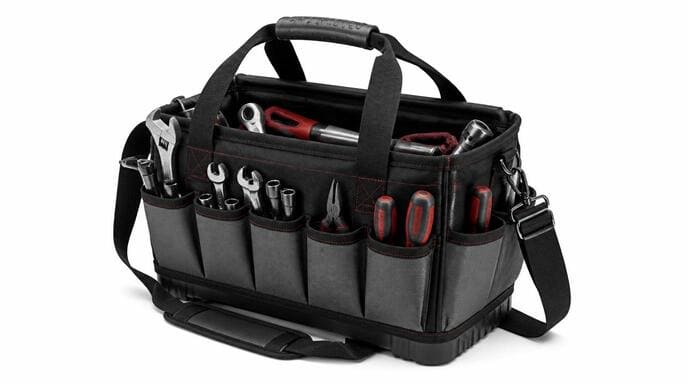
When we talk about custom tool tote bags, one size or material certainly doesn't fit all. The environment and the specific tasks your tools are used for play a massive role in determining the most suitable fabric. At Zhejiang Jiarong Packaging, we work closely with clients to ensure their custom tool tote bags meet the exact needs of the intended user.
Construction & Industrial Tools
For trades that involve heavy-duty work, often in rough environments, you need materials that can take a beating.
- Recommended Materials: Canvas, heavy-duty Oxford fabric, and Nylon are excellent choices.
- Why: These materials provide high strength to support the weight of multiple power tools, hammers, and other heavy equipment. They offer superior wear resistance against sharp edges, concrete, and metal surfaces, and can handle the stress of being frequently loaded and unloaded. Canvas provides a classic, rugged durability, while Nylon offers exceptional toughness and a lighter feel for its strength. Heavy Oxford fabric, especially when coated, provides a great blend of ruggedness and some water repellency.
Electricians & Technicians
Professionals in these fields often deal with a variety of tools, some delicate, some robust, and they frequently move between job sites. Portability and protection are key.
- Recommended Materials: Oxford fabric, Nylon, and reinforced Polyester are often ideal.
- Why: These materials strike a balance between lightweight design for easy carrying and sufficient durability for essential tools. Oxford fabric, especially with PU coating, offers good protection against spills and light moisture. Nylon provides excellent tear strength without excessive weight. Polyester can be a cost-effective choice, especially when reinforced in critical areas like the base and handles, and its smoother surface might be preferred for preventing snags.
Promotional Tool Bags
When creating tool bags as giveaways, the focus shifts towards cost-effectiveness, branding potential, and suitability for light-duty use.
- Recommended Materials: Non-Woven PP and Polyester are the most popular options.
- Why: These materials are very low cost, allowing for bulk orders without breaking the budget. They are lightweight and easily customizable with company logos and branding through screen printing or heat transfer. They are suitable for holding smaller hand tools, fasteners, or promotional items, serving more as a branded carrier than a heavy-duty work bag.
Premium Corporate Tool Bags
For high-end corporate gifts, executive tool kits, or bags designed to impress, aesthetics and perceived value are paramount.
- Recommended Materials: High-quality Canvas, genuine or high-grade Leather, and premium Oxford fabrics can be used.
- Why: These materials offer a better appearance and convey a sense of quality and prestige. Canvas provides a sturdy yet classic look. Leather offers unmatched sophistication and durability with proper care. Using higher-density Oxford fabrics with refined finishes can also elevate the bag's appeal. These choices focus on creating a memorable and valuable item that reflects positively on the brand.
In summary, selecting the material for custom tool tote bags should align with the application: Canvas, Oxford, and Nylon are best for demanding construction/industrial jobs; Oxford, Nylon, and reinforced Polyester suit electricians/technicians; Non-woven PP and Polyester are cost-effective for promotional use; while Canvas, Leather, and premium Oxford cater to the premium corporate market.
How GSM and Fabric Thickness Affect Custom Tool Tote Bag Quality?
Beyond the type of fiber, the physical characteristics of the fabric itself play a significant role in its performance. Two key metrics, GSM and Denier, directly influence a tool bag's durability and carrying capacity.
GSM (grams per square meter) and Denier (D) indicate fabric weight and thread thickness, respectively. Higher GSM and Denier values generally mean a thicker, stronger, and more durable fabric, leading to better load capacity and longevity for custom tool tote bags.
When we examine materials like canvas, polyester, or nylon for custom tool tote bags, it's not just about the fiber type but also about its density and thickness. Two common measurements you'll encounter are GSM and Denier, and understanding them can help you select a fabric that offers the right balance of strength and weight for your needs.
GSM (Grams per Square Meter)
GSM refers to the weight of fabric per square meter. It measures the overall fabric density and thickness rather than directly indicating strength. In general, a higher GSM means the fabric contains more material, making it heavier, thicker, and often more durable. However, actual performance also depends on fiber type, weaving structure, coating, and finishing.
For tool bags, fabrics with higher GSM usually provide better resistance to abrasion, tearing, and daily wear. For example, a heavy-duty non-woven or canvas tool bag may use a higher GSM fabric to improve load-bearing performance, while synthetic fabrics such as polyester or nylon are usually specified by denier rather than GSM.
As a general reference, heavy-duty synthetic tool bags often use fabrics in the range of 400–900+ GSM, while canvas is commonly described by weight classifications such as 10oz, 12oz, or 20oz.
Denier (D)
Denier is a measurement used to describe the thickness and weight of individual fibers or yarns, mainly for synthetic fabrics such as polyester and nylon. It indicates the mass of 9,000 meters of yarn, with a higher denier number meaning thicker yarn.
For example, 900D polyester uses thicker yarns than 600D polyester, which generally provides better abrasion resistance, durability, and load-bearing capability. However, denier alone does not determine fabric strength, as factors such as weave density, yarn quality, coating, and finishing treatments also affect performance.
For tool bags, common synthetic fabrics include 600D, 900D, and 1000D polyester or nylon. Higher denier fabrics are typically chosen for heavy-duty applications because they offer improved resistance to punctures, scratches, and frequent use.
Impact on Tool Bag Quality:
A thicker, denser fabric (higher GSM/Denier) provides superior durability and load capacity. It means the bag is less likely to rip or tear when packed with heavy tools or snagged on rough surfaces. This directly contributes to a longer service life for the tool bag. However, these heavier fabrics can also increase the overall weight of the bag itself, potentially impacting comfort.
It's important to remember that while thickness is a crucial indicator, fabric structure and sewing reinforcement also play significant roles. A well-constructed bag using a mid-weight fabric with robust stitching and reinforced stress points can often outperform a poorly made bag using the thickest possible material. For custom tool tote bags, specifying a suitable GSM or Denier, along with detailing reinforcement requirements, is key to achieving the desired performance.
In summary, fabric thickness, measured by GSM (grams per square meter) and Denier (D), is crucial for the durability and load capacity of custom tool tote bags; higher values generally indicate stronger, more robust materials suitable for heavy use.
Other Factors Affecting Custom Tool Tote Bag Performance?
While the base material is critical, several other design and construction elements contribute significantly to the overall performance and utility of your custom tool tote bags. These details often make the difference between a good bag and a great one.
Beyond the fabric, key factors include well-designed handle systems with reinforced stitching for comfortable carrying, superior sewing quality with attention to stress points, practical bag structure like pockets and sturdy bottoms, and useful extra features such as waterproofing or tool loops.
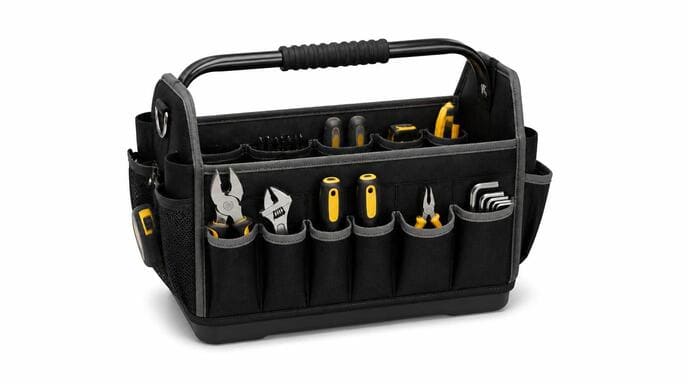
Choosing the right material is only part of the equation for creating excellent custom tool tote bags. The thoughtful integration of various design and construction elements ensures that the bag is not only durable but also highly functional and comfortable to use. My experience in manufacturing has shown me how these details can elevate a simple bag into an indispensable tool for professionals.
Handle Design
The handles are where most of the stress is transferred from the bag to the user.
- Webbing handles: Often made from strong nylon or polyester, these are durable and comfortable.
- Reinforced stitching: Multiple rows of strong thread, often using heavy-duty machines, are essential to prevent handles from tearing away.
- Cross stitching: For heavier loads, cross-stitching or box stitching provides maximum strength at the attachment points.
- Ergonomics: Padded grips or ergonomic shapes can improve carrying comfort, especially for long periods.
Sewing Quality
The stitching is the backbone of any bag. Even the strongest fabric will fail if the sewing is poor.
- Stitch density: Higher stitch counts per inch generally mean a stronger seam.
- Stress point reinforcement: Key areas like corners, pocket attachments, and handle anchors should have extra stitching or bar tacks for reinforcement.
- Double stitching: Often used on seams and edges to increase durability and prevent fraying.
- Thread type: Using strong, UV-resistant polyester or nylon thread is crucial for longevity.
Bag Structure
How the bag is designed internally and externally greatly affects its utility.
- Multiple pockets: Interior and exterior pockets help organize different types of tools, keeping them accessible and preventing damage.
- Zipper closure: For security and protection against elements, zippers are often preferred. High-quality, robust zippers are essential.
- Hard bottom support: A reinforced or plastic base prevents the bag from sagging when empty and offers better protection against moisture and abrasion from the ground.
- Stiff sidewalls: Some bags are designed with stiffened sides to help them stand upright, making it easier to access tools.
Extra Features
Modern tool bags often incorporate features to enhance their performance and versatility.
- Waterproof coating: Applying PU, PVC, or other coatings to the fabric or using laminated materials can significantly improve water resistance.
- Reflective strips: For safety, especially when working near roads or in low-light conditions, reflective elements can increase visibility.
- Tool loops and attachments: External loops, D-rings, or molle webbing can provide additional attachment points for frequently used tools or accessories.
- ID holders: A clear window for an ID card or business card can be useful for professional settings.
These elements, when combined with the right base material, create custom tool tote bags that are not only durable but also highly practical and tailored to the user's specific workflow.
In summary, the performance of custom tool tote bags is enhanced by well-designed handles with reinforced stitching, superior sewing quality at stress points, practical structural elements like multiple pockets and hard bottoms, and useful extra features such as waterproofing and tool loops.
Custom Tool Tote Bag Manufacturing Considerations?
For businesses looking to procure custom tool tote bags, understanding the manufacturing process and available customization options is as important as selecting the right material. This ensures you get a product that meets your quality standards and branding goals.
Manufacturing considerations include a clear material selection process based on usage, extensive customization options (size, color, logo, features), and rigorous quality testing like load tests and tear resistance tests, ensuring the final product meets high standards for durability and branding.
When you decide to invest in custom tool tote bags, whether for your brand's internal use, as promotional items, or for resale, collaborating with a capable manufacturer is crucial. Zhejiang Jiarong Packaging, with over a decade of OEM/ODM experience, understands the nuances of producing high-quality, custom bags that meet diverse client needs.
Material Selection Process
This is the foundational step. It's not just about picking a fabric off a shelf.
- Confirm Usage: Clearly define the intended use – what tools will be carried? What environment will the bag be used in? What is the desired lifespan? This helps narrow down material properties like strength, water resistance, and abrasion resistance.
- Select Material: Based on usage, choose from options like canvas, Oxford, nylon, polyester, or even eco-friendly RPET fabric. Consider GSM, Denier, and any required coatings (PU, PVC).
- Make Samples: Once a material is chosen, producing physical samples is vital. This allows for tactile evaluation and preliminary testing.
- Test Performance: Samples should be subjected to basic tests: Can the handles bear weight? Does the fabric feel robust? Is the water resistance adequate? These tests validate the material choice before mass production.
Customization Options
This is where your brand identity and specific functional requirements come to life.
- Size & Dimensions: Tailor the bag’s overall size, depth, and width to perfectly fit specific tool sets or storage needs.
- Color: Choose from a vast spectrum of colors, often dyeable based on material. We offer wide color palettes suitable for branding.
- Logo Printing: Various methods like screen printing, heat transfer, embroidery, or custom labels can be applied to showcase your logo effectively. High-speed printing machines ensure vibrant and precise application.
- Handle Style: Select from different handle lengths, materials (webbing, padded), and attachment methods (cross-stitching, bar tacks).
- Pocket Design: Customize the number, size, and placement of internal and external pockets for optimal organization.
- Reinforcement: Specify reinforced bottoms, extra stitching on stress points, or double-layered handles for enhanced durability.
- Closure Types: Zippers, snaps, Velcro, or open-top designs can be implemented based on security needs.
Quality Testing
Ensuring the final product meets stringent quality standards is non-negotiable.
- Load Test: Bags are tested to withstand specific weight capacities to ensure structural integrity.
- Handle Strength Test: Handles are subjected to pull tests to verify their attachment and durability.
- Tear Resistance Test: Fabric samples and finished seams are tested to determine their resistance to tearing.
- Water Resistance Test: For coated or water-repellent materials, tests verify their ability to repel moisture.
- Colorfastness Test: Ensuring printed logos or dyed fabrics do not fade easily.
- Stitching Inspection: Visual inspection for consistency, strength, and absence of defects.
Working with a manufacturer like Zhejiang Jiarong Packaging means leveraging our experience, advanced machinery, and commitment to quality assurance to deliver custom tool tote bags that truly perform.
In summary, custom tool tote bag manufacturing involves a careful material selection process based on usage, extensive customization options including size, color, and logo application, and rigorous quality testing such as load and tear resistance checks to ensure durability and brand compliance.
Common Mistakes When Choosing Materials?
It’s easy to make missteps when selecting materials for custom tool tote bags, especially when balancing cost, durability, and aesthetics. Recognizing common pitfalls can help you avoid costly errors and ensure you get the best value.
Common mistakes include choosing materials solely based on price, neglecting the strength and design of handles and stitching, and selecting materials without fully considering the specific usage environment or intended purpose of the tool bag.
In my years working with clients on custom tool tote bags, I've observed several recurring mistakes that can lead to disappointment or premature product failure. Avoiding these common traps is essential for making a wise investment.
Choosing Only by Price
This is perhaps the most frequent mistake. While budget is always a consideration, prioritizing the absolute lowest cost can be a false economy.
- The Problem: Ultra-low-cost materials, like very thin polyester or cheap non-woven PP, might not withstand the rigors of daily use. They can tear easily, wear out quickly, and fail to support the weight of tools.
- The Consequence: You end up replacing the bag much sooner than anticipated, costing more in the long run. Worse, a failed bag can lead to lost tools or damaged equipment.
- The Solution: Focus on value rather than just price. Look for materials that offer the best combination of durability, functionality, and cost for your specific application. A slightly more expensive fabric might last twice as long, making it the more economical choice.
Ignoring Handle Strength and Stitching
Sometimes, the main body fabric of a tool bag is robust, but the handles or the stitching that attaches them are not.
- The Problem: Even if the fabric is tough, weak handles or inadequate stitching are common failure points. Handles can rip off, seams can unravel, and the bag becomes unusable.
- The Consequence: A bag that cannot be carried safely or reliably is useless. This is especially critical for heavy tool bags where handle failure can be dangerous.
- The Solution: Pay close attention to handle design, material (e.g., reinforced webbing), and especially the stitching. Look for reinforced stitching, bar tacks, and cross-stitching at all stress points. Ensure the manufacturer has robust sewing quality controls.
Choosing Without Considering Usage
Trying to use a one-size-fits-all approach to material selection for tool bags is a recipe for disaster.
- The Problem: A material perfect for a lightweight promotional bag is entirely unsuitable for carrying heavy power tools. Conversely, using extremely heavy-duty canvas for a simple giveaway bag is unnecessary and increases cost.
- The Consequence: The bag either fails to perform its intended function (e.g., rips under load) or is over-engineered and more expensive than needed.
- The Solution: Always define the primary use case first. Is it for heavy industrial tools, delicate electronics, or promotional giveaways? Then, select materials that are specifically suited to that environment and load requirement. For instance, professionals needing heavy-duty bags might look at canvas or nylon, while brands needing inexpensive, branded bags might opt for non-woven PP or polyester.
By understanding these common mistakes, you can make more informed decisions when sourcing custom tool tote bags, ensuring you choose materials that provide the necessary performance, durability, and value for their intended purpose.
In summary, common mistakes when choosing materials for custom tool tote bags include prioritizing price over durability, neglecting the strength of handles and stitching, and failing to match the material to the specific usage requirements, leading to poor performance or increased costs.
Frequently Asked Questions
Q1: What is the strongest material for tool tote bags?
Nylon and heavy-duty canvas are generally considered the strongest materials for tool tote bags due to their inherent toughness and resistance to tearing and abrasion. For ultimate strength, look for high-denier nylon or thick (12oz+) canvas, combined with robust stitching and reinforced handles.
Q2: Is Oxford fabric good for tool bags?
Yes, Oxford fabric is an excellent choice for tool bags. It offers a strong weave, good tear resistance, and can be coated to provide significant water resistance. Its balance of durability, weight, and cost-effectiveness makes it a versatile and popular material for many types of custom tool tote bags.
Q3: Canvas vs Polyester tool bags, which is better?
Canvas tool bags are generally stronger, more durable, and have a premium appearance, making them ideal for heavy-duty professional use. Polyester tool bags are lighter, more affordable, and offer excellent printability for branding, making them better suited for promotional items or lighter-duty storage needs.
Q4: What GSM is suitable for tool tote bags?
For tool tote bags, suitable GSM depends heavily on the material and intended use. For polyester or Oxford fabrics, a GSM between 400-900 is common, with higher numbers indicating greater durability. For canvas, weight is often measured in ounces per square yard (e.g., 10oz, 12oz, 20oz), with heavier weights offering more strength for heavy-duty applications.
Q5: Can custom tool tote bags include logos?
Absolutely! Custom tool tote bags are excellent for branding. Logos can be incorporated through various methods, including screen printing, heat transfer, embroidery, or custom labels, depending on the material and desired aesthetic. Manufacturers like Zhejiang Jiarong Packaging offer a wide range of printing options to showcase your brand effectively.
Q6: What material is best for waterproof tool bags?
For waterproof or highly water-resistant tool bags, look for materials with dedicated coatings or laminations. Coated Oxford fabrics (PU or PVC), waterproof Nylon, and specially laminated fabrics are the best options. These materials prevent moisture from penetrating the bag, protecting your tools from water damage.
Conclusion
Choosing the right material is fundamental to the success of your custom tool tote bags. For applications demanding the utmost durability and load-bearing capacity, materials like heavy-duty canvas and high-performance nylon are superior. However, for a versatile blend of strength, water resistance, and cost-effectiveness that suits a broad range of professional and industrial uses, Oxford fabric stands out. Polyester remains a solid, budget-friendly choice for promotional needs and lighter tasks.
Ultimately, the ideal material depends on your specific requirements – balancing ruggedness, portability, environmental resistance, and budget. For most custom tool tote bags intended for professional use, Oxford fabric and canvas offer the most practical and reliable combination of durability, customization potential, and cost efficiency.
At Zhejiang Jiarong Packaging, we specialize in creating high-quality custom tool tote bags from a wide array of materials. Whether you need robust OEM tool bags for your brand or eye-catching promotional items, our extensive manufacturing capabilities and commitment to quality ensure your needs are met. Contact us today to discuss your project and discover the perfect material solution for your custom tool tote bags.