Choosing the right material for your bags can feel overwhelming, especially when you need durability, style, and functionality for wholesale or custom projects. You want a reliable solution that stands up to daily use and represents your brand well. Understanding nylon bags is a crucial step in making an informed decision that meets your specific needs.
A nylon bag is a versatile carrying solution crafted from synthetic nylon fabric, known for its exceptional strength, lightweight nature, and resistance to wear and tear. These nylon fabric bags are popular for wholesale and custom applications due to their durability and performance across various uses, from everyday shopping to rugged travel.
But what exactly makes nylon so suitable for bags, and how does it compare to other popular materials? Let's dive into the world of nylon bags to uncover their secrets and potential.
What Is a Nylon Bag? Definition, Material, and Basic Features?
Defining a nylon bag is the first step toward understanding its value. These aren't just any bags; they represent a class of carriers built for resilience and everyday utility. The material itself offers a unique blend of properties that make it a preferred choice for many applications.
A nylon bag is a container made from nylon, a synthetic polymer renowned for its strength, elasticity, and smooth texture. Basic features often include lightweight construction, resistance to abrasion, and a sleek appearance, making nylon fabric bags ideal for demanding uses where durability and appearance matter.
The Science Behind Nylon Fabric
Nylon, first synthesized in the 1930s, is a thermoplastic polymer made from repeating units of diamine and dicarboxylic acid. Its molecular structure gives it inherent strength and elasticity. When processed into fibers, it can be woven or knit into various fabrics with remarkable properties. The specific type of nylon and the manufacturing process determine the final characteristics of the fabric, influencing everything from its tensile strength to its feel.
Why Nylon is a Preferred Material for Bags
The unique chemical composition of nylon translates directly into tangible benefits for bag manufacturing. Its high strength-to-weight ratio means you get robust bags that don't feel heavy. It resists abrasion, punctures, and tears exceptionally well, which is critical for bags that undergo constant wear and tear. Furthermore, nylon's resistance to chemicals and moisture helps protect contents and prolong the life of the bag itself, making it a dependable choice for many scenarios.
What Is Nylon Fabric? Understanding Nylon Material Used in Bag Manufacturing?
To appreciate a nylon bag, we must understand its foundation: nylon fabric itself. This synthetic wonder has a unique story rooted in innovation and industrial advancement, leading to its widespread use in various products, including robust bags.
Nylon fabric is a man-made material derived from petroleum-based chemicals through a process called polymerization. It's prized for its high tensile strength, excellent elasticity, and resistance to chemicals and moisture, making it a superior choice for manufacturing durable nylon bags designed for longevity and performance.
The History of Nylon
Nylon was famously introduced by DuPont in 1938 as a revolutionary synthetic fiber. Initially developed as a replacement for silk in items like stockings, its strength and durability quickly led to applications in military gear during World War II. Post-war, nylon found its way into countless consumer products, including clothing, carpets, and, of course, bags, due to its advantageous properties.
Polymerization Process and Fiber Formation
The creation of nylon fabric begins with the polymerization of monomers. This process forms long polymer chains. These chains are then melted and extruded through tiny holes (spinnerets) to form fine filaments. These filaments are cooled, stretched, and twisted to create yarns, which are subsequently woven or knitted into fabrics. The ability to control the diameter of these filaments (denier) and the weave structure allows for a wide range of fabric types, from sheer to heavy-duty.
Properties Relevant to Bag Making
Several key properties make nylon fabric ideal for bag manufacturing:
- High Tensile Strength: Nylon fibers can withstand significant pulling forces before breaking, essential for bags that carry heavy loads.
- Abrasion Resistance: It is highly resistant to rubbing and scraping, meaning bags can withstand constant contact with surfaces without significant wear.
- Elasticity: Nylon can stretch and return to its original shape, which helps bags maintain their form and resist tearing under stress.
- Water Resistance: While not completely waterproof, nylon naturally repels water better than many natural fibers, making it suitable for various conditions.
- Lightweight: Despite its strength, nylon fabric is relatively light, contributing to the overall comfort and portability of the bags.
Key Characteristics of Nylon Bags: Strength, Weight, Durability, and Performance?
What makes nylon bags stand out in a crowded market? It's their inherent characteristics that promise reliability and functionality, setting them apart from many other bag materials. These qualities are precisely why they are chosen for demanding applications.
Nylon bags are distinguished by their remarkable strength-to-weight ratio, superior durability, excellent abrasion resistance, and good performance in various environmental conditions. These traits contribute to their reputation as highly reliable and durable nylon bags suitable for countless applications where toughness is paramount.
Unpacking the Strength of Nylon
The primary appeal of nylon is its impressive tensile strength. This means the fabric can endure substantial force without breaking. For a nylon bag, this translates to confidence when packing it full or carrying heavy items. Compared to many natural fibers, nylon offers significantly more strength pound-for-pound, making it ideal for heavy-duty use.
Lightweight Advantage
Despite its strength, nylon fabric is surprisingly lightweight. This characteristic is crucial for bag design, especially for items like travel luggage or backpacks where every ounce counts. A lightweight yet strong nylon bag reduces user fatigue and makes the item more portable and convenient, whether it's a simple shopping tote or a sophisticated travel backpack.
Long-Term Durability and Wear Resistance
Nylon's resistance to abrasion and tearing is a key factor in its durability. Bags made from nylon can withstand constant rubbing against rough surfaces, repeated opening and closing, and general wear and tear without showing signs of premature aging. This resilience means durable nylon bags can maintain their appearance and functionality over extended periods, offering excellent value.
Performance in Different Environments
Nylon performs well under a variety of conditions. It resists mildew and mold, is generally resistant to chemicals, and dries quickly. While prolonged exposure to direct sunlight can cause some types of nylon to degrade (UV degradation), many are treated to improve UV resistance. This overall robust performance makes nylon bags suitable for everything from outdoor adventures to daily commutes.
Different Types of Nylon Bags for Various Applications?
The versatility of nylon fabric means it's shaped into many types of nylon bags, each designed for specific needs and user preferences. From quick errands to epic journeys, there's likely a nylon bag tailored for the task.
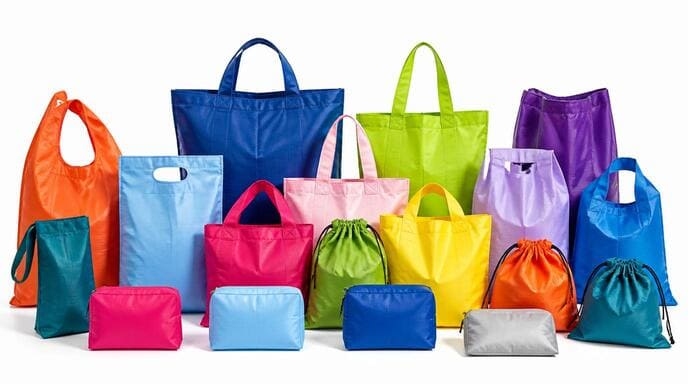
Nylon bags come in numerous forms, including lightweight nylon shopping bags, versatile nylon tote bags, convenient drawstring bags, rugged travel bags, functional backpacks, and insulated cooler bags, proving their adaptability for diverse purposes and user lifestyles.
Nylon Shopping Bags
Designed for everyday errands, nylon shopping bags are a popular alternative to single-use plastic bags. They are typically lightweight, easy to fold, and durable enough to carry groceries or purchases. Their water resistance also makes them practical for unpredictable weather.
Nylon Tote Bags
Nylon tote bags offer a blend of fashion and function. They are often larger than typical shopping bags, with comfortable straps for carrying over the shoulder. Available in various styles, from minimalist to elaborate designs, they serve well as everyday carryalls, work bags, or casual accessories.
Nylon Drawstring Bags
These simple yet effective bags feature a drawstring closure, making them easy to open and close. Nylon drawstring bags are perfect for gym clothes, shoes, or light travel essentials. Their casual appeal and ease of use make them a popular choice for promotional giveaways and casual use.
Nylon Travel Bags
The durability and lightweight nature of nylon make it an excellent material for luggage and travel accessories. This category includes duffel bags, carry-on bags, packing cubes, and toiletry bags. Their resistance to moisture and tears ensures belongings stay protected during transit.
Nylon Backpacks
From hikers to students, nylon backpacks are ubiquitous. They offer excellent load-bearing capacity, comfort with padded straps and back panels, and organizational features like multiple compartments and pockets. Their durability ensures they can withstand the rigors of daily use and outdoor adventures.
Nylon Cooler Bags
Designed to keep food and drinks at the desired temperature, nylon cooler bags often feature insulated linings in addition to their durable nylon exterior. The nylon shell provides protection against tears and moisture, while the insulation maintains temperature efficiently.
Common Nylon Fabric Types Used for Bags: 210D, 420D, 600D Nylon, and Ripstop Nylon?
Not all nylon is the same. The specific weave and denier of nylon fabric significantly impact the performance, durability, and cost of a nylon bag. Understanding these distinctions is key to selecting the right material for your needs.
Common nylon fabrics for bags include 210D, 420D, and 600D, denoting thread thickness and density, with higher numbers indicating greater thickness and durability. Ripstop nylon, featuring a grid pattern, offers enhanced tear resistance, making these nylon fabric bags exceptionally resilient and reliable.
Understanding Denier (D)
Denier (D) is a unit of measurement for linear mass density of fibers. It describes the thickness of a yarn or fiber used in the fabric. A higher denier number means a thicker, heavier, and generally stronger yarn. For example, 600D nylon is made from thicker yarns than 210D nylon. This directly influences the fabric's weight, durability, and cost.
210D Nylon: Lightweight and Flexible
Fabrics like 210D nylon are lightweight and pliable. They are often used for bags where weight is a critical factor and extreme ruggedness isn't the primary concern, such as linings, simple tote bags, or lightweight packing cubes. While not as robust as higher deniers, it offers good durability for its weight.
420D Nylon: A Balanced Choice
420D nylon strikes a good balance between weight and durability. It's stronger and more abrasion-resistant than 210D but still relatively light. This makes it a versatile choice for many types of bags, including backpacks, duffel bags, and everyday totes, offering good performance for general use.
600D Nylon: Robust and Durable
600D nylon is a popular choice for heavy-duty applications. It's significantly thicker, stronger, and more abrasion-resistant than lower denier nylons. This makes it ideal for durable backpacks, luggage, outdoor gear, and work bags that need to withstand significant stress and rough handling. It provides excellent longevity for nylon bags.
Ripstop Nylon: Enhanced Tear Resistance
Ripstop nylon is characterized by a special reinforcing weave that makes it resistant to tearing and ripping. Thicker threads are woven at regular intervals in a crosshatch pattern. If a tear does occur, the ripstop structure helps to contain it, preventing it from spreading further. This makes it exceptionally durable for rugged nylon fabric bags, often used in outdoor gear and military applications.
Nylon Bag vs Other Materials: Which Bag Fabric Is Better?
In the quest for the perfect bag, comparing nylon bags to other materials is crucial for selecting the best material for bags that fits your specific needs and budget. Each fabric offers a unique set of advantages and disadvantages.
When comparing nylon bags to other materials, nylon often excels in durability and water resistance, though materials like polyester and canvas offer different balances of cost, weight, and aesthetics. The "better" choice depends entirely on the intended application, required performance, and user priorities.
Nylon Bag vs Polyester Bag: Differences in Durability, Cost, and Performance
Both nylon and polyester are strong synthetic fabrics used widely in bag manufacturing.
- Durability: Nylon generally boasts higher tensile strength and abrasion resistance than polyester, making nylon bags potentially more durable for heavy-duty use.
- Cost: Polyester is often less expensive to produce than nylon, making polyester bags a more budget-friendly option.
- Performance: Nylon tends to have better elasticity and resilience, while polyester often has superior UV resistance, meaning it's less likely to fade or degrade in sunlight. Nylon often feels smoother.
Nylon Bag vs Canvas Bag: Weight, Strength, and Appearance Comparison
Canvas bags, typically made from cotton or linen, offer a distinct aesthetic and feel compared to nylon.
- Weight: Canvas is generally heavier than nylon of comparable strength.
- Strength: While strong, canvas can be susceptible to tearing and abrasion. High-denier nylon often surpasses canvas in pure tensile strength and resilience.
- Appearance: Canvas has a natural, textured look that many find appealing for casual or eco-conscious branding. Nylon has a smoother, often shinier finish. Canvas is also more prone to staining and can mildew if not dried properly.
Nylon Bag vs Cotton Bag: Material Features and Application Differences
Cotton bags, especially when made from thicker materials like canvas or denim, are popular for their natural feel and breathability.
- Material Features: Cotton is biodegradable and breathable but absorbs moisture, can shrink, and is prone to wrinkling and mildew. Nylon is synthetic, water-resistant, quick-drying, and more durable against tears.
- Application Differences: Cotton bags are favored for organic branding, grocery shopping, and casual totes where breathability and natural aesthetics are key. Nylon bags are preferred for travel, sports, outdoor use, and situations requiring high durability and water resistance.
Nylon Bag vs Non Woven PP Bag: Cost, Reusability, and Customization Comparison
Non-woven Polypropylene (PP) bags are a very common and cost-effective option, especially for promotional and retail use.
- Cost: Non-woven PP bags are significantly cheaper to produce than nylon bags.
- Reusability: Both can be reusable, but nylon's superior durability means it typically lasts much longer than non-woven PP, which can tear more easily.
- Customization: Both offer excellent customization for printing logos and designs. Non-woven PP is extremely popular for large-scale promotional giveaways due to its low cost. Nylon offers greater longevity and performance for premium branding or functional applications.
Nylon Bag vs Oxford Fabric Bag: Strength, Water Resistance, and Heavy-Duty Performance
Oxford fabric, often made from cotton or synthetic blends, is known for its basket-weave pattern, offering good strength and breathability.
- Strength: High-denier nylon generally offers superior tensile strength and abrasion resistance compared to most standard Oxford fabrics.
- Water Resistance: Nylon, especially with coatings, is inherently more water-resistant than cotton-based Oxford fabrics. Synthetic Oxford fabrics can be coated for water resistance.
- Heavy-Duty Performance: For extreme conditions, heavy loads, and maximum durability, nylon often outperforms Oxford fabric due to its robust synthetic fibers and ability to handle stress.
Nylon Bag vs RPET Bag: Traditional Nylon and Recycled Material Comparison
RPET (Recycled Polyethylene Terephthalate) bags are made from recycled plastic bottles, offering a more sustainable alternative.
- Environmental Aspect: RPET bags are a strong eco-friendly choice, repurposing plastic waste. Virgin nylon production is petroleum-based.
- Performance: RPET fabric can mimic many properties of polyester and sometimes nylon, offering good durability and water resistance. However, high-performance nylon might still lead in terms of ultimate tensile strength and abrasion resistance in demanding applications.
- Comparison: While nylon offers proven performance, RPET provides a compelling sustainability story, making it a strong contender when environmental impact is a primary concern, especially for shopping bags and totes.
Nylon Bag Advantages and Disadvantages: Is Nylon a Good Material for Bags?
Every material has its strengths and weaknesses. Understanding the pros and cons of nylon bags helps determine if they are the good material for bags you need for your specific project or business.
Nylon bags offer significant advantages like superior strength, light weight, and excellent durability. However, potential disadvantages include a higher cost compared to some synthetics and susceptibility to UV degradation if untreated. Overall, nylon remains a strong contender for many bag applications due to its impressive performance profile.
Advantages of Nylon Bags
- Exceptional Strength: High tensile strength makes them ideal for carrying heavy loads.
- Superior Durability: Excellent resistance to abrasion, punctures, and tears ensures a long lifespan.
- Lightweight: Provides robustness without adding significant weight, enhancing portability.
- Water Resistance: Naturally repels water better than many natural fibers, protecting contents.
- Quick Drying: Dries faster than natural fibers if it does get wet.
- Mildew and Mold Resistant: Less prone to developing these issues compared to natural fabrics.
- Wrinkle Resistance: Tends to hold its shape well and resist creasing.
Disadvantages of Nylon Bags
- Cost: Generally more expensive than polyester, non-woven PP, or cotton fabrics.
- UV Degradation: Prolonged exposure to direct sunlight can weaken and discolor nylon if it lacks UV-protective treatments.
- Environmental Impact: Production of virgin nylon is petroleum-based, contributing to fossil fuel consumption and potential pollution, though recycling options are improving.
- Static Electricity: Nylon can sometimes generate static electricity, although this is rarely a significant issue for bag applications.
Is Nylon a Good Material for Bags?
Yes, for many applications, nylon is an excellent material for bags. Its combination of strength, durability, lightweight nature, and water resistance makes it a top choice for travel gear, backpacks, shopping bags, promotional items, and more. When performance and longevity are critical, nylon bags are hard to beat.
Are Nylon Bags Waterproof? Understanding Nylon Water Resistance and Coating Options?
A common question arises: are nylon bags truly waterproof? The answer involves understanding the fabric's natural properties and the potential treatments it can receive to enhance its protective capabilities.
While nylon fabric is inherently water-resistant due to its synthetic nature, most nylon bags are not completely waterproof unless treated with coatings like PU or PVC. These coatings enhance their ability to repel water, creating more waterproof nylon bags suitable for protection against rain and spills.
Nylon's Natural Water Repellency
Nylon fibers are hydrophobic, meaning they do not readily absorb water. This natural characteristic gives them a good level of water resistance. A light sprinkle or brief shower might not penetrate the fabric, keeping the contents relatively dry. However, this resistance is not absolute.
Water-Resistant vs. Waterproof
It's crucial to distinguish between water-resistant and waterproof.
- Water-Resistant: The material can repel water to a certain extent and withstand light moisture. Most basic nylon fabrics fall into this category.
- Waterproof: The material provides a complete barrier against water penetration, even under prolonged exposure or pressure. For bags, this level of protection usually requires additional treatments.
Coating and Laminating for Enhanced Protection
To achieve true waterproofness or significantly enhanced water resistance in nylon bags, manufacturers apply various coatings or laminations to the fabric. Common options include:
- Polyurethane (PU) Coating: A flexible, durable coating that creates a waterproof barrier. It's common on the inside of backpack fabrics to prevent leaks.
- Polyvinyl Chloride (PVC) Coating: Offers excellent water and abrasion resistance but can be stiffer and less breathable than PU.
- Thermoplastic Polyurethane (TPU) Laminates: Offer a highly durable and flexible waterproof layer, often used in high-performance gear.
Importance of Seams and Zippers
Even with waterproof coatings, the seams and zippers of a nylon bag can be entry points for water. Manufacturers often use special techniques like sealed seams or waterproof zippers on truly waterproof bags to ensure complete protection. For standard water-resistant bags, tightly woven fabrics and well-constructed seams are important. When seeking waterproof nylon bags, pay attention to these construction details.
How Strong Are Nylon Bags? Understanding Nylon Fabric Strength and Load Capacity?
When you need a bag that can take a beating and reliably carry your essentials, the strength of a nylon bag is a major draw. But just how robust are they, and what determines their load-carrying capability?
Nylon bags are exceptionally strong, boasting high tensile strength and excellent resistance to abrasion and tearing. The specific strength and load capacity depend heavily on the denier, weave, and construction of the nylon fabric used, but generally, they are considered highly durable nylon bags capable of carrying significant weight safely and reliably.
Tensile Strength Explained
Tensile strength refers to the maximum stress a material can withstand while being stretched or pulled before breaking. Nylon's high tensile strength means that the fibers and, consequently, the fabric can endure considerable pulling forces. This is fundamental to how much weight a nylon bag can hold without the material itself failing.
Abrasion and Tear Resistance
Beyond simple pulling strength, nylon's resistance to rubbing (abrasion) and ripping (tearing) is critical for bag durability. Bags often come into contact with rough surfaces, edges, and other items, which can quickly wear down weaker materials. Nylon's inherent toughness allows it to withstand this constant friction and stress, contributing to the longevity of durable nylon bags.
Impact of Denier and Weave on Load Capacity
As discussed earlier, the denier (thickness of the yarn) and the weave structure significantly influence a nylon bag's strength and load capacity.
- Higher Denier: Fabrics like 600D or 1000D nylon use thicker yarns, providing greater strength and ability to handle heavier loads.
- Weave Type: Tightly woven fabrics are generally stronger and more resistant to punctures than loosely woven ones. Ripstop nylon, with its reinforcing grid, is particularly good at preventing tears from spreading under load.
- Construction: Reinforced stitching, double layers of fabric in high-stress areas, and sturdy handles all contribute to a nylon bag's overall load capacity and structural integrity.
Examples of Load Capacities for Different Nylon Types
While specific load capacities vary greatly with bag design and quality, general guidelines can be illustrative:
- Lightweight (210D-420D): Suitable for everyday items, laptops, books, or light groceries. Perhaps up to 10-15 kg (22-33 lbs) for well-constructed bags.
- Medium Duty (420D-600D): Good for travel essentials, moderately heavy shopping, or daily work use. Potentially 15-25 kg (33-55 lbs).
- Heavy Duty (600D+ / Ballistic Nylon / Ripstop): Designed for rugged use, camping gear, heavy tools, or substantial travel loads. Can often handle 25 kg (55 lbs) and upwards, depending on specific design and reinforcement.
Ultimately, the perceived strength of a nylon bag is a combination of the fabric's intrinsic properties and the engineering that goes into its construction.
Applications of Nylon Bags in Retail, Travel, Outdoor, Sports, and Promotional Markets?
The diverse applications highlight why nylon bags are a go-to choice across many industries and consumer needs. Their unique combination of durability, lightweight construction, and aesthetic versatility makes them adaptable for almost any purpose.
Nylon bags are ubiquitous, serving the retail sector (shopping bags, totes), the travel industry (luggage, backpacks), outdoor and sports (gear bags, hydration packs), and promotional markets (giveaways, branded merchandise) due to their exceptional durability, versatility, and customizability.
Retail Sector
In retail, nylon shopping bags and nylon tote bags offer a durable, reusable alternative to plastic or paper. They are excellent for carrying merchandise, providing a branded takeaway for customers. Their strength ensures they can handle multiple shopping trips, promoting sustainability and brand visibility long after purchase. They are also used for in-store displays or packaging for specific product lines.
Travel Industry
The travel sector heavily relies on nylon bags for luggage, duffel bags, carry-ons, and backpacks. Their ability to withstand the rigors of transit – being packed, checked, and handled frequently – is invaluable. Water resistance protects contents from rain or spills, while lightweight construction helps meet airline weight restrictions and reduces traveler fatigue.
Outdoor and Sports
For outdoor enthusiasts and athletes, nylon bags are indispensable. Backpacks for hiking, climbing, or camping need to be rugged, water-resistant, and capable of carrying significant gear. Gym bags, sports equipment bags, and cycling packs benefit from nylon's durability and easy-to-clean nature. Many specialized bags, like hydration packs, also utilize nylon for its performance characteristics.
Promotional Markets
Nylon bags are a popular choice for promotional items and corporate giveaways. Their durability ensures that branded bags are used repeatedly, offering extended brand exposure. Companies often opt for custom-printed nylon shopping bags or drawstring bags for events, trade shows, or as part of marketing campaigns. The ability to print vibrant logos makes them effective marketing tools.
Custom Nylon Bags for Wholesale Buyers and Brands?
For businesses seeking unique branding opportunities or specific functionality, custom nylon bags offer unparalleled possibilities. They allow for precise tailoring to meet exact product requirements, marketing goals, or client demands.
Custom nylon bags provide brands and wholesale buyers with the ultimate flexibility to create unique products. Working with a skilled nylon bag manufacturer allows for tailored designs, branding, and features, ensuring the bags perfectly meet specific market or promotional needs.
Why Choose Custom?
Off-the-shelf bags might not perfectly align with your brand identity or functional needs. Customization allows you to:
- Align with Brand Identity: Specify colors, logos, and designs that perfectly match your brand guidelines.
- Optimize Functionality: Determine the ideal size, pocket configuration, strap type, and closure system for your intended use.
- Stand Out: Create unique products that differentiate you from competitors.
- Meet Specific Requirements: Ensure compliance with industry standards or specific client demands.
Benefits for Brands
Brands can leverage custom nylon bags to:
- Develop unique product lines that reflect their ethos.
- Create eye-catching promotional merchandise that reinforces brand messaging.
- Enhance customer experience with high-quality, functional branded items.
- Ensure consistency in branding across all touchpoints, including packaging and accessories.
Benefits for Wholesalers
Wholesale buyers benefit from customization by:
- Offering a wider range of tailored products to their clients.
- Meeting niche market demands with bespoke solutions.
- Streamlining procurement by sourcing specialized bags from a single, capable manufacturer.
- Securing competitive pricing for bulk orders of custom-designed bags.
The Role of a Nylon Bag Manufacturer in Customization
A capable nylon bag manufacturer is your partner in bringing custom designs to life. They possess the expertise in materials, design, and production processes to translate your ideas into tangible products. From initial concept and sampling to mass production and quality control, they ensure your custom nylon bags meet your exact specifications and quality standards. Zhejiang Jiarong Packaging, with its extensive experience in bag manufacturing and customization across various materials, understands the nuances involved in producing high-quality custom bags for diverse clients.
Nylon Bag Customization Options: Size, Color, Printing, Handles, Zippers, and Accessories?
When ordering custom nylon bags, the level of detail goes far beyond just the material choice. Manufacturers offer a wide array of customization options to ensure the final product is exactly what you envisioned, both aesthetically and functionally.
Nylon bag customization spans dimensions, colors, printing techniques, handle types, closures like zippers, and additional accessories. These options allow for truly bespoke custom nylon bags tailored to precise functional and aesthetic requirements, ensuring a perfect fit for your brand or application.
Sizing and Dimensions
The first layer of customization is size. Bags can be manufactured to precise dimensions—length, width, and depth—to perfectly fit their intended contents or purpose. Whether you need a compact pouch or a large travel duffel, custom sizing ensures optimal utility.
Color Matching and Dyeing
Nylon fabric can be dyed in virtually any color. You can match your brand's specific Pantone colors for consistent branding. The dye process can also affect the fabric's feel and performance. For multi-color designs, printing methods become essential.
Handle Options
The type and length of handles significantly impact a bag's comfort and functionality. Options include:
- Webbing Straps: Durable, versatile, and available in various widths and colors.
- Rolled Handles: Offer a more comfortable grip for carrying heavier loads.
- Padded Straps: Essential for backpacks and shoulder bags to enhance comfort.
- Custom Lengths: Handles can be made to specific lengths for shoulder-carrying, cross-body wear, or hand-carrying.
Closure Mechanisms
The way a bag closes is critical for security and accessibility. Common options for custom nylon bags include:
- Zippers: Available in various types (coil, Vislon, metal) and colors, often with custom pullers. Waterproof zippers offer enhanced protection.
- Buckles and Clips: Used for secure closures on flap-over bags or for adjusting straps.
- Velcro: Provides a quick and easy fastening method.
- Drawstrings: A simple and effective closure for bags like pouches or backpacks.
- Snaps or Magnetic Closures: Offer a discreet and easy way to secure smaller compartments or flaps.
Adding Pockets, Straps, and Other Accessories
Further customization can involve adding functional elements:
- Internal and External Pockets: For organizing smaller items.
- Bottle Holders or Mesh Pockets: Common on backpacks and travel bags.
- MOLLE Webbing: For attaching additional gear on tactical or outdoor bags.
- Reinforced Bases: To enhance durability when bags are placed on the ground.
- ID Windows or Luggage Tags: For easy identification during travel.
- Reflective Strips: For increased visibility in low-light conditions.
These extensive customization options allow for the creation of truly unique and highly functional custom nylon bags that perfectly meet the specific requirements of brands and wholesale buyers.
Nylon Bag Printing Methods: Screen Printing, Heat Transfer, Sublimation, and More?
To make your custom nylon bags truly represent your brand and make a visual impact, effective printing methods are essential. The chosen method will influence the vibrancy, detail, durability, and cost of your custom graphics.
Popular nylon bag printing methods include screen printing for bold graphics, heat transfer for vibrant, detailed designs, and sublimation for full-coverage, edge-to-edge graphics on specific nylon types. Each method offers unique benefits for custom nylon bags, allowing for diverse branding possibilities.
Screen Printing
Screen printing is a classic and widely used method for applying ink onto fabric. A stencil (screen) is created for each color, and ink is pushed through the mesh onto the bag.
- Pros: Highly durable, cost-effective for large print runs, capable of bold, opaque colors, and works well on many nylon types.
- Cons: Can be less suitable for very fine details or complex, multi-color gradients. Setup costs can be high for small runs.
Heat Transfer
Heat transfer involves printing a design onto a special transfer paper and then using heat and pressure to apply it to the bag.
- Pros: Excellent for detailed graphics, photographic images, and vibrant colors. Works well on various surfaces and is good for smaller print runs.
- Cons: Durability can vary; if not applied correctly, the print might peel or crack over time. Some transfers may not adhere perfectly to all nylon textures.
Sublimation Printing
Sublimation is a process where special inks turn into a gas under heat and pressure, permanently bonding with the fabric fibers. This method requires fabrics with a high polyester content or specific nylon types treated for sublimation.
- Pros: Produces full-color, edge-to-edge graphics with exceptional vibrancy and durability. The ink becomes part of the fabric, so there's no raised texture and no risk of cracking or peeling.
- Cons: Limited to specific fabric types and lighter colors (white or light-colored nylon works best). Cannot achieve opaque white on darker fabrics.
Digital Printing
Advancements in digital printing technology allow for direct-to-garment or direct-to-fabric printing, similar to high-end inkjet printers.
- Pros: Ideal for very small print runs, complex multi-color designs, and rapid prototyping. Offers high detail.
- Cons: Can be more expensive per unit for large volumes compared to screen printing. Durability might vary depending on the ink and fabric compatibility.
Considerations for Nylon Fabric
When choosing a printing method for custom nylon bags, it's essential to consider the specific type of nylon. Some synthetic blends are better suited for certain processes. For instance, sublimation works best on polyester-rich materials, so specially treated nylons or blended fabrics might be required. A knowledgeable nylon bag manufacturer can guide you on the best printing technique for your design and chosen nylon fabric to ensure optimal results for your custom nylon bags.
How Are Nylon Bags Manufactured? From Fabric Selection to Finished Products?
Ever wondered how a raw piece of nylon fabric transforms into the functional nylon bags we use daily? The manufacturing process is a blend of precision engineering, skilled craftsmanship, and quality control, ensuring the final product meets high standards.
The manufacturing of nylon bags involves selecting the appropriate nylon fabric (based on denier and weave), cutting it into specific patterns, stitching or welding panels together, adding reinforcements, and integrating features like zippers and handles. Skilled craftsmanship and advanced machinery ensure a high-quality finished product from a reputable nylon bag manufacturer.
Fabric Sourcing and Preparation
The process begins with sourcing high-quality nylon fabric. Manufacturers select the specific denier, weave, and any necessary coatings (like PU for water resistance) based on the bag's intended use. The fabric is then inspected for defects and prepared for cutting.
Cutting and Pattern Making
Based on the design specifications for the nylon bag, patterns are created. These patterns are then used to precisely cut the nylon fabric panels. Modern manufacturing often uses automated cutting machines (like CNC cutters) for accuracy and efficiency, especially for large production runs.
Stitching Process
After the nylon fabric panels are cut, the next step is stitching the individual pieces together to form the basic bag structure. Since nylon is a woven fabric, most nylon bags are assembled using industrial sewing methods to create strong, flexible, and durable seams.
During this stage, the cut fabric pieces are carefully aligned according to the bag design and sewn together with high-strength threads. The main body panels, side panels, bottom sections, handles, shoulder straps, and other fabric parts are connected through precise stitching to ensure the overall structure is stable and properly shaped.
For areas that experience higher stress, such as handles, strap attachment points, and corners, manufacturers may apply reinforced stitching or bartack reinforcement to improve seam strength and load-bearing performance. Edge binding and seam finishing can also be added during the stitching process to enhance appearance and help prevent fabric edges from fraying.
Modern nylon bag production typically uses professional industrial sewing machines to maintain consistent stitch quality, accurate assembly, and efficient production for large wholesale orders.
At Zhejiang Jiarong Packaging, nylon bags are manufactured with skilled sewing operators and strict quality control during the stitching process, ensuring strong seams, reliable durability, and consistent quality for customized bag projects.
Adding Hardware and Reinforcements
Once the main body of the bag is formed, necessary hardware like zippers, buckles, D-rings, and adjustable straps are attached. High-stress points, such as where straps connect to the bag or the base of zipper openings, are reinforced with extra stitching or stronger materials to prevent failure under load.
Quality Control and Finishing
Throughout the manufacturing process, quality control checks are performed at different stages. This includes inspecting fabric quality, verifying dimensions, checking stitch integrity or weld strength, and ensuring that zippers, handles, and other components meet the required standards. After production, finished bags are inspected, counted, packed, and prepared for shipment. Zhejiang Jiarong Packaging applies strict quality control procedures throughout the production process to ensure consistent quality and reliable performance for customized nylon bags and other bag products.
How to Choose the Right Nylon Bag for Your Business or Project?
With so many options and considerations, selecting the ideal nylon bag requires a strategic approach. It's not just about picking a bag; it's about finding the perfect material and design that will serve its purpose effectively and represent your brand optimally.
To choose the right nylon bag, assess its intended use, required durability, budget, and desired features. Consider the specific application against the properties of different nylon types and compare against other materials to find the best material for bags for your specific needs.
Defining Your Needs
Start by clearly defining the bag's purpose.
- What will it carry? (e.g., groceries, laptops, sports gear, travel essentials)
- How often will it be used? (e.g., daily, occasionally, for specific events)
- What is the expected load? (e.g., light, moderate, heavy)
- In what environment will it be used? (e.g., city, outdoors, travel)
Budgetary Constraints
Nylon bags can vary in price depending on the denier, features, and any special coatings or treatments. Determine your budget early on, as this will help narrow down the options between different nylon grades or even other comparable materials.
Aesthetic and Branding Considerations
What look and feel do you want your bag to convey? Consider the color, finish, and texture. If branding is important, think about how logos and graphics will be applied. Some nylon types and finishes lend themselves better to certain printing methods.
Environmental Impact Assessment
While durable, virgin nylon production has environmental considerations. If sustainability is a key factor, explore options like recycled nylon (RPET) or compare nylon's longevity and reusability against more eco-friendly alternatives like cotton or non-woven PP for specific applications.
Comparing Nylon Specs (Denier, Weave, Coatings)
Once needs are defined, dive into the specifics of nylon fabrics:
- Denier: Choose a denier (210D, 420D, 600D, 1000D) that matches the required durability and weight.
- Weave: Consider standard weaves or Ripstop for enhanced tear resistance.
- Coatings: Decide if water resistance (PU, PVC) is necessary.
By systematically evaluating these factors, you can confidently select the best material for bags and the most suitable nylon bag design for your business or project.
Are Nylon Bags Environmentally Friendly? Nylon Recycling and Sustainable Options?
In today's conscious market, the environmental footprint of products, including nylon bags, is a significant factor for consumers and businesses alike. Understanding the lifecycle and sustainability of nylon is key to making responsible choices.
While traditional nylon production is petroleum-based, advancements in nylon recycling and the development of sustainable alternatives like RPET are improving the eco-friendliness of bags. Choosing nylon bags made from recycled materials or exploring Zhejiang Jiarong Packaging's sustainable options like non-woven PP or cotton can mitigate environmental concerns.
The Environmental Impact of Virgin Nylon
The production of virgin nylon relies on fossil fuels, a non-renewable resource. The manufacturing process can also consume significant energy and water, and potentially release emissions. This makes virgin nylon less environmentally favorable compared to natural, biodegradable, or recycled materials, especially when considering single-use alternatives.
Nylon Recycling Processes and Challenges
Recycling nylon is possible, and several companies are developing chemical and mechanical recycling processes. However, challenges remain:
- Collection and Sorting: Gathering sufficient quantities of clean nylon waste can be difficult.
- Degradation: Mechanical recycling can sometimes degrade the fiber's quality, limiting its reuse in high-performance applications.
- Cost: Recycled nylon can sometimes be more expensive than virgin nylon due to processing complexities.
RPET (Recycled PET) as an Alternative
RPET fabric, made from recycled plastic bottles, has become a popular sustainable alternative. It offers many of the desirable properties of polyester and nylon, such as durability and water resistance, while repurposing waste plastic. Many bags that might traditionally be made from nylon are now successfully produced using RPET.
Other Sustainable Materials
For businesses prioritizing sustainability, Zhejiang Jiarong Packaging offers excellent alternatives:
- Non-Woven PP Bags: Cost-effective, durable, and recyclable, widely used for shopping and promotional purposes.
- Cotton/Canvas Bags: Biodegradable, renewable, and offer a natural aesthetic.
- RPET Bags: As mentioned, a great option for reducing plastic waste.
Longevity and Reusability of Nylon Bags
One of the key environmental benefits of nylon bags is their exceptional durability and longevity. A high-quality nylon bag can be used hundreds or thousands of times, significantly reducing the need for frequent replacements and thus lowering overall waste and resource consumption compared to single-use bags. When choosing nylon bags, investing in quality that ensures a long lifespan contributes positively to sustainability.
Expert Opinions: What Industry Professionals Think About Nylon Bags?
What do those who work with bags daily—designers, manufacturers, and buyers—have to say about the performance and utility of nylon bags? Their insights offer valuable perspectives on why this material remains a staple.
Industry professionals often praise nylon bags for their exceptional durability, lightweight construction, and versatility, making them a reliable choice for manufacturing, especially for demanding applications. They highlight nylon's consistent performance and adaptability as key advantages that serve a wide range of client needs.
Insights from Bag Designers
Bag designers frequently select nylon for its ability to hold shape, its smooth finish which can look sleek and modern, and its inherent strength. They appreciate that nylon can be tailored into various forms, from structured backpacks to flexible tote bags, allowing for creative expression within functional constraints. The wide color palette and printing capabilities are also major advantages for brand integration.
Perspectives from Manufacturers
For manufacturers like Zhejiang Jiarong Packaging, nylon fabric represents a reliable material that supports efficient bag production through established stitching processes and suitable manufacturing techniques. They value nylon's consistent quality, durability, and versatility, which help ensure stable production and reliable product performance. The ability to customize nylon bags with different features, sizes, colors, and finishes is also an important advantage for meeting various customer requirements.
Opinions from Retail Buyers
Retail buyers often look for bags that offer a good balance of durability, functionality, and price. Nylon bags are favored for their longevity, meaning products sold in them are perceived as higher quality. They also appreciate nylon's water resistance, which protects merchandise. For promotional purposes, the high visibility of branding on durable nylon bags makes them a preferred choice for advertisers.
Thoughts from Sustainability Consultants
Sustainability consultants acknowledge that while virgin nylon has environmental impacts, its extreme durability is a significant positive. A long-lasting nylon bag prevents the need for frequent replacements, thereby reducing waste and resource consumption over its lifespan. They also advocate for the growing use of recycled nylon and RPET to mitigate the initial environmental footprint.
User Reviews and Market Feedback: Why Customers Choose Nylon Bags?
Real-world experiences often paint the clearest picture of a product's value. What do users say about their nylon bags and the specific benefits they appreciate?
Customer feedback frequently emphasizes the longevity and resilience of nylon bags, often citing their ability to withstand heavy use and various weather conditions. Users appreciate durable nylon bags for their reliability, functional performance, and the peace of mind they provide when carrying essentials.
Common Praise Points
Across reviews, common themes emerge:
- Durability: Users consistently mention how well their nylon bags hold up over time, resisting wear and tear much better than bags made from other materials.
- Water Resistance: Many appreciate that their belongings stay dry during unexpected rain showers or accidental spills.
- Lightweight: The lack of excessive weight, even in sturdy bags, is often highlighted as a comfort factor.
- Easy to Clean: Nylon surfaces are generally easy to wipe down, making maintenance straightforward.
Specific Use Case Testimonials
Users often share specific stories:
- Frequent travelers praise their nylon travel bags for surviving countless flights and excursions.
- Students and commuters rely on nylon backpacks to protect laptops and daily essentials through busy schedules.
- Parents appreciate the robustness of nylon cooler bags for outings with children.
- Shoppers find nylon shopping bags to be far more reliable than flimsy alternatives.
Comparisons to Previous Bag Experiences
Many reviews compare nylon bags favorably to bags made from canvas, cotton, or polyester, noting that nylon bags often last significantly longer or perform better under demanding conditions. While sometimes pricier initially, the extended lifespan is seen as providing better value.
Areas for Improvement Mentioned by Users
While overwhelmingly positive, some users mention potential areas for improvement:
- UV Fading: In areas with intense sunlight, some users have noted colors fading over time if the nylon isn't UV-treated.
- Static Cling: Though minor, some find that certain synthetic fabrics can attract lint or create static.
- Environmental Concerns: A growing segment of consumers is mindful of the petroleum-based origins of virgin nylon and seeks out recycled or more sustainable alternatives.
Overall, market feedback strongly supports the reputation of nylon bags as a reliable, long-lasting, and high-performing choice for a wide array of needs.
Our Nylon Bag Manufacturing and Customization Services?
While Zhejiang Jiarong Packaging excels in a wide range of eco-friendly materials like non-woven and PP woven fabrics, our extensive manufacturing expertise and advanced customization capabilities mean we can cater to your needs for custom nylon bags. We offer wholesale nylon bags with comprehensive services from design to delivery, partnering with you to create exceptional products.
Jiarong's Commitment to Quality Manufacturing
With over 11 years of OEM/ODM experience, Zhejiang Jiarong Packaging has built a reputation for quality and reliability. We employ advanced machinery, including ultrasonic bag-making machines and high-speed printing presses, alongside a skilled workforce. While our core specialization lies in environmentally friendly materials, this deep understanding of bag construction, material properties, and finishing techniques allows us to adapt our expertise to various synthetic fabrics, including nylon.
Our Customization Process for Various Materials
Our approach to customization is holistic. Whether it's for non-woven, PP woven, cotton, or potentially nylon, we work closely with clients to:
- Understand Needs: Discuss your project's purpose, target audience, and desired features.
- Design & Sampling: Develop design concepts and provide physical samples for approval, ensuring every detail is to your satisfaction.
- Material Sourcing: Select the best material based on your requirements, whether it's our specialty eco-fabrics or sourced nylon.
- Production: Utilize our state-of-the-art facilities for precise cutting, printing, stitching, and finishing.
- Quality Assurance: Implement rigorous quality checks at every stage.
Why Choose Us for Your Wholesale and Custom Bag Needs
Choosing Zhejiang Jiarong Packaging means partnering with an experienced bag manufacturer focused on reliable quality and customized solutions. Our strengths include:
- Extensive Experience: Over a decade of experience in OEM/ODM bag manufacturing.
- Efficient Production Capacity: Equipped with modern production equipment, including 100+ industrial sewing machines, automatic production lines, and skilled workers to support stable and efficient manufacturing for large-volume orders.
- Comprehensive Services: From design communication and sample development to production and shipment coordination, we provide complete support for customized bag projects.
- Quality Commitment: Strict quality control procedures and compliance with international standards, including ISO certifications, help ensure consistent product quality.
- Flexible Customization: With expertise in various bag materials and manufacturing processes, we provide customized solutions for different applications, including wholesale nylon bags and custom nylon bags.
We are committed to providing reliable products and professional manufacturing support, helping customers develop functional and customized bag solutions for their markets.
Frequently Asked Questions About Nylon Bags
What is a nylon bag made of?
A nylon bag is primarily constructed from nylon fabric, a synthetic polymer known for its strength and durability. This material is woven or knit into fabric used to create a wide variety of bags, often featuring water-resistant properties and a smooth finish.
Is nylon better than polyester for bags?
For bags requiring exceptional strength, abrasion resistance, and moisture repellency, nylon often has an edge. Polyester may offer better UV resistance and be more cost-effective, making the choice dependent on specific needs for nylon vs polyester bag comparison and application demands.
Are nylon bags waterproof?
Pure nylon fabric is water-resistant, not fully waterproof. Most waterproof nylon bags achieve this level of protection through special coatings (like PU or PVC) applied to the fabric or via tightly constructed seams and waterproof zippers to prevent water penetration.
How long do nylon bags last?
High-quality durable nylon bags can last for many years, often a decade or more, with proper care. Their inherent resistance to wear, tear, moisture, and abrasion contributes significantly to their impressive longevity compared to many other bag materials.
What is the best nylon fabric for shopping bags?
For nylon shopping bags, fabrics like 210D or 420D are often suitable, offering a good balance of lightness, flexibility, and durability. For more robust nylon tote bags or bags intended for heavier use, 600D or Ripstop nylon might be preferred for superior resilience.
Can nylon bags be customized with logos?
Absolutely. Custom nylon bags are highly popular for branding and promotional purposes. Logos and designs can be applied using various printing methods such as screen printing, heat transfer, or sublimation, ensuring your branding is prominently and effectively displayed.
Are nylon bags eco-friendly?
While virgin nylon production has environmental impacts due to its petroleum base, the growing availability of recycled nylon (like RPET) and the inherent durability and reusability of nylon bags contribute to a more sustainable lifecycle compared to single-use alternatives. Investing in long-lasting nylon bags reduces waste.
Conclusion: Is a Nylon Bag the Right Choice for Wholesale and Custom Projects?
In summary, nylon bags stand out as a remarkably versatile and durable option for a multitude of applications. Their key strengths—exceptional tensile strength, excellent abrasion resistance, lightweight construction, and inherent water repellency—make them ideal for everything from everyday shopping and travel to rugged outdoor adventures. While considerations like cost and UV sensitivity exist, these can often be managed through material selection, coatings, and responsible manufacturing practices.
For businesses seeking reliable wholesale nylon bags or highly specific custom nylon bags, understanding the different types of nylon fabric and customization options is crucial. By partnering with an experienced manufacturer, you can ensure your chosen bags meet precise functional requirements and effectively represent your brand. At Zhejiang Jiarong Packaging, we leverage our extensive bag manufacturing expertise to deliver quality and value, whether you're exploring our specialized eco-friendly options or discussing custom projects involving materials like nylon. Let's create the perfect bag solution for your needs.