Are you packing lunch for work or heading out for a picnic? You've likely wondered about the difference between a lunch bag and a cooler bag. While both keep your food fresh, their designs and intended uses vary significantly. Understanding these distinctions is key to preventing spoilage, maintaining optimal temperatures, and ensuring your food is as enjoyable as possible.
The primary difference between a lunch bag and a cooler bag lies in their insulation capabilities and intended duration of use. A lunch bag is designed for carrying daily meals for short periods, typically a few hours, focusing on convenience. A cooler bag, however, offers superior temperature control and longer insulation performance, making it suitable for extended outdoor activities, grocery transport, or longer commutes.
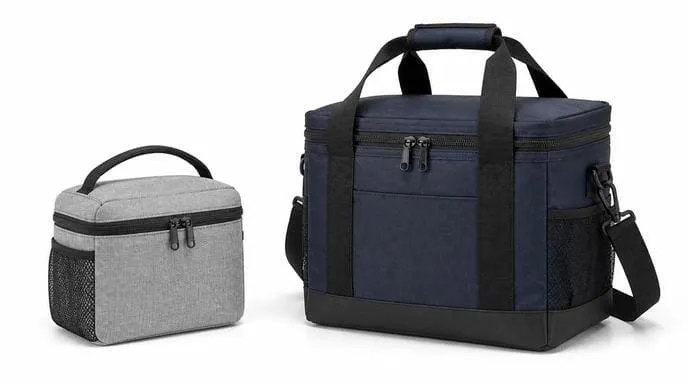
Choosing the right bag ensures your meals stay fresh, your drinks remain cold, and your overall experience is enhanced. Let's dive into what makes each bag unique and how to pick the perfect one for your needs.
1. What Is a Lunch Bag?
So, what exactly defines a lunch bag, and why do we reach for them day after day? A lunch bag is essentially your personal, portable food carrier, designed for the everyday journey of bringing your carefully prepared meal from home to your destination.
Definition of a Lunch Bag
A lunch bag is a compact, often insulated, portable container primarily designed for carrying single-person meal portions. They are the go-to choice for individuals heading to work, school, or simply running errands, prioritizing convenience and immediate food access over prolonged temperature maintenance. Their typical capacity aligns with one person's daily meals, making them small and easy to handle.
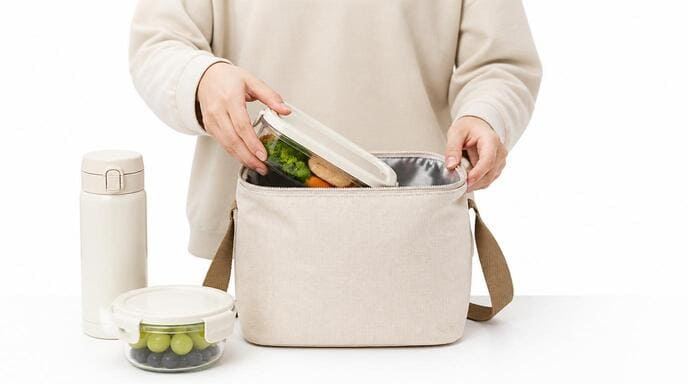
Think of it as your trusty sidekick for daily nourishment, ensuring your food stays ready for consumption at lunchtime.
Common Features of Lunch Bags
Lunch bags are engineered with practicality and ease of use in mind. Their design incorporates several features that make them ideal for daily transport.
- Compact and Lightweight Structure: They are designed to be easily carried without adding significant bulk or weight to your daily load.
- Easy Carrying Handles: Most feature simple top handles or shoulder straps for comfortable portability.
- Zipper Closure: A secure zipper closure keeps the contents safe and helps maintain internal temperature.
- Interior Insulation Layer: This is crucial; it uses materials like foil or PEVA to slow down heat transfer, keeping hot food warm and cold food cool for several hours.
- Food Container Compatibility: The interior is usually sized to accommodate standard food containers, bento boxes, or water bottles.
- Easy Cleaning Materials: Linings are often wipeable, making spills and messes simple to clean up after a meal.
Common Lunch Bag Materials
The materials used in a lunch bag are chosen to balance durability, insulation, and cost. The construction typically involves multiple layers, each serving a specific purpose.
Outer Fabric:
- Oxford Fabric: Known for its durability and resistance to abrasion, making it a robust choice.
- Polyester: A popular synthetic fabric that is lightweight, water-resistant, and cost-effective.
- Non-Woven Fabric: Affordable and versatile, often used for promotional or budget-friendly options.
- Nylon: Offers excellent durability and tear resistance, often found in higher-end models.
Insulation Layer:
- Aluminum Foil: Highly effective at reflecting radiant heat, keeping contents warm or cold.
- EPE Pearl Cotton: A lightweight, flexible foam material providing good insulation.
- Foam: Offers thermal resistance, commonly used in thicker insulation layers.
- PEVA Lining: A food-safe, waterproof, and easy-to-clean inner layer.
These layers work together. The outer fabric protects the bag, the insulation layer minimizes heat transfer, and the inner lining ensures it's waterproof and simple to maintain.
Quick Summary: Lunch bags are compact, lightweight personal carriers for daily meals. They feature easy-to-use designs like zippers and handles, with interior insulation layers made from materials like foil or EPE pearl cotton to maintain food temperature for several hours. Outer fabrics such as polyester or Oxford fabric provide durability, while PEVA lining ensures a waterproof and clean interior.
2. What Is a Cooler Bag?
Now, let's shift our focus to the cooler bag, a more robust solution designed for when temperature control needs to go the extra mile. These bags are built for serious insulation.
Definition of a Cooler Bag
A cooler bag is a portable insulated container engineered to maintain the temperature of food and beverages for extended periods. Unlike everyday lunch bags, cooler bags are built for more demanding applications. They are commonly used for a wide range of activities, including outdoor adventures like camping and picnics, transporting groceries, long road trips, and professional food delivery services.
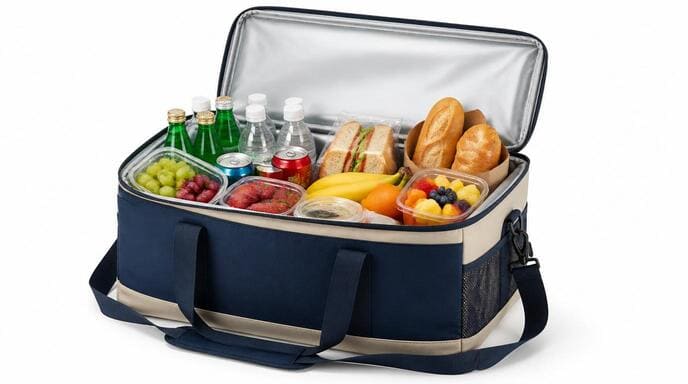
These bags are the workhorses of temperature-controlled transport, ensuring perishables stay safe and refreshing drinks remain chilled for hours on end.
Common Features of Cooler Bags
Cooler bags are distinguished by their emphasis on superior insulation and durability. Their construction is more substantial to handle longer durations and harsher conditions.
- Thicker Insulation Structure: They typically feature a more substantial layer of insulation material, such as thicker foam or EPE, to reduce heat transfer significantly.
- Larger Capacity: Cooler bags often come in medium to extra-large sizes, accommodating multiple meals, drinks, or a larger grocery haul.
- Better Thermal Retention: Their primary design goal is to keep contents cold (or hot) for many hours, often up to 12-24 hours with ice packs.
- Stronger Construction: Reinforcements, sturdier seams, and more durable zippers are common to withstand heavy use.
- More Durable Materials: Outer fabrics are often heavier-duty to resist punctures and abrasions common in outdoor or commercial settings.
- Additional Features: Many include adjustable shoulder straps for comfortable carrying, waterproof zippers to prevent leaks, reinforced handles, and multiple compartments for organization.
Types of Cooler Bags
The world of cooler bags is diverse, with specialized designs catering to different needs. Understanding these categories can help you pinpoint the best fit for your specific application.
Soft Cooler Bags
These are often made from flexible materials and have a softer construction compared to hard-shell coolers. They are generally lightweight, easy to fold and store when not in use, and are very popular for day trips, picnics, and casual outdoor activities.
Delivery Cooler Bags
Specifically designed for the demands of food delivery services, these bags are built for maximum durability, frequent use, and often large capacities. They need to maintain temperature over longer delivery routes and withstand constant loading and unloading. I've seen how crucial reliable delivery bags are for customer satisfaction during my time working with food brands.
Grocery Cooler Bags
These are typically found in supermarkets or used as reusable shopping bags for transporting chilled and frozen groceries home. They prioritize ease of carrying and enough capacity for a typical shopping trip, often featuring flat bottoms and strong handles.
Insulated Tote Bags
These bags cleverly combine the functionality of a stylish tote bag with the thermal protection of an insulated bag. They are perfect for carrying personal items alongside a packed lunch or snacks, offering a discreet way to keep food at the desired temperature.
Quick Summary: Cooler bags are designed for superior, long-term temperature control, ideal for outdoor activities, grocery transport, and deliveries. They feature thicker insulation, larger capacities, and more robust construction than standard lunch bags. Types include flexible soft coolers, heavy-duty delivery bags, convenient grocery bags, and stylish insulated totes.
3. Lunch Bag vs Cooler Bag: Key Differences Overview
To truly grasp the distinction, let's break down the fundamental differences side-by-side. It's more than just size; it’s about purpose and performance.
| Feature | Lunch Bag | Cooler Bag |
|---|---|---|
| Main Purpose | Daily meal carrying, short-term storage | Long-term temperature preservation, robust food/drink transport |
| Typical Users | Office workers, students, commuters | Outdoor enthusiasts, delivery drivers, families, grocery shoppers |
| Capacity | Small to medium (1-2 person meal) | Medium to large (multiple meals, drinks, groceries) |
| Insulation Thickness | Light to moderate | Moderate to heavy (thicker foam, EPE) |
| Heat Retention Time | Short-term (few hours) | Longer-term (6+ hours, up to 24+ with ice packs) |
| Structure | Compact, lightweight, flexible | More reinforced, often sturdier, can be rigid or semi-rigid |
| Portability | Easy daily carrying, fits in bags | Designed for dedicated transport (handles, shoulder straps) |
| Durability Requirement | Normal daily use, occasional spills | Frequent or heavy use, potential for outdoor/commercial wear and tear |
This table highlights how each bag is optimized for its specific role. A lunch bag prioritizes daily convenience, while a cooler bag emphasizes extended thermal performance and durability.
Quick Summary: The core differences between lunch bags and cooler bags lie in their main purpose, capacity, insulation thickness, and heat retention time. Lunch bags are for short-term, everyday use by individuals, whereas cooler bags are built for longer durations, larger volumes, and more demanding transport scenarios, offering superior insulation and durability.
4. Insulation Performance Comparison
The heart of any insulated bag is its ability to keep things hot or cold. The difference in insulation structure and thickness directly impacts how long your food stays at the desired temperature.
Insulation Structure Differences
The way these bags are constructed dictates their thermal efficiency. It's not just about the material, but how it's layered and how much of it is used.
- Lunch bags typically feature a simpler insulation structure: often an outer fabric layer, followed by a thin insulation layer (like a thin EPE foam or aluminum foil lining), and then a waterproof inner lining. This design is sufficient for keeping a meal warm or cool until lunchtime.
- Cooler bags employ a more sophisticated and thicker insulation system. This usually includes a durable outer fabric, a thicker layer of high-density foam or EPE pearl cotton, sometimes an additional reflective foil layer to bounce radiant heat, and a robust, waterproof, and often food-grade inner lining. This multi-layered, thicker approach drastically reduces heat transfer.
The thickness of the insulation is a critical factor. Thicker insulation creates a greater barrier against external temperature changes. This directly affects:
- Heat Transfer Speed: Thicker insulation slows down how quickly heat enters or leaves the bag.
- Cold Retention Time: More insulation means ice packs last longer and cold items stay cold for extended periods.
- Weight: While thicker insulation is better, it can also add more weight to the bag.
- Cost: Higher quality and thicker insulation materials generally increase the manufacturing cost.
Temperature Retention Ability
When it comes to keeping food at its intended temperature, there's a significant performance gap.
Lunch Bags:
- Suitable for: Keeping meals warm until lunchtime or maintaining the coolness of a snack for a few hours. They are excellent for short-distance transport within a few miles.
- Performance: Usually designed for several hours of insulation, typically 2-4 hours, depending on the external temperature and initial food temperature. They are not designed for overnight chilling or keeping frozen items frozen.
Cooler Bags:
- Suitable for: Longer outdoor activities like picnics or beach days, transporting groceries home from the store (especially frozen or chilled items), and demanding delivery applications.
- Performance: Offer significantly better thermal performance. When used with ice packs or ice blocks, they can keep contents cold for 6-24 hours or even longer.
- Optimization: Their performance is greatly enhanced by using ice packs, high-density insulation materials, and ensuring the bag is packed full to minimize air space.
It's important to remember that actual insulation time is influenced by many factors: the specific material structure and thickness, the outside temperature, how often the bag is opened, and the initial temperature of the food or drinks packed inside.
Quick Summary: Cooler bags outperform lunch bags in temperature retention due to their thicker, multi-layered insulation structures, which significantly slow heat transfer. While lunch bags are suitable for a few hours of insulation for daily meals, cooler bags can maintain temperatures for 6-24+ hours, especially when used with ice packs, making them ideal for extended use and transport.
5. Lunch Bag vs Cooler Bag: Material Comparison
The choice of materials plays a pivotal role in the durability, performance, and cost of both lunch bags and cooler bags. Let's break down the common materials used for their outer shells and insulation.
Outer Material Comparison
The outer fabric protects the bag from wear and tear and contributes to its overall look and feel.
- Polyester: This is a very common choice due to its lightweight nature, resistance to stretching and shrinking, and cost-effectiveness. It's often treated to be water-resistant and is widely used in many standard lunch bags.
- Oxford Fabric: Offering stronger abrasion resistance and better durability than standard polyester, Oxford fabric is a good choice for bags that might see rougher handling, making it more suitable for robust lunch bags or lighter cooler bags.
- Non-Woven Fabric: This is a more affordable and easily printable material, often used for promotional insulated bags or budget-friendly options. It's less durable than woven fabrics but is very lightweight and versatile.
- Nylon: Known for its superior durability, strength, and resistance to abrasion and tearing, nylon is often found in higher-end or more premium lunch bags and cooler bags where longevity is a key factor.
Insulation Material Comparison
The interior insulation is what provides the thermal barrier. Different materials offer varying degrees of performance and weight.
- Aluminum Foil: This material is excellent at reflecting radiant heat, which helps keep contents hot or cold. It's often used as a layer within the insulation or as a direct lining.
- EPE Pearl Cotton: A lightweight and flexible expanded polyethylene foam. It offers a good balance of insulation properties and flexibility, making it a common choice for the core insulation layer in many cooler bags and higher-end lunch bags.
- Foam Insulation: This can refer to various types of closed-cell foam (like polyurethane or polyethylene). Foam provides excellent thermal resistance by trapping air. It's available in different thicknesses, with thicker foam offering better insulation.
- PEVA/EVA Lining: These are food-grade thermoplastic polymers often used as the inner lining. They are waterproof, leak-proof, non-toxic, and easy to clean, making them ideal for direct contact with food. PEVA is generally considered more environmentally friendly than PVC.
The combination of these outer and insulation materials dictates the bag's overall performance, longevity, and suitability for different environments.
Quick Summary: The outer materials for lunch and cooler bags include durable options like polyester, Oxford fabric, and nylon, chosen for protection and aesthetics. The crucial insulation layer commonly uses aluminum foil for heat reflection, EPE pearl cotton or foam for thermal resistance, and a waterproof PEVA/EVA lining for hygiene and leak prevention.
6. Lunch Bag vs Cooler Bag: Application Comparison
Understanding where and how you plan to use your insulated bag is perhaps the most critical factor in deciding between a lunch bag and a cooler bag. Their applications are quite distinct.
When to Choose a Lunch Bag
A lunch bag is the perfect companion for your daily routine when your primary concern is convenient transport of your meals for a few hours.
- Suitable for:
- Carrying your packed lunch to the office or workplace.
- Transporting meals to school or university.
- Daily commuting where you might eat on the go.
- Preparing your own meals for the day and needing a simple way to store them.
- Short trips or errands where you need to keep a snack or drink cool for a couple of hours.
- Advantages:
- Lightweight and Compact: Easy to carry and fits into larger bags or backpacks.
- Easy Storage: Takes up minimal space when not in use.
- Lower Cost: Generally more affordable than specialized cooler bags.
- Convenient for Everyday Use: Designed for the daily grind, making meal prep and transport effortless.
I personally prefer a simple, wipeable lunch bag for my daily office meals. It's just the right size for my container and water bottle, and it's easy to clean after a busy week.
When to Choose a Cooler Bag
A cooler bag is the superior choice when you need more substantial temperature control, larger capacity, or enhanced durability for specific activities.
- Suitable for:
- Food delivery services: Maintaining food temperature during longer routes is paramount.
- Grocery shopping: Keeping frozen and chilled items cold on the way home.
- Camping and picnics: Ensuring food stays safe and drinks remain chilled for extended periods outdoors.
- Fishing trips: Keeping bait fresh or catches cold.
- Beach activities: Protecting food and drinks from the heat.
- Long-distance food transportation: For road trips or moving food items.
- Advantages:
- Better Insulation: Keeps contents cold or hot for significantly longer periods.
- Larger Capacity: Can hold more food, drinks, or groceries.
- Stronger Protection: More durable materials and construction offer better protection against damage.
Quick Summary: Choose a lunch bag for everyday office, school, or commuting needs where insulation for a few hours is sufficient and portability is key. Opt for a cooler bag for longer durations, larger capacities, outdoor activities, grocery transport, and professional delivery, where superior insulation and durability are essential.
7. Lunch Bag vs Cooler Bag for Business Buyers
For businesses, offering branded or functional insulated bags can be a powerful marketing tool or a critical component of their operational logistics. The considerations for manufacturing custom bags differ significantly based on their intended use.
Custom Lunch Bag Manufacturing Considerations
When businesses look to produce custom lunch bags, they often focus on branding, portability, and everyday appeal.
- Size Customization: Tailoring dimensions to fit specific food containers or promotional items.
- Printing Options: High-quality printing for logos, brand colors, and designs to maximize brand visibility.
- Handle Design: Choosing comfortable and durable handles that align with brand aesthetics.
- Material Selection: Opting for cost-effective yet durable materials like polyester or non-woven fabric.
- Branding Requirements: Integrating logos prominently and ensuring the overall design reflects the brand's identity.
- Target Market Positioning: Creating bags that appeal to specific demographics, such as students, office workers, or event attendees.
Common buyers for custom lunch bags include corporate gifting companies, schools (for meal programs), retail brands looking for unique merchandise, and promotional companies distributing them as giveaways. These bags serve as mobile billboards, keeping a brand visible throughout the user's day.
Custom Cooler Bag Manufacturing Considerations
Custom cooler bags are often for commercial applications, requiring a greater emphasis on performance, durability, and specific functional requirements.
- Insulation Thickness: Specifying the R-value or thickness of foam/EPE to meet target temperature retention times.
- Load Capacity: Designing for the weight and volume of goods to be transported, ensuring structural integrity.
- Waterproof Requirements: Ensuring the lining and zippers are fully waterproof, especially for delivery or outdoor use.
- Food Safety Lining: Using certified food-grade, easy-to-clean, and odor-resistant inner materials.
- Reinforced Structure: Strengthening seams, handles, and zippers for frequent, heavy-duty use.
- Commercial Durability: Selecting rugged outer materials like heavy-duty polyester or reinforced nylon to withstand daily commercial wear and tear.
Common buyers for custom cooler bags include food delivery companies needing to maintain food quality, grocery retailers wanting branded reusable shopping bags with insulation, outdoor and sporting goods brands creating products for adventure, and supermarkets offering them for chilled product transport. Reliability and performance are paramount for these business applications.
Quick Summary: Custom lunch bag manufacturing focuses on branding, portability, and everyday appeal for promotional or retail purposes. Custom cooler bag manufacturing prioritizes performance, durability, and functionality for commercial uses like food delivery, grocery transport, and outdoor gear, with a strong emphasis on insulation, load capacity, and structural integrity.
8. How to Choose Between a Lunch Bag and Cooler Bag?
Making the right choice between a lunch bag and a cooler bag boils down to understanding your primary needs and intended usage. It's about matching the bag's capabilities to your lifestyle or business requirements.
Choose a Lunch Bag If:
- You carry one meal daily: Your primary need is to transport your breakfast or lunch from home to your immediate destination, like an office or school.
- You need lightweight portability: You want something easy to carry, perhaps that fits inside another bag, without adding much bulk.
- Insulation time requirement is short: You plan to eat your meal within a few hours of packing, so long-term temperature control isn't a major concern.
- Budget is a primary consideration: Lunch bags are generally more affordable.
- Simplicity and ease of cleaning are key: You need something straightforward to use and maintain for daily use.
Choose a Cooler Bag If:
- You need longer temperature control: You require your food or drinks to stay cold (or hot) for more than 4-6 hours, especially for outdoor activities or long commutes.
- You transport more food or drinks: You need a larger capacity to hold multiple items, family portions, or a significant amount of groceries.
- You plan to use ice packs: You intend to enhance the insulation with ice packs or frozen gel packs for extended cooling.
- You need stronger durability: The bag will be used in outdoor environments or subjected to frequent, heavy use where robustness is essential.
- It's for commercial use: For delivery services or retail, performance, reliability, and durability are non-negotiable.
By considering these points, you can make an informed decision that ensures your food stays fresh and your experience is positive, whether it's a simple daily meal or an extended adventure.
Quick Summary: Select a lunch bag for daily, short-term meal transport requiring lightweight portability and simple convenience. Opt for a cooler bag when extended temperature control, larger capacity, enhanced durability, or use with ice packs are necessary, such as for outdoor excursions, deliveries, or significant grocery transport.
9. Frequently Asked Questions About Lunch Bags and Cooler Bags
Are lunch bags and cooler bags the same?
No, they are not the same, although they share the function of insulated food transport. Lunch bags are designed for convenient, short-term carrying of daily meals, usually for a few hours. Cooler bags are built for longer-term temperature preservation, offering superior insulation and capacity for extended periods or more demanding use.
Can a lunch bag keep food cold?
Yes, an insulated lunch bag can keep food cold for several hours, typically 2-4 hours. Its effectiveness depends on the quality of the insulation materials, the thickness of the insulation layer, the outside temperature, and whether cold items were initially chilled sufficiently. They are not designed for prolonged cold storage like cooler bags.
How long can a cooler bag keep food cold?
The duration a cooler bag keeps food cold varies greatly depending on its construction, insulation thickness, external temperature, and whether ice packs or ice are used. High-quality cooler bags, especially those designed for outdoor use or delivery, can keep food cold for 6 to 24 hours or even longer when properly packed with sufficient ice.
Is a cooler bag better than a lunch bag?
Neither is inherently "better"; they are designed for different purposes. A cooler bag is better for longer trips, maintaining colder temperatures, and carrying larger quantities. A lunch bag is better for daily commutes and short durations where compact size, lightweight design, and basic insulation are sufficient. The "best" choice depends entirely on your specific needs.
What insulation material is best for cooler bags?
The best insulation material for cooler bags often involves a combination. Thick, high-density closed-cell foam or EPE pearl cotton provides excellent thermal resistance. A reflective aluminum foil layer can enhance performance by bouncing radiant heat. The effectiveness also relies heavily on a robust, waterproof, and well-sealed inner lining.
Can cooler bags be used for food delivery?
Absolutely. Cooler bags are essential for food delivery services. Their superior insulation, durable construction, and capacity to maintain food temperature (both hot and cold) over longer routes ensure food quality and customer satisfaction. Specialized delivery cooler bags are designed for the rigors of frequent use and varied weather conditions.
10. Conclusion: Lunch Bag or Cooler Bag, Which One Is Right?
Ultimately, the choice between a lunch bag and a cooler bag hinges on your specific needs. Lunch bags excel at providing convenience and portability for daily meals, keeping your food fresh until lunchtime with their lightweight, compact designs. Cooler bags, on the other hand, are built for robust performance, offering superior insulation, larger capacities, and enhanced durability for extended periods, outdoor adventures, or commercial applications like delivery.
Understanding the difference in their construction, insulation capabilities, and intended applications is crucial. Whether you're packing a quick bite for the office or transporting perishables on a long journey, selecting the right insulated solution ensures your food stays at its optimal temperature, preserving its freshness and your overall experience. For businesses looking for reliable, custom-designed solutions, partners like Zhejiang Jiarong Packaging offer expertise in creating high-performance insulated bags tailored to your precise requirements.