When importing cooler bags into the European market, food safety compliance has become one of the most important requirements for brands, retailers, and distributors.
In the past, buyers mainly focused on product appearance, insulation performance, capacity, and price. Today, however, European retailers and importers are paying much closer attention to the materials used in products that may come into contact with food.
Cooler bags are widely used for carrying lunch, beverages, fresh food, frozen products, and outdoor meals. When the inner lining or other components may directly or indirectly contact food, these products need to comply with relevant EU food contact material regulations.
For importers, compliance is not only about avoiding regulatory problems. It also helps protect brand reputation, reduce supply chain risks, and build consumer confidence.
A professional cooler bag supplier should provide more than a finished product. They should also provide verified materials, testing reports, compliance documentation, and a reliable quality control system.
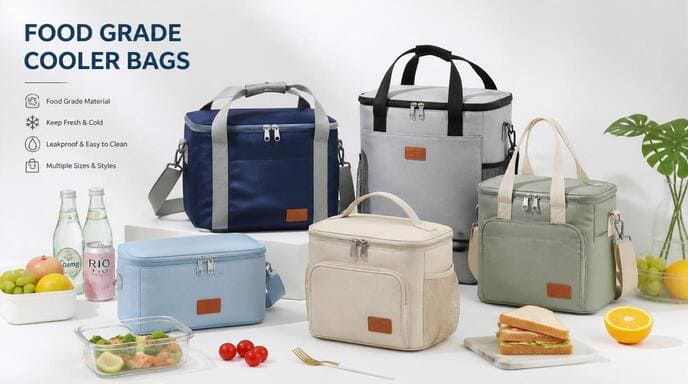
What EU Regulations Apply to Cooler Bags?
Cooler bags are considered food contact products when materials inside the bag have the possibility of directly or indirectly contacting food.
The European Union has established a comprehensive regulatory framework to ensure that food contact materials are safe and do not transfer harmful substances into food.
These requirements apply not only to the main food-contact surface but also to other components that may influence product safety, including plastic liners, coatings, adhesives, and printing materials.
For cooler bag importers, understanding these regulations is essential because different materials used in the product may be subject to different compliance requirements.
The main EU regulations related to cooler bags include:
| Regulation | Purpose | Relevance to Cooler Bags |
|---|---|---|
| (EC) No 1935/2004 | General requirements for food contact materials | Ensures materials do not release harmful substances or affect food safety |
| (EU) No 10/2011 | Plastic food contact materials regulation | Applies to PE, PP, and other plastic liner materials |
| REACH (EC) No 1907/2006 | Chemical substance safety management | Controls restricted chemicals and SVHC (Substances of Very High Concern) |
| CLP (EC) No 1272/2008 | Chemical classification and labeling regulation | Ensures proper hazard communication and chemical information management |
These regulations work together to ensure that cooler bags entering the European market meet food safety expectations.
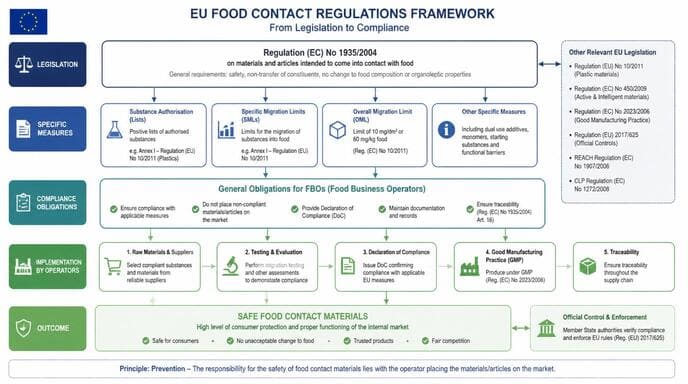
1. Framework Regulation (EC) No 1935/2004: The Foundation of Food Contact Safety
Regulation (EC) No 1935/2004 is the basic framework regulation for food contact materials in the European Union.
Its purpose is to ensure that any material or article intended to come into contact with food does not create a safety risk for consumers.
The regulation applies to a wide range of products and materials, including plastics, coatings, adhesives, and other components used in food-related applications.
According to this regulation, food contact materials must meet three fundamental requirements:
- They must not release substances into food at levels that could endanger human health.
- They must not cause unacceptable changes to food composition.
- They must not negatively affect food taste, smell, or appearance.
For cooler bags, compliance is not limited to the inner liner.
Many buyers mistakenly focus only on whether the inner lining is food grade. However, the complete product structure should also be considered.
Other components that may require evaluation include:
- Plastic liners
- Insulation materials
- Adhesives
- Printing inks
- Coatings
- Plastic accessories
Since cooler bags are usually manufactured using multiple materials combined together, suppliers need to control the safety of the entire production process instead of checking only one material.
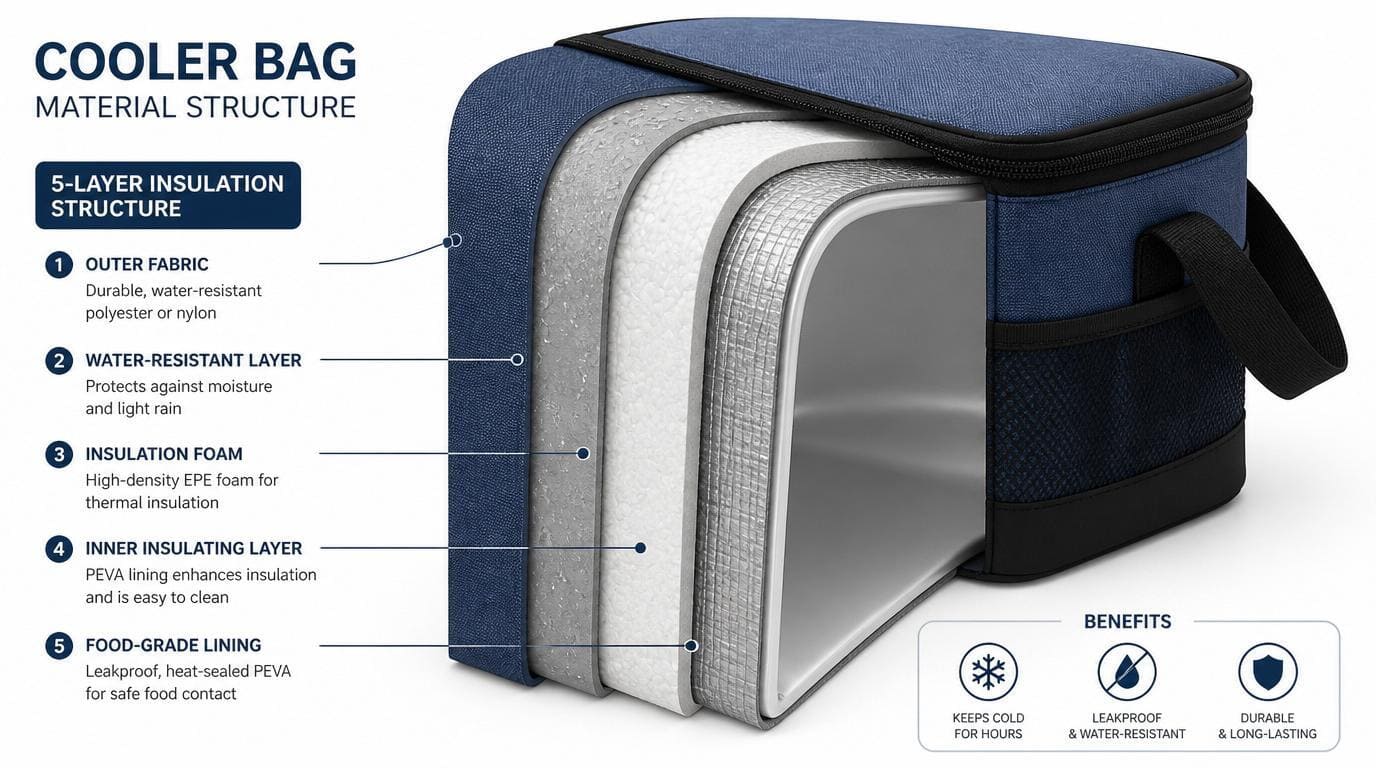
2. Regulation (EU) No 10/2011: Requirements for Plastic Food Contact Materials
Most cooler bags use plastic materials in their inner layers because plastic provides waterproof performance, easy cleaning, and good insulation protection.
Common plastic materials include:
- PE (Polyethylene)
- PP (Polypropylene)
When these materials are intended for food contact applications, they must comply with Regulation (EU) No 10/2011.
This regulation specifies:
- Which substances are permitted for plastic food contact materials
- Migration limits for chemical substances
- Testing requirements
- Documentation requirements
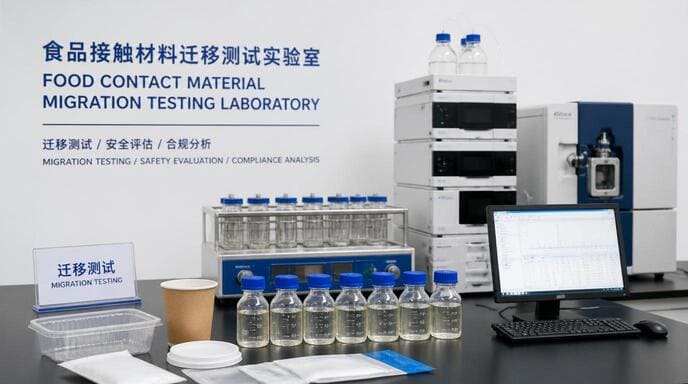
Migration Testing
Migration testing is one of the most important evaluations for food contact materials.
The purpose of migration testing is to verify whether substances from the material could transfer into food under simulated conditions.
Common tests include:
Overall Migration Limit (OML)
Overall Migration Limit testing measures the total amount of substances that may migrate from the material into food simulants.
It provides an overall evaluation of material safety.
Specific Migration Limit (SML)
Specific Migration Limit testing focuses on individual substances that have defined safety limits.
For European buyers, migration test reports provide important evidence that cooler bag materials are suitable for food contact applications.
3. Chemical Safety Requirements: REACH Compliance
Food contact compliance is not only related to materials that directly touch food.
Chemical safety regulations such as REACH (EC) No 1907/2006 also play an important role in cooler bag manufacturing.
REACH controls the use of chemical substances within products and supply chains. It requires manufacturers and suppliers to manage restricted substances and ensure compliance with European chemical safety requirements.
For cooler bags, REACH compliance may involve:
- Plastic materials
- Printing inks
- Coatings
- Adhesives
- Chemical additives
Suppliers should regularly review material information from raw material partners and maintain updated compliance documents.
For international buyers, REACH documentation provides additional confidence that products are manufactured responsibly and meet European market expectations.
How Do Professional Suppliers Ensure Cooler Bag Compliance?
Meeting EU food contact requirements requires more than simply understanding regulations.
A professional cooler bag manufacturer needs to establish a complete compliance system that covers material selection, production control, testing procedures, and documentation management.
For European importers and retailers, supplier compliance capability is an important factor when selecting long-term manufacturing partners.
A supplier that understands food contact regulations can help buyers reduce risks during product approval, customs clearance, and retail customer audits.
1. Food-Grade Material Selection
The foundation of cooler bag compliance begins with selecting appropriate raw materials.
Professional suppliers should work with qualified material manufacturers and verify supporting documents before production starts.
Common food-contact materials used in cooler bags include:
- Food-grade PE liners
- Food-grade PP components
- Compliant adhesives
- Safe printing materials
- Approved coatings
Suppliers should maintain supporting documentation, including:
- Material declarations
- Laboratory test reports
- Compliance statements
- Supplier certificates
Proper material control helps prevent compliance issues before they occur during manufacturing.
For example, a cooler bag may use a food-contact inner liner while using different materials for the outer fabric and insulation layer. Each material should be evaluated according to its specific application.
2. Production Quality Control
Even when compliant materials are selected, the manufacturing process must also be carefully controlled.
Food contact safety depends not only on what materials are used, but also on how products are produced.
A reliable cooler bag factory should have a quality management system covering every production stage.
Incoming Material Inspection
Before production begins, factories should check:
- Material specifications
- Supplier documentation
- Test reports
- Material consistency
- Batch information
This step ensures that only approved materials enter production.
Production Process Inspection
During manufacturing, quality teams should monitor key production processes, including:
- Sewing quality
- Lamination process
- Printing quality
- Heat sealing performance
- Structural strength
- Material bonding
For cooler bags, production consistency is especially important because large orders often involve thousands or even hundreds of thousands of units.
Small production differences can affect:
- Leakage resistance
- Insulation performance
- Product appearance
- Customer satisfaction
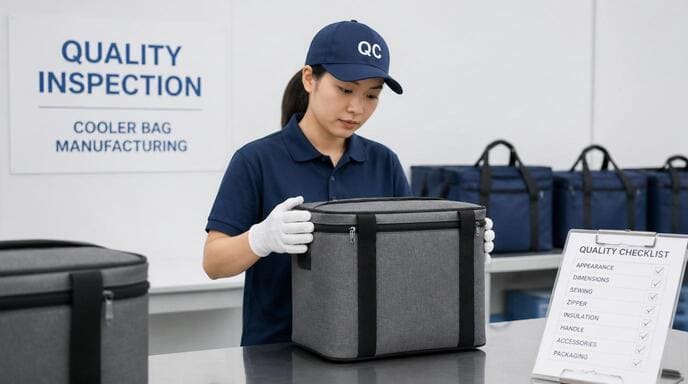
Final Product Inspection
Before shipment, finished cooler bags should undergo final quality inspections.
Typical checks include:
- Appearance inspection
- Size verification
- Function testing
- Packaging inspection
- Product consistency checks
A complete inspection system helps ensure that products delivered to European customers meet both quality and compliance expectations.
What Documents Should Buyers Request from Cooler Bag Suppliers?
Before importing cooler bags into the European market, buyers should request complete compliance documentation from suppliers.
These documents provide evidence that products meet regulatory requirements and help reduce risks during customs inspections, customer audits, and retail approval processes.
A professional supplier should be able to provide clear and organized documentation rather than only making verbal compliance claims.
1. Declaration of Conformity (DoC)
The Declaration of Conformity (DoC) is one of the most important documents for food contact products.
It confirms that the product complies with applicable EU food contact regulations.
For cooler bags, the DoC may reference:
- Regulation (EC) No 1935/2004
- Regulation (EU) No 10/2011 (for applicable plastic food contact materials)
A complete Declaration of Conformity usually includes:
- Product information
- Manufacturer details
- Applicable regulations
- Material information
- Compliance statement
The DoC provides buyers with formal confirmation that the supplier has evaluated the product according to relevant requirements.
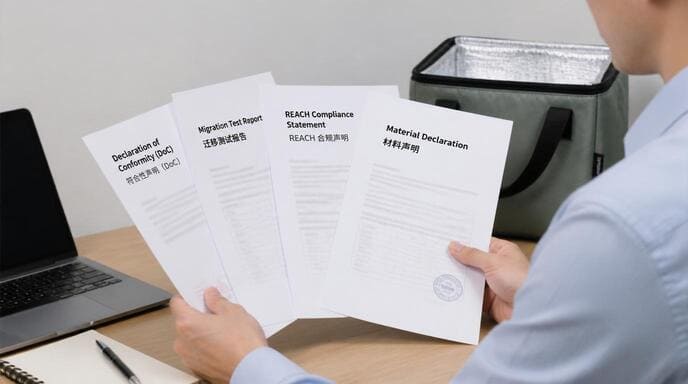
2. Migration Test Reports
Migration test reports provide technical evidence that food contact materials meet safety requirements.
These reports evaluate whether substances from materials may migrate into food under simulated conditions.
Typical testing includes:
- Overall Migration Limit (OML)
- Specific Migration Limit (SML)
- Heavy metal testing
- Chemical substance analysis
For European importers, migration reports are often one of the first documents requested
Why EU Food Contact Compliance Matters for Cooler Bag Importers
For brands, retailers, and distributors selling cooler bags in Europe, food contact compliance is more than a legal requirement.
It is also an important part of brand protection and supply chain management.
Consumers are becoming increasingly aware of food safety issues, and retailers are placing higher expectations on suppliers to provide transparent product information.
A cooler bag that is used for carrying food must provide confidence not only in its insulation performance but also in the safety of the materials used.
Working with a compliant supplier helps importers:
- Reduce customs and regulatory risks
- Avoid product recalls
- Improve retailer approval processes
- Build customer trust
- Strengthen long-term supply chain stability
For companies entering the European market, compliance should be considered during supplier selection rather than after production has started.
Conclusion
EU food contact regulations are essential requirements for cooler bag suppliers and importers.
Regulations such as (EC) No 1935/2004 and (EU) No 10/2011 provide the foundation for ensuring that cooler bags used in food-related applications are safe and suitable for the European market.
However, compliance is not only about having a document or a test report.
A reliable cooler bag supplier should combine:
- Safe food-contact materials
- Professional testing capabilities
- Strict production quality control
- Complete compliance documentation
- Stable manufacturing performance
For importers and brands, choosing the right manufacturing partner can significantly reduce supply chain risks and improve market confidence.
A professional supplier does not simply provide cooler bags. They provide the documentation, quality assurance, and manufacturing reliability needed to successfully enter competitive markets.
Frequently Asked Questions (FAQ)
Are cooler bags considered food contact products in the EU?
Yes. Cooler bags are considered food contact products when the inner lining, insulation layer, or other components may directly or indirectly come into contact with food.
For example, cooler bags used for carrying lunch, beverages, fresh food, or frozen products may need to comply with EU food contact material regulations.
Importers should ensure that food-contact materials used in cooler bags meet relevant requirements, including Regulation (EC) No 1935/2004 and, where applicable, Regulation (EU) No 10/2011 for plastic materials.
What regulations apply to cooler bags in the European Union?
The main EU food contact regulations related to cooler bags include:
| Regulation | Purpose |
|---|---|
| (EC) No 1935/2004 | General requirements for food contact materials |
| (EU) No 10/2011 | Requirements for plastic food contact materials |
| REACH (EC) No 1907/2006 | Control of restricted chemical substances |
| CLP (EC) No 1272/2008 | Chemical classification and labeling requirements |
These regulations help ensure that cooler bag materials are safe and do not release harmful substances into food.
Do cooler bags need food contact certification?
Cooler bags do not always require one single “food contact certificate.”
Compliance depends on the materials used, product structure, and intended application.
However, professional buyers usually request supporting documents, including:
- Declaration of Conformity (DoC)
- Migration test reports
- Material declarations
- REACH compliance statements
These documents provide evidence that cooler bag materials are suitable for food contact applications.
What is a food grade cooler bag?
A food grade cooler bag is manufactured using materials that are suitable for carrying food products and meet applicable food safety requirements.
A food grade cooler bag usually includes:
- Food-safe inner lining materials
- Compliant adhesives and coatings
- Tested plastic components
- Controlled manufacturing processes
Suppliers should provide supporting documents and testing reports instead of relying only on a “food grade” product description.
What is migration testing for cooler bags?
Migration testing is a laboratory evaluation used to determine whether substances from food contact materials may transfer into food.
For cooler bags, migration testing is mainly used to evaluate components such as plastic liners and other food-contact materials.
Common migration tests include:
- Overall Migration Limit (OML)
- Specific Migration Limit (SML)
Migration test reports are important compliance documents for buyers importing cooler bags into Europe.
What documents should I request from a cooler bag supplier?
Before importing cooler bags into the European market, buyers should request complete compliance documentation.
Important documents include:
- Declaration of Conformity (DoC)
- Migration test reports
- REACH compliance statement
- Material declarations
- Quality management certificates
For large retail projects, buyers may also request:
- Factory audit reports
- Social compliance documents
- Production quality records
How can I verify if a cooler bag supplier meets EU food safety requirements?
Buyers should evaluate both compliance capability and manufacturing experience.
A reliable cooler bag supplier should provide:
- Verified food contact materials
- Laboratory testing reports
- Complete compliance documentation
- Stable production processes
- Quality inspection procedures
Compliance documents should always be supported by actual production control.
Can recycled materials be used for food contact cooler bags?
Yes, recycled materials can be used in some cooler bag applications, but they must meet applicable safety requirements.
When recycled materials are used, buyers should confirm:
- Material source information
- Food contact suitability
- Testing documentation
- Compliance statements
For example, recycled polyester (RPET) fabric used on the outside of a cooler bag may have different requirements compared with inner liners that directly contact food.
How do I choose a reliable food grade cooler bag manufacturer?
When selecting a cooler bag manufacturer, buyers should consider more than product price.
Important factors include:
- Experience with food-related products
- Knowledge of EU food contact regulations
- Ability to provide compliance documents
- Quality control systems
- Production capacity
- International export experience
A reliable supplier should support the entire process from material selection and testing to production and shipment.
Why is EU food contact compliance important for cooler bag importers?
EU food contact compliance helps importers reduce risks related to customs clearance, customer audits, and product safety issues.
Working with a compliant cooler bag supplier helps brands:
- Enter the European market more smoothly
- Reduce compliance risks
- Build customer confidence
- Improve supply chain stability
For importers and retailers, selecting a supplier with strong compliance capabilities is an important step toward long-term success in the European market.