Choosing between drawstring bags and tote bags is not simply a matter of style. For businesses ordering custom bags, the better option depends on how the bag will be used, what it needs to carry, how customers will interact with it, and what role it plays in the brand experience.
Drawstring bags are well suited to sports, schools, outdoor activities, trade shows, and promotional campaigns where lightweight, hands-free carrying matters. Tote bags are often better for retail, shopping, corporate gifts, and everyday use where easy access and a larger branding area are more important.
The right choice starts with the application—not simply the bag shape.
Drawstring Bags vs Tote Bags: Key Differences
The main difference is how people carry, open, and use the bag.
| Factor | Drawstring Bags | Tote Bags |
|---|---|---|
| Carrying method | Shoulder/back carry | Hand or shoulder carry |
| Access | Drawcord opening | Wide, easy-access opening |
| Hands-free use | Excellent | Limited |
| Branding area | Good | Excellent |
| Storage | Very compact | Compact, depending on material |
| Best suited for | Sports, schools, events, giveaways | Retail, shopping, promotions, daily use |
Drawstring bags use cords that typically function as both the closure and shoulder straps. Tote bags generally use two handles and a wider opening, making repeated access more convenient.
Neither design is automatically stronger, cheaper, or better. Material, dimensions, stitching, attachment points, reinforcement, and overall construction determine whether a custom bag is suitable for a specific load and application.
Quick Overview: Choose drawstring bags for mobility and hands-free carrying; choose tote bags for easy access, retail use, and broader branding opportunities.
When Are Drawstring Bags Better for Your Business?
Drawstring bags are most effective when mobility, simple storage, and lightweight carrying are more important than fast access to the contents.
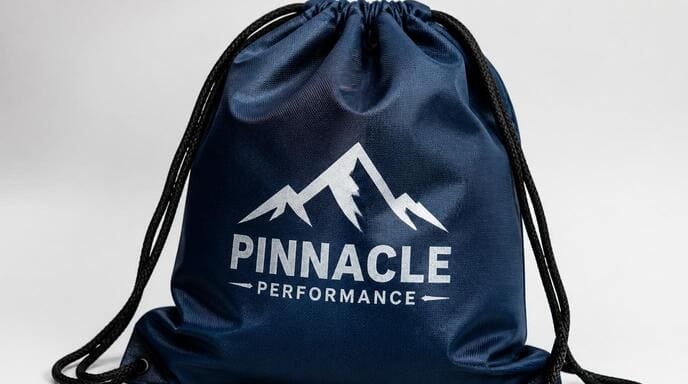
They are commonly used for sports events, school activities, outdoor programs, trade shows, travel accessories, and promotional campaigns. The cord design allows users to carry the bag on their shoulders or back while keeping both hands relatively free.
They are also practical for large-volume distribution. Lightweight drawstring bags can be folded and packed efficiently, which may help when businesses need to store or distribute thousands of units. Actual shipping efficiency will still depend on the bag dimensions, material, packaging method, and order quantity.
For promotional campaigns, a drawstring bag can hold items such as T-shirts, towels, water bottles, brochures, and small accessories. Schools, universities, clubs, and organizations can also use them as activity or event kits.
The main limitation is access. The opening generally needs to be loosened or opened before contents can be removed, making drawstring bags less convenient for situations where users frequently reach inside. Cord-based carrying may also be unsuitable for substantial loads unless the fabric, cord, attachment points, and reinforcement are designed accordingly.
When Are Tote Bags Better for Your Business?
Tote bags are generally a better choice when easy access, everyday practicality, and visible branding are priorities.
Their wide opening makes them convenient for retail shopping, groceries, clothing, books, documents, corporate materials, and other items that customers may need to add or remove frequently.
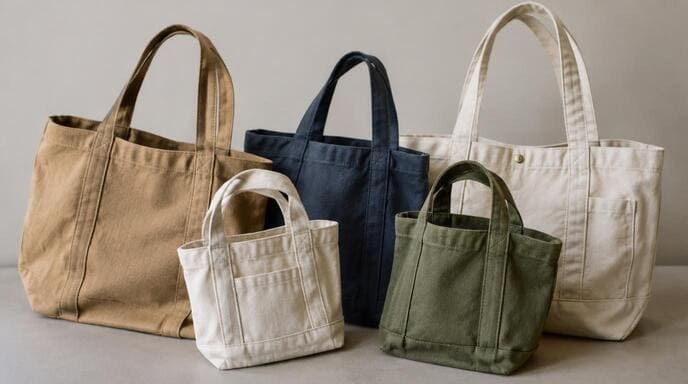
Tote bags also offer considerable flexibility in construction. Depending on the application, they can be produced with different fabrics, dimensions, handle lengths, gussets, boxed corners, reinforced seams, pockets, and structured bottoms.
However, a tote bag is not automatically stronger than a drawstring bag. Load performance depends on the selected fabric, handle attachment, seams, reinforcement, and overall construction.
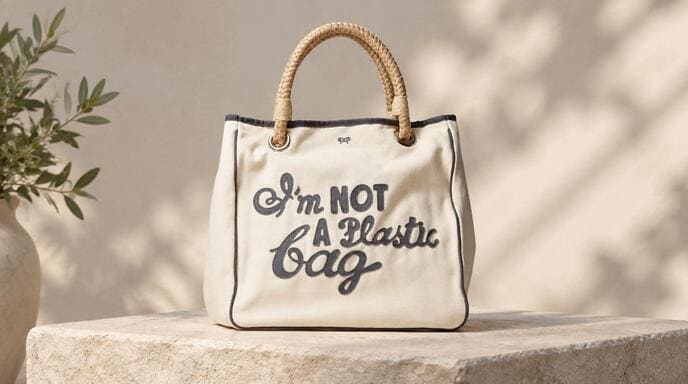
Totes are particularly useful for businesses that want the bag itself to act as a long-term branding tool. Their relatively broad and flat panels provide space for logos, slogans, illustrations, product information, and other brand messages.
The main limitation is carrying style. Totes are less convenient when users need both hands free, while heavier materials or more elaborate construction can increase bag weight, material consumption, and shipping volume.
Drawstring Bags vs Tote Bags for Different Business Applications
Instead of choosing based only on appearance, businesses should consider the situation in which customers will actually use the bag.
| Application | Recommended Choice | Why |
|---|---|---|
| Promotional giveaways | Drawstring | Lightweight and easy to carry |
| Sports & outdoor events | Drawstring | Better mobility and hands-free use |
| School activities | Drawstring | Practical for activity kits and events |
| Retail & shopping | Tote | Wide opening and easy access |
| Corporate gifts | Tote | More presentation and branding space |
| Everyday use | Tote | Convenient repeated access |
| Mixed promotional campaigns | Either | Depends on audience and contents |
For heavy sports equipment, tools, or demanding loads, a purpose-built backpack or equipment bag may be more appropriate than either a basic drawstring bag or tote.
Customization: Which Bag Offers Better Branding Opportunities?
Both drawstring bags and tote bags can be customized in size, material, color, printing, handles or cords, pockets, closures, and reinforcement. The main difference is how much usable surface and structural flexibility each design provides.
| Customization Factor | Drawstring Bags | Tote Bags |
|---|---|---|
| Large branding area | ★★★☆☆ | ★★★★★ |
| Detailed artwork | ★★★★☆ | ★★★★★ |
| Cord / handle color matching | ★★★★★ | ★★★★☆ |
| Retail branding | ★★★☆☆ | ★★★★★ |
| Construction flexibility | ★★★★☆ | ★★★★★ |
| Promotional use | ★★★★★ | ★★★★★ |
| Premium brand presentation | ★★★☆☆ | ★★★★★ |
Tote bags generally provide a broader, flatter surface for large logos and detailed artwork. Drawstring bags can still deliver strong promotional impact, particularly when printed graphics are combined with coordinated cord and fabric colors.
Depending on the material and production method, customization may include screen printing, heat transfer, digital printing, sublimation, or laminated printing.
For B2B orders, artwork should be prepared according to the actual printable area, rather than simply the overall bag dimensions.
Custom Drawstring Bags vs Tote Bags: Cost Considerations
Neither style is automatically cheaper.
Custom bag pricing is determined primarily by the specifications of the order, including:
- Material type and fabric weight
- Bag dimensions
- Printing coverage and method
- Handle or cord specifications
- Pockets and reinforcement
- Order quantity
- Packaging requirements
A lightweight drawstring bag may be economical for large promotional campaigns, while a premium drawstring bag with thicker fabric and reinforced components can cost more than a basic tote.
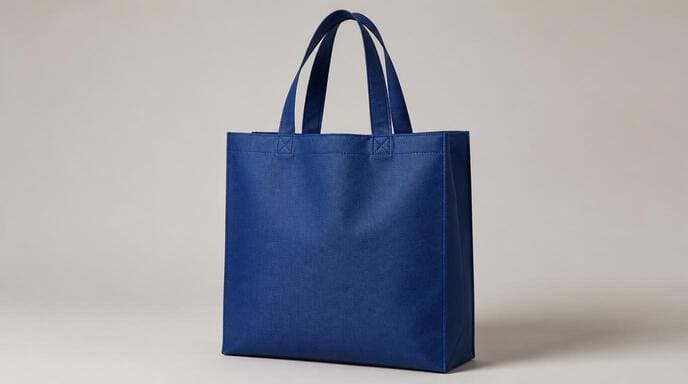
The same applies to tote bags. A simple non-woven tote may be highly cost-effective, while a large canvas tote with reinforced handles, gussets, or additional pockets requires more material and labor.
For bulk purchasing, businesses should compare quotations based on equivalent specifications, rather than comparing unit prices between different bag styles.
How to Choose Between Drawstring Bags and Tote Bags
The most useful starting point is the customer's actual behavior.
Choose a drawstring bag when you prioritize:
- Hands-free carrying
- Lightweight construction
- Compact storage
- Sports and outdoor activities
- School and event use
- Large-volume promotional distribution
Choose a tote bag when you prioritize:
- Easy access to contents
- Retail and shopping
- Everyday use
- Larger branding areas
- Flexible hand or shoulder carrying
- A more traditional retail presentation
If the same business serves different customer scenarios, using both styles can be more effective than forcing one design to handle every purpose. For example, a sportswear company could use drawstring bags for event promotions and tote bags for retail purchases.
The better question is not “Which bag is better?”
It is:
“Which bag will be more useful to the person receiving it?”
Custom Bag Buying Checklist for Businesses
Once the preferred bag style has been selected, the next step is to define the specifications clearly before requesting quotations.
1. Application & Load
Specify what the bag will carry, the expected weight, and how frequently it will be used.
2. Size & Construction
Confirm dimensions, opening style, gusset requirements, handle or cord specifications, seams, and reinforcement.
3. Material & Printing
Define the fabric, fabric weight, colors, logo size, printing method, and printing coverage.
4. Sample & Quotation
Check a pre-production sample for opening size, handle or cord comfort, fabric feel, proportions, and printing quality. When comparing quotations, make sure suppliers are pricing the same material, size, printing, construction, packaging, and delivery requirements.
Quick Overview: Define the application and technical requirements first, then compare samples and equivalent quotations rather than choosing solely by bag style or unit price.
FAQ
Are drawstring bags cheaper than tote bags?
Not necessarily. Price depends on material, size, fabric weight, printing, cords or handles, construction, quantity, and packaging. A simple drawstring bag and a basic tote can both be economical depending on their specifications.
Are tote bags stronger than drawstring bags?
Not automatically. Strength depends on the fabric, seams, handle or cord attachment, reinforcement, and overall construction. The expected load should be specified when ordering custom bags.
Which bag is better for promotional giveaways?
Drawstring bags are often suitable for sports events, schools, outdoor activities, and campaigns where lightweight, hands-free carrying matters. Tote bags may be more suitable when the promotion is closely connected to retail shopping or long-term brand visibility.
Which is better for retail shopping?
Tote bags are generally more practical because their wide opening makes it easier to place products inside and remove them. They also provide a broad surface for retail branding.
What material is best for custom drawstring and tote bags?
There is no single best material. Lightweight non-woven or polyester can work well for many promotional applications, while cotton, canvas, jute, and other materials may suit different appearances and use cases. The choice should reflect the expected load, frequency of use, design, budget, and brand positioning.
Final Thoughts: Which Custom Bag Should Your Business Choose?
Drawstring bags and tote bags serve different customer needs.
A drawstring bag is generally better for mobility, hands-free carrying, lightweight construction, and event distribution.
A tote bag is generally better for easy access, retail shopping, everyday use, and larger branding areas.
For businesses ordering custom bags, the best approach is to start with customer behavior and intended use, then determine the appropriate material, construction, printing, and budget.
The best bag is not necessarily the cheapest or strongest—it is the one that fits the way customers actually use it.