Skip to content
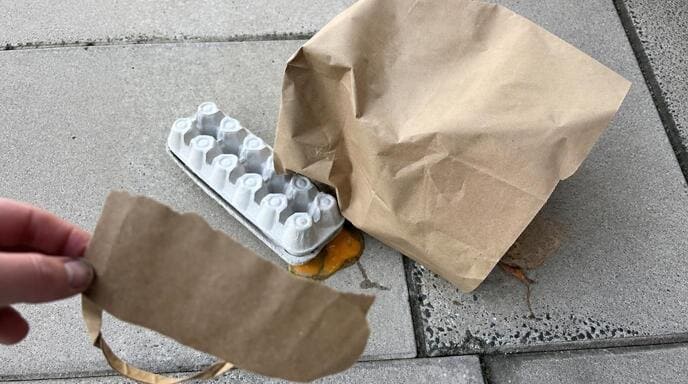
A grocery bag can tear even when it is only partly full because failure depends on where the force is concentrated, not simply on the total weight inside the bag. A 5 kg load creates approximately 49 N of gravitational force, but the stress is not always distributed evenly. A heavy bottle at one corner, a sharp carton edge, a weak handle attachment, an imperfect seam or a small defect can concentrate force in one area and start a tear.
Bag performance depends not only on the material itself, but also on the bag structure, handle design, reinforcement and manufacturing quality. For retailers and packaging buyers, improving bag strength is not simply about using thicker material—the more effective approach is to identify where the bag fails and why.
Why Can a Partly Filled Bag Still Tear?
A grocery bag can fail before reaching its maximum load because the force inside the bag is not always evenly distributed. The most common causes include:
-
The load is concentrated in one area. A bottle, can or rigid carton can create high stress at one corner or near the handle.
-
The handle, seam or attachment point is weaker than the main bag body. Many failures occur at connection areas rather than in the main material.
-
A small cut, puncture or defect allows a tear to spread. Minor damage can become the starting point of a larger failure.
-
The material and construction do not match the intended use. A lightweight shopping bag and a reusable heavy-duty bag require different designs.
The Weight Inside the Bag Is Not the Only Factor
A 5 kg shopping load creates:
5 × 9.81 = 49.1 N
Under an ideal two-handle loading condition, each handle would carry about 24.5 N. However, real shopping conditions are rarely perfectly balanced. Bottles, cans and boxes can shift toward one side, increasing stress on a single handle, corner or seam.
For example, a bag carrying 4 kg of soft packaged food may distribute the load relatively evenly, while another bag carrying the same 4 kg of bottles and rigid cartons may experience much higher local stress. The total weight is identical, but the stress distribution is different.
This is why bag strength cannot be judged only by kilograms of carrying capacity.
The Weakest Area Usually Determines Failure
The main body of a bag may remain intact while another area fails first. The failure location often provides more useful information than the total weight the bag was carrying.
| Failure location | Areas to investigate |
|---|---|
| Handle or handle attachment | Handle width, reinforcement, welding, stitching or attachment strength |
| Side or bottom seam | Heat sealing, ultrasonic welding, stitching quality or seam strength |
| Bottom corner | Load concentration, bag shape and construction |
| Bag body | Material strength, puncture resistance and tear resistance |
| Small starting tear | Material defects and tear propagation resistance |
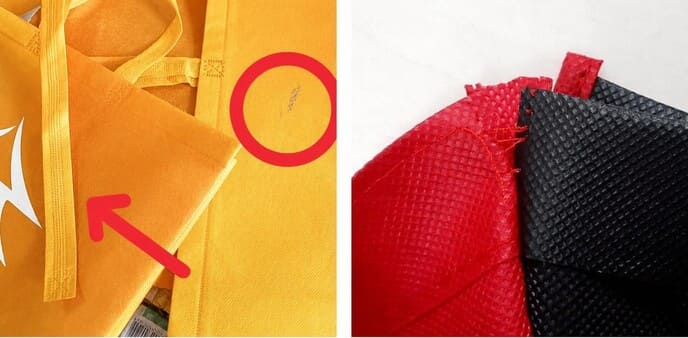
The correct solution depends on the actual failure point. If the handle attachment breaks, increasing overall material thickness may not solve the problem. If the body material tears from sharp packaging, improving tear resistance or adding reinforcement may be more effective. If the seam opens, the issue may be related to sealing, welding or stitching quality rather than the material itself.
Does a Thicker Material Always Make a Stronger Grocery Bag?
Not necessarily. Thickness can improve strength, but it is only one factor affecting bag performance.
For example, one mechanical study of LDPE plastic film measured:
| LDPE thickness | Tensile force at break | Tear force |
|---|---|---|
| 0.07 mm | 37 N | 6 N |
| 0.15 mm | 70 N | 9 N |
In this specific test, increasing thickness from 0.07 mm to 0.15 mm increased tensile force at break by about 89% and tear force by about 50%.
However, these results describe specific LDPE samples under laboratory conditions. They do not represent the universal carrying capacity of all grocery bags.
A finished bag’s performance also depends on material formulation, bag dimensions, handle design, reinforcement method, seam or welding quality and manufacturing consistency.
Different bag materials may have different weak points:
| Bag material | Common failure concerns |
|---|---|
| Plastic bags | Tear propagation, handle stress and puncture damage |
| Non-woven bags | Handle welding, fabric strength and bottom construction |
| Woven PP bags | Stitching, seam strength and fabric durability |
| Paper bags | Paper tear resistance, handle attachment and moisture sensitivity |
| Cotton/canvas bags | Stitching quality, fabric fatigue and handle reinforcement |
What Usually Causes a Grocery Bag to Fail Before It Is Full?
The most effective diagnosis method is to identify the first failure point.
Handle failure
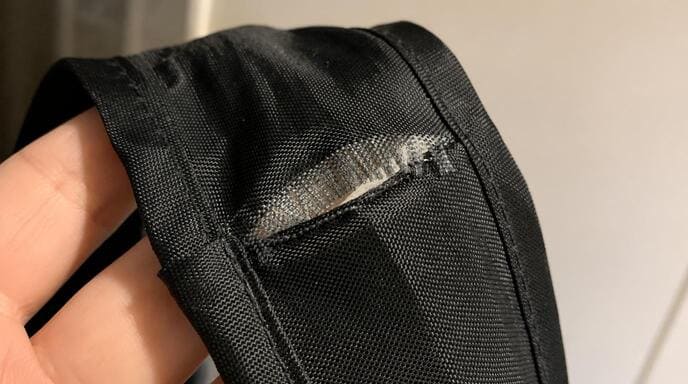
If the handle separates from the bag, inspect the handle attachment area, reinforcement patches, welding or stitching strength and handle width. The handle transfers the contents' weight through a relatively small area, making it one of the highest-stress parts of many bag designs.
Seam or connection failure
If the side or bottom opens, check seal width, welding temperature and pressure, stitching quality or material compatibility. A strong material can still produce a weak finished bag if the connection process is inconsistent.
Body tear
If the bag body splits, check material strength, tear resistance, puncture damage and sharp edges from contents. A small defect can become the starting point of a much larger tear.
How Should Buyers Specify a Stronger Grocery Bag?
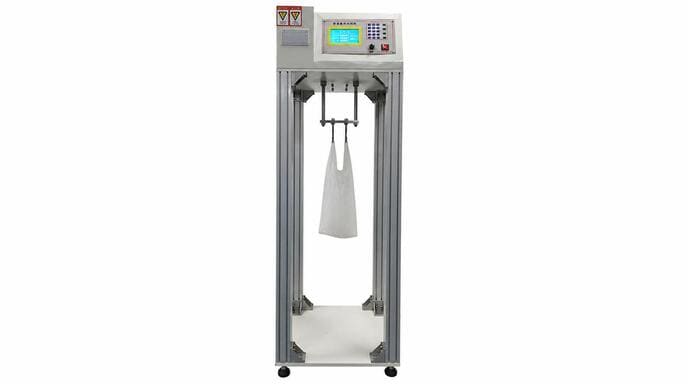
Instead of specifying only thickness or GSM, buyers should define the actual application. A practical specification should include:
Material + dimensions + handle construction + connection method + expected load + usage condition + test requirement
Important information includes:
| Requirement | Why it matters |
|---|---|
| Maximum filled weight | Defines required load level |
| Typical contents | Shows puncture risk and load distribution |
| Single-use or reusable | Determines durability requirement |
| Handle style | Affects load transfer |
| Construction method | Determines relevant quality checks |
| Testing requirement | Provides a measurable performance target |
A bag designed for lightweight groceries does not necessarily need the same construction as a reusable shopping bag carrying bottles or heavy products.
The Better Way to Find the Cause
When a grocery bag fails unexpectedly, first identify where the tear starts and then check the corresponding structure. This helps determine whether the problem comes from material selection, design or manufacturing.
- Handle failure: improve attachment strength or reinforcement.
- Seam failure: improve sealing, welding or stitching quality.
- Body tear: improve material performance or puncture resistance.
- Corner failure: review bag structure and load distribution.
This approach is more effective than simply increasing material thickness.
Conclusion
A grocery bag does not need to be completely full to tear. The actual cause is usually not the total weight alone, but the combination of load distribution, material properties, construction design and manufacturing quality.
Thickness can influence strength, but it does not determine finished-bag performance by itself.
For commercial shopping bags, the better approach is to define the real usage condition, identify the likely failure point, and evaluate the complete bag construction—not just the material thickness.
FAQ
Why does my grocery bag tear when it is not full?
Because the load may be concentrated at one handle, seam, corner or damaged area instead of being evenly distributed.
Does a thicker grocery bag always carry more weight?
No. Thickness can improve performance, but material properties, construction and manufacturing quality also affect final strength.
Which part of a grocery bag usually fails first?
It depends on the design, but handles, seams, welded areas and corners are common stress points.
How should buyers test grocery bags before bulk production?
Use realistic loads and contents, then record where failure occurs. The result helps determine whether the issue is material, structure or manufacturing.