
RPET vs Cotton Tote Bags: Which Is Better?
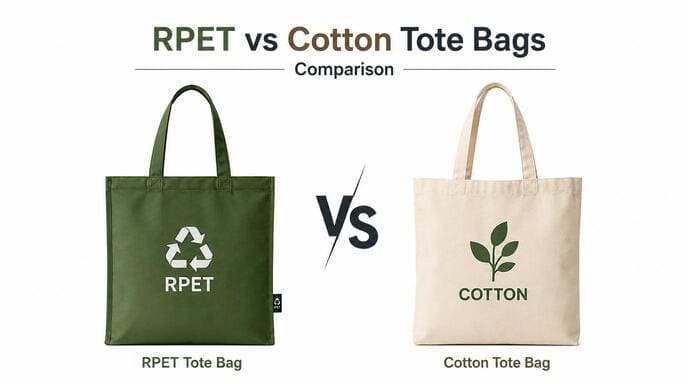
Reusable tote bags have become one of the most effective alternatives to disposable plastic bags. Governments around the world are introducing plastic reduction policies, retailers are adopting reusable packaging, and consumers are increasingly choosing environmentally friendly products.
Among the many reusable bag options available today, RPET tote bags and cotton tote bags are two of the most popular choices. Both are marketed as sustainable alternatives, yet they differ significantly in material composition, manufacturing process, environmental impact, durability, appearance, and overall cost.
For importers, wholesalers, retailers, promotional product companies, and private-label brands, selecting the right tote bag material can influence product quality, customer satisfaction, and even brand image. Understanding the strengths and weaknesses of each option helps businesses make informed purchasing decisions while aligning with their sustainability goals.
This guide provides a detailed comparison between RPET and cotton tote bags, covering everything from raw materials and production processes to carbon footprint, customization, pricing, and ideal applications.
What Is an RPET Tote Bag?
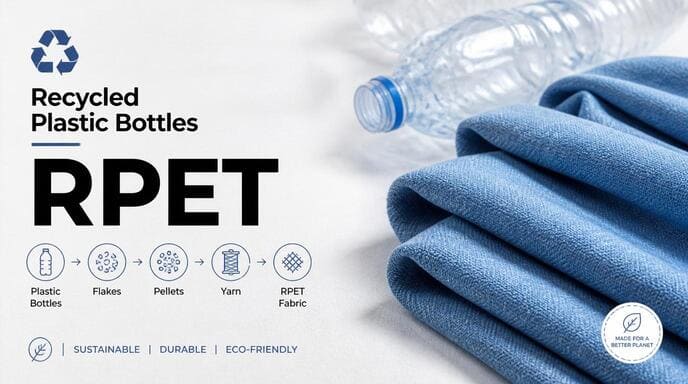
RPET stands for Recycled Polyethylene Terephthalate, a recycled polyester material produced from post-consumer PET plastic bottles and containers. Instead of allowing discarded bottles to end up in landfills or oceans, they are collected, cleaned, processed, and transformed into durable textile fibers.
This recycling process gives plastic waste a second life while reducing the demand for virgin petroleum-based polyester.
Today, RPET has become one of the fastest-growing materials in the reusable bag industry. Many supermarkets, fashion brands, sports companies, and corporate organizations use RPET tote bags for promotional events, retail packaging, conferences, and eco-friendly product lines.
Compared with conventional polyester, RPET offers similar strength and appearance while significantly reducing waste generation.
How RPET Tote Bags Are Made
The manufacturing process begins with the collection of used PET bottles from recycling programs.
These bottles are carefully sorted according to color and material type before labels and bottle caps are removed. The bottles are then washed thoroughly to eliminate contaminants such as food residue, adhesives, and dirt.
After cleaning, the bottles are shredded into small plastic flakes. The flakes are melted and converted into recycled PET pellets, which serve as the raw material for spinning polyester yarn.
The yarn is woven into fabric before undergoing dyeing, coating, printing, cutting, and sewing processes to produce finished tote bags.
The production process can be summarized as follows:
- Collection of PET bottles
- Sorting and cleaning
- Crushing into flakes
- Melting into pellets
- Fiber spinning
- Fabric weaving
- Dyeing and finishing
- Bag cutting and sewing
- Logo printing
- Quality inspection and packaging
Modern RPET manufacturing facilities often use automated production lines that improve efficiency while reducing energy consumption.
Advantages of RPET Tote Bags
RPET has become increasingly popular because it combines environmental benefits with excellent commercial performance.
Some of its main advantages include:
1. Recycles Plastic Waste
One of the greatest benefits of RPET is that it helps reduce plastic pollution.
Every RPET tote bag is manufactured using recycled PET bottles that might otherwise become landfill waste or marine pollution.
Depending on the bag size, one reusable RPET shopping bag may recycle between 6 and 20 plastic bottles.
2. Excellent Durability
RPET fibers have high tensile strength, making the bags resistant to tearing and stretching.
With proper stitching and reinforced handles, RPET tote bags can carry heavy groceries, promotional materials, books, and daily essentials without deformation.
3. Water Resistance
Unlike natural cotton fibers, RPET does not absorb water easily.
This makes RPET shopping bags ideal for supermarkets, outdoor activities, exhibitions, and rainy environments.
4. Lightweight
Despite their strength, RPET bags remain lightweight, reducing shipping costs and making them easier for customers to carry.
This is especially beneficial for large-volume promotional campaigns.
5. Vibrant Printing
RPET fabric has a smooth surface that supports multiple printing technologies, including:
- Heat transfer printing
- Digital printing
- Sublimation printing
- Screen printing
- UV printing
High-resolution artwork, colorful logos, and photographic designs can be reproduced with excellent clarity.
6. Cost-Effective for Bulk Orders
Because RPET is widely produced on an industrial scale, it is often more economical than premium cotton fabrics when purchased in large quantities.
Many businesses choose RPET for promotional giveaways because it offers an attractive balance between price, quality, and sustainability.
Potential Limitations of RPET
Although RPET offers many advantages, buyers should also understand its limitations.
Being a synthetic material, RPET is not biodegradable. At the end of its service life, it should ideally be recycled again through appropriate recycling systems.
Additionally, while RPET reduces plastic waste, it is still derived from plastic polymers. Businesses seeking entirely plant-based products may prefer cotton or other natural fibers.
Some premium retail brands also favor cotton because of its softer texture and natural appearance.
What Is a Cotton Tote Bag?

Cotton tote bags are manufactured from fibers harvested from cotton plants, making them one of the oldest and most widely used reusable bag materials.
Cotton is valued for its natural appearance, comfortable feel, breathability, and biodegradable properties. It has long been associated with environmentally conscious brands, bookstores, cafés, museums, fashion retailers, and organic food stores.
Depending on the intended application, cotton tote bags may be produced using different fabric weights and weaving methods.
The most common options include:
- Standard cotton
- Canvas
- Heavy canvas
- Organic cotton
- Recycled cotton
- Combed cotton
Fabric weight is usually measured in GSM (grams per square meter). Common specifications range from 120 GSM for lightweight promotional bags to over 400 GSM for heavy-duty shopping totes.
Advantages of Cotton Tote Bags
Natural and Renewable Material
Cotton is a plant-based fiber that can be cultivated repeatedly, making it a renewable resource when responsibly managed.
Its natural texture gives products a premium appearance that many consumers associate with sustainability and quality.
Comfortable Texture
Cotton bags are soft, breathable, and comfortable to carry.
Unlike some synthetic fabrics, cotton feels pleasant against the skin, making it ideal for daily use.
Excellent for Premium Branding
Luxury retailers often prefer cotton because it communicates craftsmanship and authenticity.
Embroidery, woven labels, leather patches, and minimalist printing all pair well with cotton fabric.
Washable and Reusable
Cotton tote bags can be machine washed multiple times without significant damage, allowing consumers to use them for years.
Their long lifespan helps reduce dependence on disposable shopping bags.
Biodegradable
Unlike synthetic polyester, untreated cotton naturally decomposes under suitable environmental conditions.
This characteristic appeals to brands emphasizing natural materials and circular product design.
Challenges of Cotton Tote Bags
Cotton production also has environmental considerations.
Conventional cotton farming often requires:
- Large quantities of irrigation water
- Agricultural land
- Fertilizers
- Pesticides
- Energy-intensive harvesting
These factors contribute to the overall environmental footprint of cotton production.
Furthermore, cotton absorbs moisture more easily than RPET, making it less suitable for wet environments unless additional treatments are applied.
Cotton tote bags also tend to wrinkle more easily during transportation and storage.
RPET vs Cotton: Manufacturing Differences
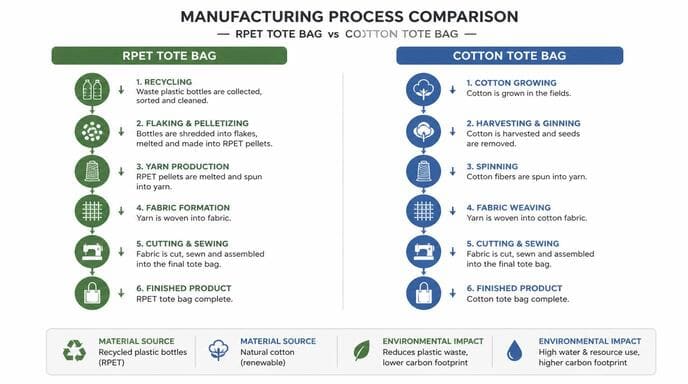
Although both products ultimately become reusable shopping bags, their production methods are fundamentally different.
RPET manufacturing focuses on recycling existing plastic waste into new textile fibers, supporting a circular economy by extending the life of PET materials.
Cotton production begins with agricultural cultivation, harvesting, ginning, spinning, weaving, dyeing, and sewing. This process relies on renewable natural resources but also requires significant water, land, and farming inputs.
From a sustainability perspective, neither material is universally superior. Instead, each offers different environmental advantages depending on how it is sourced, produced, used, and disposed of.
RPET vs Cotton Tote Bags: A Detailed Comparison
Choosing between RPET and cotton tote bags depends on more than just appearance. Businesses should evaluate the material based on environmental performance, durability, customization options, cost, and the intended application.
The following comparison highlights the key differences.
| Feature | RPET Tote Bags | Cotton Tote Bags |
|---|---|---|
| Raw Material | Recycled PET plastic bottles | Natural cotton fiber |
| Sustainability | Recycles existing plastic waste | Renewable and biodegradable |
| Water Resistance | Excellent | Low |
| Weight | Lightweight | Heavier |
| Durability | Excellent | Excellent |
| Tear Resistance | High | Medium to High |
| Moisture Absorption | Very Low | High |
| Printing Quality | Excellent for full-color graphics | Excellent for simple logos and artwork |
| Embroidery | Good | Excellent |
| Texture | Smooth | Natural and soft |
| Cost | Lower for bulk production | Higher |
| Maintenance | Easy to wipe clean | Machine washable |
| Typical Lifespan | 3–5+ years | 3–8+ years with proper care |
Neither material is objectively "better." The right choice depends on your brand values, target customers, and product positioning.
Environmental Impact
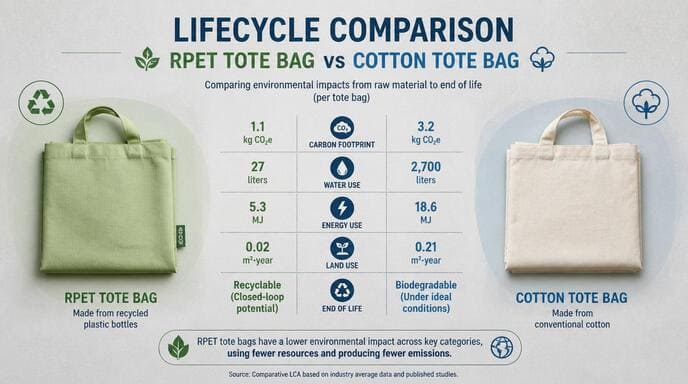
Environmental performance is often the deciding factor for brands choosing reusable bags.
However, sustainability is much more complex than simply asking whether a material is recycled or natural.
A product's environmental impact includes:
- Raw material sourcing
- Energy consumption
- Water usage
- Carbon emissions
- Transportation
- Product lifespan
- Recycling or disposal
RPET Environmental Benefits
RPET is considered a circular material because it uses existing plastic waste instead of virgin petroleum.
Advantages include:
- Diverts plastic bottles from landfills
- Reduces marine plastic pollution
- Requires less virgin raw material
- Consumes less energy than producing virgin polyester
- Supports global recycling programs
By extending the life cycle of PET bottles, RPET contributes to a more resource-efficient manufacturing system.
Cotton Environmental Benefits
Cotton offers different sustainability advantages.
As a natural plant fiber, cotton is renewable and biodegradable under suitable conditions.
Consumers often perceive cotton as environmentally friendly because it comes from a natural source rather than fossil fuels.
Organic cotton can further reduce environmental impact by avoiding synthetic pesticides and promoting healthier agricultural practices.
Environmental Challenges
Each material also has limitations.
RPET
- Still made from plastic polymers
- Requires recycling systems at end of life
- Not biodegradable
Cotton
- High water consumption during cultivation
- Requires large agricultural areas
- Conventional farming may use fertilizers and pesticides
- Higher overall resource demand before manufacturing
The most sustainable tote bag is ultimately the one that is reused for many years rather than replaced frequently.
Durability and Everyday Performance
For businesses purchasing reusable bags, durability directly affects customer satisfaction and brand perception.
RPET fabric is engineered for strength.
Its polyester fibers provide:
- Excellent tensile strength
- Resistance to stretching
- Strong abrasion resistance
- Better shape retention
- Superior moisture resistance
These characteristics make RPET ideal for:
- Grocery shopping
- Trade shows
- Conferences
- Supermarkets
- Outdoor events
- Sports promotions
Cotton performs differently.
Although cotton may not resist water as effectively, heavy canvas cotton can carry substantial weight without tearing.
Many premium cotton bags remain functional after years of daily use.
For consumers seeking comfort and aesthetics, cotton often provides a more luxurious experience.
Printing and Branding Options
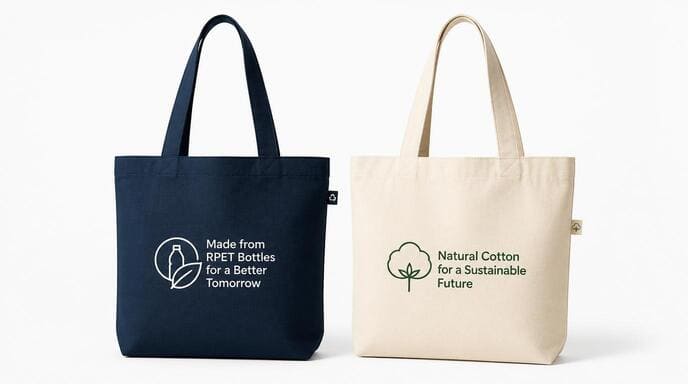
Reusable tote bags are not only packaging—they are also mobile advertisements.
Every time customers carry a branded tote bag, they increase brand exposure.
Printing Methods for RPET
RPET fabric supports numerous printing technologies.
These include:
- Screen printing
- Heat transfer printing
- Sublimation printing
- Digital printing
- UV printing
Because RPET has a smooth surface, photographic artwork and colorful graphics reproduce exceptionally well.
This makes RPET popular for promotional campaigns where visual impact is important.
Printing Methods for Cotton
Cotton also supports various decoration methods.
Popular options include:
- Screen printing
- Embroidery
- Heat transfer
- Direct-to-Garment (DTG) printing
- Woven labels
- Leather patches
Minimalist logos, line art, and embroidered branding often create a premium appearance on cotton canvas.
Customization Options
Both RPET and cotton tote bags can be customized to match different branding requirements.
Common customization options include:
Size
- Mini tote bags
- Standard shopping bags
- Large grocery bags
- Oversized beach bags
- Wine bottle bags
Handle Styles
- Short handles
- Long shoulder straps
- Cotton webbing
- RPET webbing
- Reinforced handles
Additional Features
- Zippers
- Magnetic closures
- Interior pockets
- Exterior pockets
- Bottle holders
- Bottom gussets
- Side gussets
- Snap buttons
Branding Accessories
- Woven labels
- Hang tags
- Printed care labels
- QR code labels
- Custom packaging
For private-label brands, OEM and ODM services allow complete customization from fabric selection to final packaging.
Cost Comparison
Cost is an important consideration when choosing reusable tote bags, especially for large-volume orders.
In general, cotton tote bags are more expensive than RPET tote bags. Cotton production requires growing, harvesting, spinning, and weaving natural fibers, which typically results in higher material and manufacturing costs. Premium options such as organic cotton or heavy canvas fabrics can further increase the price.
RPET tote bags are usually a more cost-effective option for promotional campaigns, retail packaging, and bulk purchases. They offer a good balance of durability, print quality, and affordability, making them a popular choice for businesses looking to maximize value without compromising on performance.
While cotton bags may require a higher initial investment, many brands choose them for their natural appearance and premium feel. RPET bags, on the other hand, are often preferred when cost efficiency and large-scale production are key priorities.
Best Applications
Different industries have different priorities.
RPET Tote Bags Are Ideal For
- Supermarkets
- Grocery stores
- Trade shows
- Conferences
- Corporate giveaways
- Sports events
- Promotional campaigns
- Retail shopping bags
- Outdoor activities
Cotton Tote Bags Are Ideal For
- Fashion boutiques
- Museums
- Bookstores
- Coffee shops
- Organic food brands
- Cosmetics
- Luxury retail
- Gift packaging
- Lifestyle brands
How to Choose the Right Tote Bag Supplier
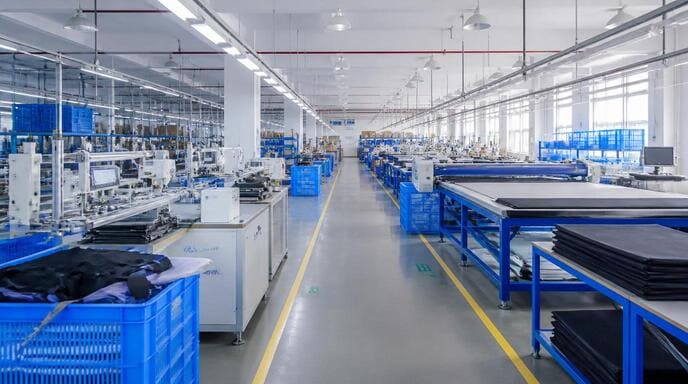
Choosing the right supplier is just as important as choosing the right material.
A reliable manufacturer should offer consistent quality, transparent sourcing, and professional support throughout the production process.
Before placing an order, evaluate the supplier based on the following criteria.
Manufacturing Experience
Look for suppliers with several years of experience producing reusable bags for international markets.
Experienced manufacturers usually have stronger quality control systems and better production efficiency.
Material Traceability
Ask where the RPET or cotton originates.
Responsible suppliers should be able to provide documentation regarding recycled content or cotton sourcing.
Quality Control
A professional factory should inspect:
- Raw materials
- Fabric quality
- Printing accuracy
- Stitching
- Handle strength
- Finished products
- Packaging
Customization Capability
An experienced supplier should provide:
- OEM services
- ODM services
- Custom colors
- Pantone matching
- Multiple printing options
- Sample development
Production Capacity
For large promotional campaigns, verify that the factory can meet delivery schedules without compromising quality.
Sustainability Certifications
Although certification requirements vary by market, suppliers with internationally recognized environmental certifications often demonstrate stronger manufacturing standards.
Conclusion
Both RPET and cotton tote bags represent significant improvements over single-use plastic bags, but they serve different business needs.
RPET tote bags are an excellent solution for companies focused on recycling, affordability, durability, and large-scale promotional campaigns. Their lightweight construction, water resistance, and excellent printability make them one of the most versatile options in today's reusable packaging market.
Cotton tote bags, on the other hand, appeal to brands seeking a natural, premium aesthetic. Their soft texture, timeless appearance, and biodegradable properties make them especially suitable for fashion retailers, bookstores, cafés, gift shops, and eco-conscious lifestyle brands.
Instead of asking "Which material is better?", businesses should ask "Which material best supports our customers, branding, and sustainability goals?"
For many organizations, offering both RPET and cotton tote bags allows customers to choose the option that best aligns with their personal preferences while strengthening the company's commitment to environmental responsibility.
By partnering with an experienced tote bag manufacturer, brands can customize reusable bags that combine functionality, durability, and sustainability—creating products that customers will continue to use long after their initial purchase.
Frequently Asked Questions
Which material is more environmentally friendly?
Both have environmental advantages.
RPET reduces plastic waste by recycling existing PET bottles, while cotton is renewable and biodegradable.
The better choice depends on your sustainability objectives.
Are RPET tote bags waterproof?
RPET fabric is naturally water resistant and performs much better than cotton in wet conditions.
Which material lasts longer?
Both materials are durable.
RPET generally offers better resistance to moisture, stretching, and abrasion, while heavy cotton canvas can provide excellent longevity with proper care.
Can RPET bags be recycled again?
Yes.
Many RPET products can be recycled through appropriate recycling systems after their useful life.
Which material is better for promotional giveaways?
RPET is often preferred because it is lightweight, affordable, durable, and supports vibrant full-color printing.
Cotton usually provides a more natural, textured appearance that many luxury and boutique brands prefer.
Can both materials be customized?
Absolutely.
Both RPET and cotton tote bags support custom sizes, colors, logos, labels, packaging, and accessories.
Which material is more cost-effective?
For high-volume orders, RPET generally offers a lower unit cost and better overall value.