Skip to content
As sustainability becomes a priority for consumers, governments, and global brands, reusable bags have become one of the fastest-growing product categories in the packaging and promotional products industry. Retailers are replacing single-use plastic bags with reusable alternatives, fashion brands are launching eco-friendly collections, and companies are increasingly using sustainable tote bags for corporate gifts and marketing campaigns.
Asia is the world's leading manufacturing hub for reusable bags. From RPET shopping bags and cotton tote bags to jute bags and recycled canvas bags, manufacturers across China, Vietnam, India, and Bangladesh supply millions of eco bags every year.
However, the rapid growth of sustainable products has also created a challenge for buyers—greenwashing.
Terms such as eco-friendly, green, sustainable, and recycled are now widely used in product descriptions, yet these claims are not always supported by verifiable evidence. Some suppliers genuinely invest in sustainable materials and responsible manufacturing, while others rely on marketing language that can easily mislead buyers.
For importers, retailers, wholesalers, and promotional product companies, understanding how to distinguish genuine sustainability from marketing claims is essential. Choosing the wrong supplier can result in inconsistent product quality, misleading environmental claims, and damage to your brand's reputation.
This guide explains how greenwashing occurs in the eco bag industry, why it is common in Asian supply chains, and what buyers should look for before placing an order.
Why Greenwashing Happens in Eco Bag Manufacturing
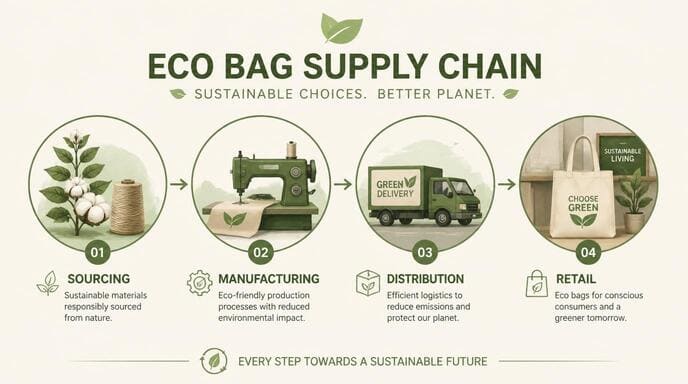
One reason greenwashing is common is that an eco bag is rarely produced by a single company from start to finish. Instead, production usually involves multiple suppliers, each responsible for a different stage of the process.
A typical supply chain looks like this:
- Recycled material collector
- Fiber or yarn producer
- Fabric mill
- Dyeing and finishing factory
- Printing supplier
- Bag manufacturer
- Exporter
Each stage contributes to the final product, and each stage presents an opportunity for inaccurate or incomplete sustainability claims.
For example, a bag manufacturer may purchase recycled fabric from an external supplier. If that fabric has not been independently certified, the manufacturer may have no reliable way to confirm the actual recycled content. Yet the finished bag may still be advertised as being "made from recycled materials."
This does not necessarily mean the supplier is intentionally misleading customers. In many cases, the issue is a lack of traceability rather than deliberate fraud. However, for buyers, the result is the same: sustainability claims that cannot be verified.
Understanding how the supply chain works helps buyers ask more informed questions and identify where supporting documentation is needed.
Common Greenwashing Practices in the Eco Bag Industry
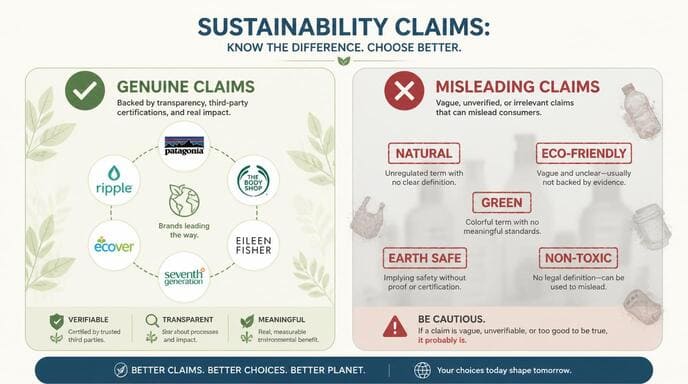
Not every environmental claim carries the same level of credibility. Buyers should look beyond marketing language and examine the evidence behind each statement.
1. Vague Sustainability Claims
Words such as eco-friendly, green, environmentally conscious, or planet-friendly sound appealing, but they have no universal definition.
A supplier should be able to explain exactly why a product is environmentally friendly. Is it made from recycled materials? Is the fabric biodegradable? Does the factory use certified materials? Without clear answers, these terms have little practical value.
Instead of accepting broad claims, ask suppliers to describe the material composition, manufacturing process, and any certifications that support their statement.
2. Highlighting One Sustainable Feature While Ignoring the Rest
Some products are promoted based on a single environmentally friendly feature while overlooking other important aspects.
For example, a tote bag may use recycled fabric but still be packaged in excessive plastic or printed with inks that do not meet common environmental standards.
A genuinely sustainable product should be evaluated as a whole, including its materials, manufacturing process, packaging, durability, and expected lifespan.
3. Misleading Recycled Content
One of the most common forms of greenwashing involves recycled materials.
A supplier may advertise a product as "made from recycled material" without explaining how much recycled material is actually used.
Imagine two RPET shopping bags.
The first contains 100% certified recycled PET fabric.
The second contains only a small percentage of recycled fiber blended with virgin polyester.
Both bags could potentially be described as containing recycled material, yet their environmental impact is very different.
Whenever recycled content is important, ask for the percentage of recycled material and whether it has been independently verified.
4. Misusing the Word "Biodegradable"
Another common misunderstanding involves biodegradable materials.
Some suppliers describe products as biodegradable without explaining the conditions required for decomposition.
Certain materials break down only in industrial composting facilities with controlled temperature and humidity. Others may require many years to decompose under natural conditions.
Without additional information, the word "biodegradable" can easily create unrealistic expectations.
Looking Beyond Certifications
Many buyers assume that asking for a certificate is enough to verify sustainability. Certifications are valuable, but they should never be the only factor used to evaluate a supplier.
For example, if a factory claims to manufacture GRS-certified RPET bags, buyers should also consider whether the supplier understands recycled material management, maintains consistent production records, and can clearly explain its manufacturing process.
A certificate demonstrates compliance with a specific standard, but long-term product quality still depends on manufacturing experience, quality control, and responsible sourcing practices.
The best suppliers combine verified certifications with transparent communication and consistent production quality.
How to Verify Eco-Friendly Materials
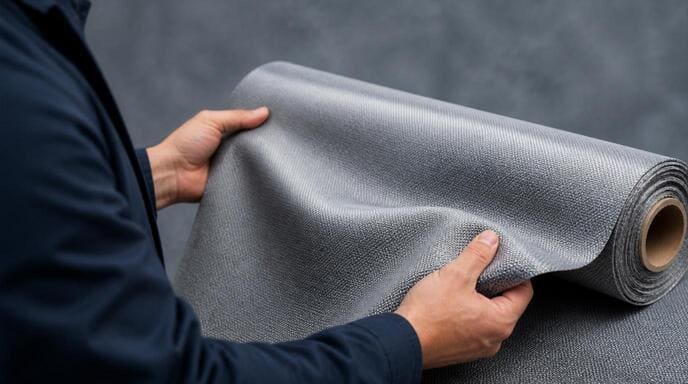
One of the simplest ways to reduce sourcing risks is to verify materials before production begins.
Professional manufacturers should provide clear information about the fabrics they use, including material composition, recycled content, and intended application.
For RPET bags, buyers should understand whether the recycled content comes from post-consumer PET bottles or post-industrial waste. While both are recycled materials, post-consumer RPET generally has greater environmental value because it helps divert discarded plastic from landfills and recycling streams.
For cotton bags, ask whether the fabric is conventional cotton, recycled cotton, or organic cotton. These materials differ significantly in terms of sourcing methods, environmental impact, and cost.
Material quality can also vary between suppliers even when the product appearance looks similar. Different production processes, raw material sources, and manufacturing standards can affect the bag’s durability, structure, and overall performance.
Experienced manufacturers should explain these differences clearly instead of simply reducing specifications to achieve the lowest possible quotation.
When comparing quotations from different suppliers, always make sure you are comparing equivalent materials and production standards. A lower price may simply reflect different material choices, reduced processing steps, or lower-quality components rather than improved manufacturing efficiency.
A Low Price Doesn't Always Mean Better Value
Price is naturally an important factor when sourcing reusable bags, but focusing only on the lowest quotation can create unexpected costs later.
Some suppliers reduce prices by lowering fabric weight, simplifying stitching, or using lower-grade printing materials. These changes may not be obvious in a quotation, yet they directly affect the finished product.
For example, reinforced handle stitching adds only a small amount to production cost but can greatly improve the bag's load capacity and service life. Similarly, using higher-quality printing inks has only a limited effect on unit cost while producing sharper colours and better resistance to fading.
A reusable bag is also a branding tool. If customers stop using it because it tears easily or loses its appearance after a short period, the marketing value of that product is lost.
Instead of choosing the lowest quotation, buyers should evaluate the balance between price, durability, appearance, and expected product lifespan.
A well-made reusable bag that customers use repeatedly often delivers far greater value than a cheaper alternative that is discarded after only a few uses.
Verifying Sustainability Certifications the Right Way
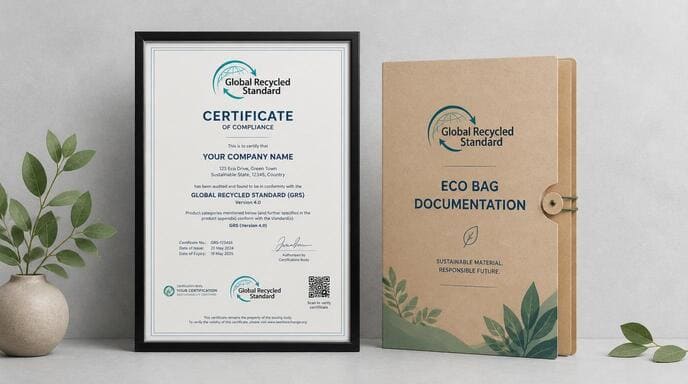
Sustainability certifications are valuable tools, but they should never replace due diligence. One of the most common mistakes buyers make is assuming that the presence of a certificate automatically guarantees that every product from a factory is certified.
In reality, certifications apply to specific materials, production processes, or product categories, and they are only valid within a defined scope.
Before placing an order, ask suppliers to provide copies of their current certificates and review the following details carefully:
- The company name should match the manufacturer you are working with.
- The certificate should still be valid and not expired.
- The issuing certification body should be internationally recognized.
- The certified products or materials should fall within the scope of the certificate.
For recycled products, many international buyers also request the relevant Scope Certificate (SC) or Transaction Certificate (TC), which helps demonstrate that certified materials have been maintained throughout the supply chain.
A trustworthy supplier should be comfortable explaining what each certification covers—and equally important, what it does not cover.
For example, a GRS certification demonstrates recycled material traceability and responsible processing, but it does not automatically mean the product is biodegradable. Likewise, OEKO-TEX® Standard 100 focuses on testing for harmful substances rather than verifying recycled content.
Understanding these differences helps buyers avoid relying on certifications that are unrelated to their sustainability goals.
How to Compare Suppliers Beyond Price
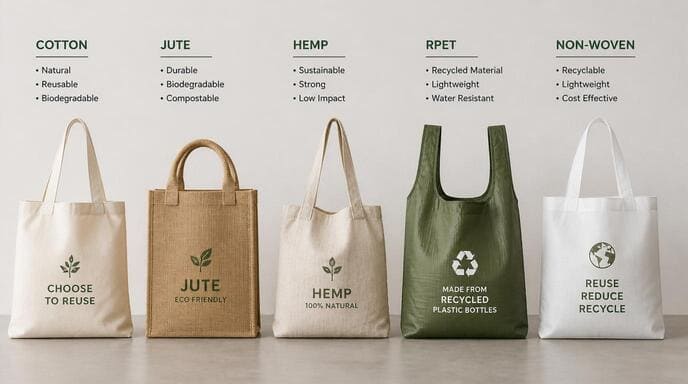
When evaluating quotations, buyers often compare only unit prices. However, two suppliers may quote nearly identical-looking bags while offering very different product specifications.
A professional comparison should include:
- Fabric material
- Fabric weight (GSM)
- Bag dimensions
- Handle length and width
- Stitching method
- Printing process
- Packaging
- Inspection standards
Small specification changes can have a noticeable impact on the finished product.
For example, some suppliers reduce the width of webbing handles or simplify the stitching pattern to lower costs. Others may use thinner fabrics or lower-quality printing inks.
Although these adjustments reduce manufacturing costs, they can also reduce durability and shorten the product's usable life.
For promotional bags, longevity matters. Every additional month that a customer continues using a branded tote bag increases brand exposure without additional marketing costs.
From a total value perspective, a bag that lasts for several years often provides a much better return on investment than one that fails after only a few months.
Don't Judge a Sample by Appearance Alone
Receiving a production sample is one of the most important stages of supplier evaluation.
However, many buyers focus only on appearance.
A professional inspection should evaluate both visual quality and functional performance.
Consider checking:
Fabric Quality
Does the material feel consistent?
Is the fabric thickness close to the agreed specification?
Does it wrinkle excessively?
Stitching
Look closely at:
- Stitch density
- Straight sewing lines
- Reinforced stress points
- Handle attachment
Uneven stitching often indicates inconsistent quality control.
Printing
Inspect:
- Color accuracy
- Registration
- Ink adhesion
- Surface finish
Rub the printed area gently.
Poor-quality printing may fade or peel quickly during normal use.
Load Capacity
Lift the bag using a realistic weight rather than simply inspecting it visually.
A reusable shopping bag should comfortably support its intended application without excessive stretching or deformation.
Finishing Details
Pay attention to:
- Loose threads
- Fabric edges
- Labels
- Packaging
- Odor
Small finishing details often reflect the manufacturer's overall quality standards.
What a Trustworthy Eco Bag Manufacturer Looks Like
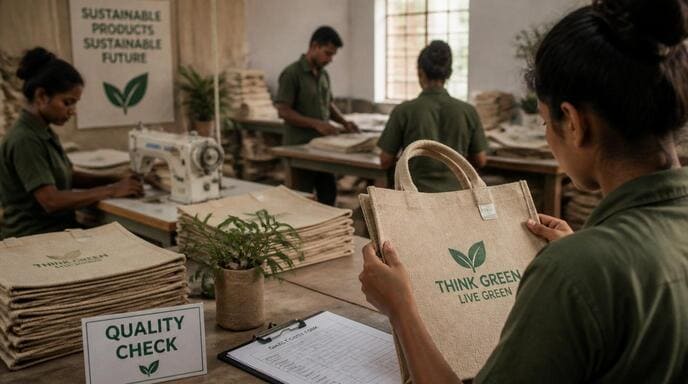
While every factory has different strengths, reliable manufacturers often share several common characteristics.
They are willing to explain where their materials come from rather than relying on vague sustainability claims.
They maintain consistent quality control procedures throughout production.
They provide clear quotations with detailed specifications instead of only offering the lowest price.
They are open about production capabilities, lead times, and customization options.
Most importantly, they do not promise unrealistic environmental benefits simply to secure an order.
Responsible manufacturers understand that sustainability is built on transparency, continuous improvement, and honest communication.
A Practical Buyer Checklist
Before confirming an order, ask yourself the following questions:
- Do I know exactly what material the bag is made from?
- Is the recycled or organic content clearly stated?
- Have I compared the GSM, dimensions, and construction between suppliers?
- Have I reviewed a production sample?
- Are the supplier's certifications relevant to the product?
- Does the quotation clearly describe the specifications?
- Has the supplier answered technical questions confidently?
- Do the sustainability claims match the supporting documentation?
If the answer to several of these questions is "no," additional verification is recommended before moving forward.
Frequently Asked Questions
Is every reusable bag sustainable?
Not necessarily. Sustainability depends on the material, manufacturing process, durability, and how many times the bag is reused. A reusable bag only delivers environmental benefits when it has a long service life.
Is RPET always better than cotton?
Each material has advantages.
RPET helps reduce plastic waste by giving discarded PET bottles a second life, while cotton offers a natural fiber option that appeals to many consumers. The right choice depends on the intended application, brand positioning, and sustainability goals.
Should I always choose the lowest quotation?
Not always.
Lower prices may result from reduced fabric weight, simplified construction, or lower-quality printing rather than improved production efficiency.
Evaluating the overall value of the product is usually more beneficial than focusing only on unit cost.
How can I confirm that recycled materials are genuine?
Ask suppliers to provide supporting documentation, explain the source of recycled materials, and clarify the percentage of recycled content. Independent certifications can provide additional confidence when they are relevant to the product being purchased.
Can a factory have certifications but still produce non-certified products?
Yes.
Many certifications apply only to specific materials or production lines. Buyers should confirm that the products being ordered fall within the certified scope.
Conclusion
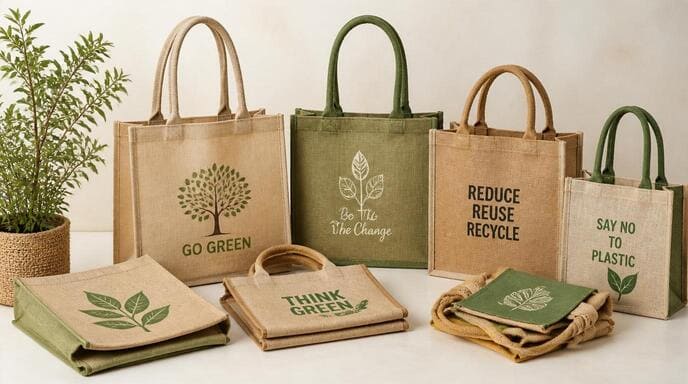
Avoiding greenwashing is not simply about requesting more certificates or choosing products labeled as "eco-friendly." It is about understanding how reusable bags are manufactured, verifying material claims, comparing specifications carefully, and working with suppliers that value transparency as much as sustainability.
Responsible sourcing requires looking beyond marketing language and asking practical questions about materials, production methods, quality control, and product performance. Buyers who invest time in this process are more likely to build reliable supply chains, reduce sourcing risks, and offer products that genuinely support their environmental commitments.
For manufacturers, sustainability is not achieved through attractive slogans alone. It is demonstrated through consistent product quality, responsible material selection, honest communication, and a willingness to explain every stage of the production process.
Ultimately, the most sustainable eco bag is not simply the one with the greenest label—it is the one that is well made, used repeatedly, and backed by transparent, verifiable manufacturing practices.