Skip to content
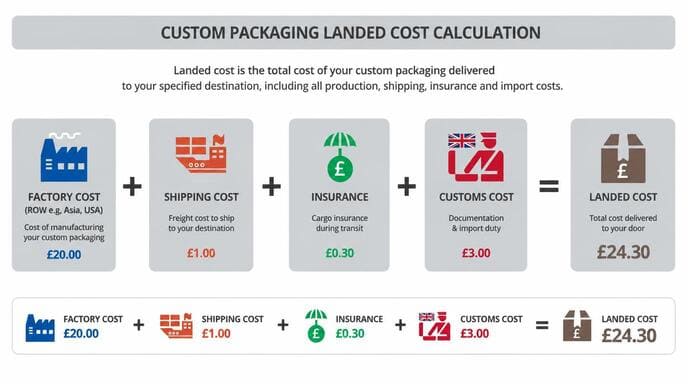
When importing custom packaging, the factory quotation is only one part of the cost. A supplier may quote $0.50 per bag, but the buyer's actual cost can be higher after freight, import duties, customs clearance, destination charges, and warehouse delivery are included.
The first question is therefore not simply “What is the factory price?” but “What will the order actually cost when it reaches the required destination?”
For international packaging procurement, the most useful figure is usually the landed cost per unit under the same product, quantity, destination, and delivery conditions.
What Is the Import Cost of Custom Packaging?
The import cost of custom packaging is the total cost of purchasing the goods and bringing them from the supplier to the agreed destination.
A typical cost chain is:
Factory Cost → Export Handling → International Freight → Import Duties & Taxes → Customs & Destination Charges → Final Delivery
Not every shipment includes every cost. The actual amount depends on the supplier's quotation, Incoterm, shipping method, destination, customs treatment, order quantity, and logistics arrangement.
This is why a factory quotation and a final delivered cost are not necessarily the same.
For example, if a factory quotes 20,000 bags at $0.50 each, the product cost is $10,000. If freight and import-related costs add another $3,200, the buyer's actual landed cost is $13,200, or $0.66 per bag.
What Costs Should Be Included?
The exact cost structure varies by shipment, but most custom packaging imports can be evaluated through five main areas.
| Cost | What it covers |
|---|---|
| Product cost | Manufacturing price quoted by the supplier |
| Freight | Transportation from the agreed shipping point to the destination |
| Import costs | Duties, taxes, customs clearance and related charges |
| Destination charges | Terminal, handling, documentation and other local fees |
| Final delivery | Transportation from the port, airport or logistics facility to the warehouse |
One-time charges such as sampling, tooling, printing setup, plates, or other customization fees should also be included when they apply.
Product cost depends on the factory and supply chain
For custom packaging, the manufacturing quotation is affected by the product itself, order quantity, customization requirements, production efficiency, equipment, purchasing scale, and the supplier's supply-chain structure.
Two factories can quote different prices for apparently similar products because their material purchasing, production efficiency, labor structure, equipment utilization, and supplier relationships are different.
One important factor is how closely the different stages of production are connected. In major packaging-producing regions in China, manufacturing activities are often highly concentrated within the same industrial area. Depending on the product and factory, processes such as printing, material cutting, lamination, heat pressing, sewing, and bag making may be completed within one factory.
Even when a supplier does not perform every process internally, specialized suppliers are often located relatively close to one another. A packaging-producing area may have several plate-making factories, screen-printing workshops, non-woven fabric manufacturers, non-woven bag factories, cutting facilities, and paper bag manufacturers operating within the same broader industrial cluster.
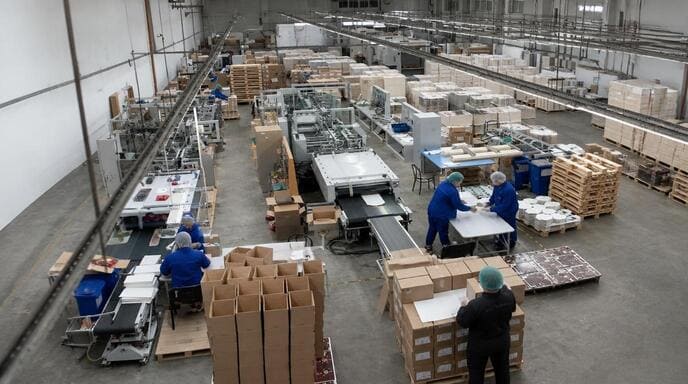
This concentration can reduce transportation between production stages and make communication and production coordination easier. A factory can also choose between multiple nearby suppliers for specialized processes instead of depending on a single distant source.
This does not mean that Chinese labor is always the cheapest. China’s main manufacturing advantage comes from its highly developed industrial clusters, accumulated manufacturing experience, established supplier networks, production capabilities, and efficient coordination across multiple processes.
For buyers, this means that product cost is influenced not only by labor rates but also by the structure and efficiency of the manufacturing supply chain.
Freight can be included or excluded from the supplier quotation
Manufacturers and exporters normally indicate whether transportation is included in the quotation. The quotation may be based on terms such as EXW, FOB, CIF, or DDP, or the supplier may separately state the freight charge.
Therefore, before comparing two prices, the buyer should confirm:
- Is international freight included?
- Where does the quoted transportation end?
- Are destination charges included?
- Is customs clearance included?
- Is final delivery to the warehouse included?
A $0.50 quotation with freight excluded cannot be directly compared with a $0.58 quotation that includes delivery to the buyer's destination.
How Is Freight Calculated for Custom Packaging?
Freight is particularly important for packaging because many bags, pouches, and other lightweight products can occupy considerable space relative to their actual weight.
In many freight arrangements, the shipping cost is determined by comparing the actual weight and the volumetric or dimensional weight of the shipment. The applicable chargeable weight is then used to calculate the freight cost. In simple terms, the higher applicable basis between weight and volume is generally used for charging, although the exact calculation method varies by transport mode and carrier.
For packaging products, volume can therefore have a significant impact on freight costs, especially when the goods are lightweight but take up a large amount of space. For ocean freight, cubic volume and container utilization are also important factors in determining the overall shipping cost.
Therefore, buyers should not estimate freight from product weight alone. Both the actual weight and the final packing volume need to be considered, with the applicable charging basis determined by the carrier or freight forwarder.
Some shipment information can only be confirmed accurately after production and final packing. The supplier can then provide the actual carton count, dimensions, gross weight, net weight, and total CBM.
| Shipment information | Why it matters |
|---|---|
| Carton dimensions | Determines shipment volume |
| Number of cartons | Shows the final shipment quantity |
| Gross weight | Used to determine the applicable chargeable weight |
| Net weight | Shows the actual product weight |
| Total CBM | Important for ocean and volume-based freight |
| Packing method | Affects carton utilization and shipment volume |
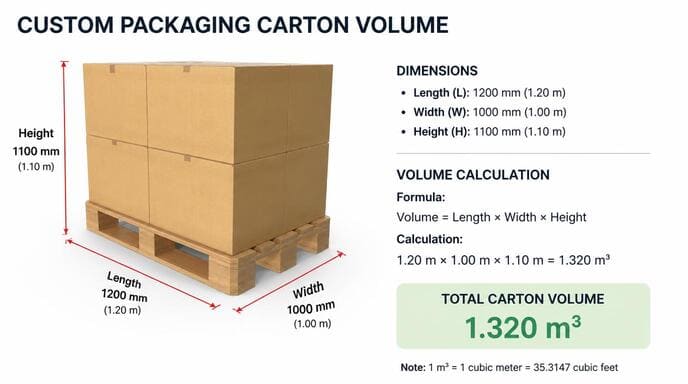
A small difference in carton size can become significant when multiplied across a large order. For this reason, how the supplier packs the finished goods can affect landed cost as well as the factory price.
How to Calculate the Landed Cost
A practical formula is:
Landed Cost = Product Cost + Applicable Freight + Import Duties & Taxes + Customs & Destination Charges + Final Delivery + Other Applicable Costs
Then:
Landed Cost per Unit = Total Landed Cost ÷ Quantity Received
For example:
| Cost item | Amount |
|---|---|
| Product cost | $10,000 |
| One-time customization cost | $300 |
| International freight | $1,200 |
| Import duties and taxes | $800 |
| Customs and destination charges | $500 |
| Warehouse delivery | $400 |
| Total landed cost | $13,200 |
For 20,000 units:
$13,200 ÷ 20,000 = $0.66 per unit
The buyer should therefore evaluate the order at approximately $0.66 per unit under these assumptions, rather than comparing suppliers using the $0.50 factory quotation alone.
One-time costs matter more on small orders
A $300 setup cost has very different effects depending on order quantity.
| Order quantity | $300 cost per unit |
|---|---|
| 1,000 | $0.30 |
| 5,000 | $0.06 |
| 10,000 | $0.03 |
| 50,000 | $0.006 |
| 100,000 | $0.003 |
This is one reason larger custom orders can have better unit economics. Fixed costs are spread over more units, and larger shipments may also use production and transportation capacity more efficiently.
However, ordering more is not automatically better. Storage, cash flow, demand certainty, and the risk of overstocking still matter.
How Incoterms Change the Cost the Buyer Still Needs to Pay
Incoterms mainly determine how costs, responsibilities, and risks are divided between the seller and buyer. They do not by themselves tell the buyer which quotation is cheaper.
| Term | General quotation scope | Buyer still needs to check |
|---|---|---|
| EXW | Goods available at the factory | Pickup, export handling, freight, import and delivery |
| FOB | Seller handles delivery to the agreed port and export obligations | Main freight, import and inland delivery |
| CIF | Main carriage and insurance to the named destination port | Import, destination charges and warehouse delivery |
| DDP | Seller takes on broader delivery and import responsibilities | Exact inclusions, taxes, destination and exclusions |
The important distinction is the cost endpoint.
CIF to a port is not the same as delivery to a warehouse.
Likewise, DDP should not be accepted simply because the quotation says “DDP.” The buyer should confirm the named destination and exactly what is included.
For supplier comparison, convert all quotations to the same basis:
Same product + Same quantity + Same destination + Same delivery requirement + Comparable cost scope
Only then does the unit price become meaningful.
Why the Lowest Factory Price May Not Be the Lowest Total Cost
Consider two suppliers:
| Cost factor | Supplier A | Supplier B |
|---|---|---|
| Factory price | $0.48 | $0.54 |
| Freight allocation | $0.09 | $0.06 |
| Import and destination costs | $0.07 | $0.06 |
| Other applicable costs | $0.03 | $0.02 |
| Estimated landed cost | $0.67 | $0.68 |
Supplier A has a lower factory quotation, but the final difference is only $0.01 per unit.
The reverse can also happen. A supplier with a higher factory price may reduce the total cost through more efficient carton packing, lower shipment volume, stronger freight arrangements, stable production, or fewer quality problems.
The same principle applies to manufacturing. A supplier's internal production capability and surrounding supply network can affect how efficiently materials and semi-finished products move through the production process. These factors may not be obvious from the unit quotation, but they can influence both product cost and logistics efficiency.
When Is Buying Custom Packaging Directly From a Chinese Factory More Competitive?
China sourcing is not automatically cheaper. It becomes more attractive when the factory-side advantage is large enough to outweigh international logistics and import costs.
Direct factory sourcing is generally more worth evaluating when the order has several of these characteristics:
- The quantity is large enough to absorb international logistics costs.
- The packaging requires meaningful customization.
- The product will be reordered regularly.
- The buyer is price-sensitive and needs competitive manufacturing costs.
- There is sufficient time for production, shipping, customs, and delivery.
- The factory has the production and supply-chain capability required for the order.
For example, a company ordering 50,000–100,000 customized bags has a very different sourcing equation from a company ordering only a few hundred pieces. Larger orders can spread setup costs, improve production efficiency, and make international freight more economical per unit.
Highly customized products can also benefit from direct factory communication because specifications, materials, printing, dimensions, packing requirements, and repeat-order standards can be controlled more directly.
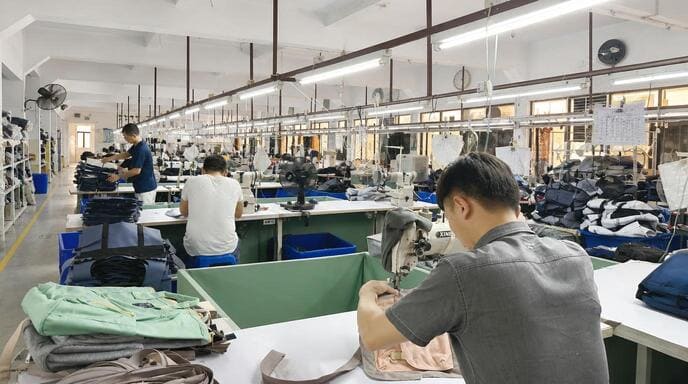
Factory capability matters alongside the quotation
A buyer evaluating a Chinese packaging manufacturer should look beyond the unit price and confirm whether the supplier can:
- Produce the required specification consistently.
- Handle the required quantity.
- Provide accurate packing and shipment data after production.
- Maintain quality across repeat orders.
- Meet the required production schedule.
- Coordinate export shipments efficiently.
A factory with stronger purchasing, production, packing, and supply-chain capabilities may sometimes provide better overall economics even when its initial quotation is not the lowest.
The relevant comparison is therefore:
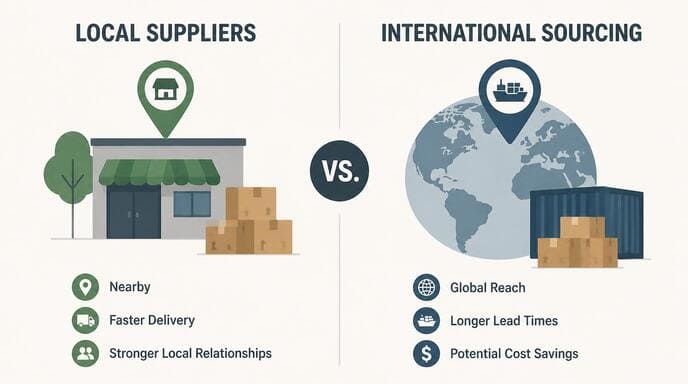
Chinese factory landed cost vs. local supplier delivered cost
—not Chinese factory price vs. local supplier price.
When Buying From China May Not Make Sense
Direct importing may be less attractive when the order is very small, the delivery deadline is extremely short, or the buyer cannot efficiently manage international logistics.
A local supplier can sometimes win because of:
- Lower transportation complexity.
- Faster replenishment.
- Smaller order quantities.
- No international customs process for the buyer.
- Lower inventory requirements.
- Shorter delivery times.
For an urgent order, paying a higher local unit price may be commercially better if importing would delay a product launch, promotion, retail campaign, or scheduled production run.
The correct question is not whether China has a lower factory price. It is whether China provides a lower suitable total cost for the actual purchasing situation.
What Buyers Should Confirm Before Ordering
A reliable landed-cost calculation does not require a complicated model. The buyer mainly needs consistent information from the supplier and logistics provider.
Ask the supplier for the quotation and production basis
The quotation should clearly state:
- Unit price and total quantity.
- One-time customization or setup charges.
- Incoterm.
- Whether freight is included or excluded.
- Shipping origin.
- Production lead time.
- Packing requirements, if already defined.
After production and final packing, the supplier can confirm the actual shipment information needed for freight calculation, including:
- Number of cartons.
- Carton dimensions.
- Gross and net weight.
- Total shipment volume.
- Final packing method.
If freight is included, the buyer should still confirm where the transportation cost ends.
Confirm import and delivery costs
Before comparing suppliers, determine:
- Applicable customs classification.
- Import duties and taxes.
- Customs clearance charges.
- Destination handling charges.
- Inland transportation.
- Final warehouse delivery.
- Any possible storage or inspection charges.
The exact customs treatment depends on the destination country and actual goods, so a generic duty percentage should not be treated as a reliable final estimate.
A Simple Supplier Comparison Method
For every supplier, convert the quotation into the same final cost basis.
| Comparison | Supplier A | Supplier B | Supplier C |
|---|---|---|---|
| Product cost | $10,000 | $10,600 | $11,000 |
| One-time costs | $300 | $0 | $200 |
| Freight | $1,200 | $900 | Included |
| Import costs | $800 | $850 | Included |
| Destination charges | $500 | $450 | Included |
| Final delivery | $400 | $350 | Included |
| Total landed cost | $13,200 | $13,150 | $11,200 |
| Quantity | 20,000 | 20,000 | 20,000 |
| Landed cost/unit | $0.660 | $0.658 | $0.560 |
This type of comparison is more useful than collecting several factory quotations and simply choosing the lowest unit price.
How to Reduce Custom Packaging Import Costs
The largest savings do not always come from negotiating the factory price.
For packaging, several cost levers can be more important:
Reduce shipment volume.
Review carton dimensions, folding, bundling, and packing methods. Lower shipment volume can reduce freight allocation and warehouse space requirements.
Choose the appropriate shipping method.
Air freight may make sense for urgent or relatively small shipments, while ocean freight can be more economical for suitable larger volumes when the delivery schedule allows.
Consolidate suitable orders.
Combining appropriate production quantities can spread fixed costs and potentially improve transportation efficiency.
Standardize repeat orders.
Stable specifications can reduce repeated development, setup, and communication costs.
Verify import costs before production.
Understanding the applicable customs treatment before ordering is safer than building the purchasing decision around an assumed duty rate.
Compare the complete delivered cost.
A small factory-price reduction is not necessarily valuable if another supplier can achieve greater savings through better packing, freight, or supply-chain efficiency.
Common Mistakes in Custom Packaging Import Cost Calculations
The most common mistakes are relatively simple.
Comparing factory prices without checking freight.
One quotation may include transportation while another excludes it.
Assuming freight is always calculated from weight or always from volume.
Packaging freight can be influenced by both. Depending on the transport arrangement, actual weight and volumetric or dimensional weight may be compared, with the applicable charge based on the higher figure.
Treating CIF as warehouse delivery.
CIF generally ends at the named destination port rather than automatically covering all import and inland delivery costs.
Assuming DDP automatically means there are no additional costs.
The exact destination and inclusions still need to be confirmed.
Ignoring carton dimensions.
For lightweight packaging, shipment volume can have a major effect on transportation economics.
Comparing different quantities.
A 5,000-piece quotation and a 50,000-piece quotation may have very different unit economics.
Using an assumed duty rate.
Customs treatment depends on the actual goods and destination-country rules.
Choosing the lowest factory quotation instead of the lowest suitable total cost.
Quality, capacity, packing efficiency, lead time, and repeat-order consistency can all affect the real commercial result.
FAQ: Custom Packaging Import Cost
What is the landed cost of custom packaging?
Landed cost is the total applicable cost of obtaining imported packaging at the defined destination. It can include the product cost, freight, import duties and taxes, customs-related charges, destination costs, and final delivery.
Is freight included in a manufacturer's quotation?
It depends on the quotation and Incoterm. Suppliers may quote freight separately or include transportation within terms such as CIF or DDP. Buyers should confirm exactly what is included and where the quoted delivery ends.
Is packaging freight calculated by weight or volume?
It can be affected by both. Because packaging is often lightweight but bulky, volume can be an important factor. In some transport arrangements, actual weight and volumetric or dimensional weight are compared, and the applicable charge is based on the higher figure.
Is FOB cheaper than DDP?
Not necessarily. FOB and DDP place different costs and responsibilities on the seller and buyer. The correct comparison is the total cost to the same destination under the same conditions.
Is buying custom packaging directly from China cheaper?
It can be, particularly for larger B2B orders, customized products, and repeat purchases. However, the relevant comparison is the Chinese factory's landed cost versus the local supplier's total delivered cost.
When is China sourcing most attractive?
It is generally more worth evaluating when order volume is meaningful, customization is substantial, repeat demand exists, price competitiveness matters, and there is enough time for international production and transportation.
Conclusion: Compare the Cost That the Buyer Actually Pays
The factory quotation is only the starting point for an imported custom packaging order.
The real purchasing cost depends on the complete chain:
Factory Cost → Freight → Import Costs → Destination Charges → Warehouse Delivery
For packaging, freight deserves particular attention because lightweight products can occupy significant volume, and the applicable freight calculation may consider actual weight, volumetric weight, or shipment volume depending on the transport method.
China's competitiveness should also not be reduced to labor cost alone. In concentrated packaging-producing regions, multiple manufacturing processes and supporting suppliers can be located close together. Printing, cutting, lamination, heat pressing, sewing, material production, plate making, and other supporting services may be handled within one factory or through nearby specialized suppliers. Combined with established manufacturing experience and production networks, this concentration can create advantages in coordination, production efficiency, and product cost.
Manufacturers should also clearly state whether freight is included or excluded from their quotation and which part of the delivery process the quoted price covers. Final carton dimensions, carton quantity, weight, and CBM can normally be confirmed after production and final packing.
For businesses considering Chinese factory sourcing, the key question is not “Is the Chinese factory price lower?”
It is:
“After freight, import costs, destination charges, and delivery are included, is the Chinese factory's landed cost lower while still meeting the required quality, quantity, customization, and delivery requirements?”
When the answer is yes, direct factory sourcing can provide a meaningful commercial advantage. When the order is too small, too urgent, or too costly to import efficiently, a local supplier may still be the better option.
Ultimately, the best supplier is not necessarily the one with the lowest factory quotation. It is the supplier that delivers the lowest suitable total cost under comparable purchasing conditions.